Great news – OpenAI just released GPT-4 Turbo, an upgraded version of the GPT-4 model with a context window up to 128K tokens – more than 300 pages of text, and a fourfold increase in regular GPT-4’s most powerful 32K context model.
The company made this known at its first-ever developer conference, touting a preview version of the model and promising a production-grade GPT-4 Turbo in the next few weeks.
Users will be able to have longer, more complex conversations with GPT-4 Turbo as there’ll be more room to remember more of what was said earlier in the chat.
DALLE-3 prompt: “A beautiful city with buildings made of different, bright, colorful candies and looks like a wondrous candy land”
Also exciting to hear, GPT-4 Turbo is now trained on real-world knowledge and events up to April 2023, allowing us to build greater apps utilizing up-to-date data, without needing to manually keep it in the loop with custom data from embeddings and few-shot prompting.
Even better, the greater speed and efficiency of this new turbocharged model have made input tokens 3 times cheaper and slashed the cost of output tokens in half.
So, upgraded in capability, upgraded in knowledge, upgraded in speed, all with a fraction of the previous cost. That’s GPT-4 Turbo.
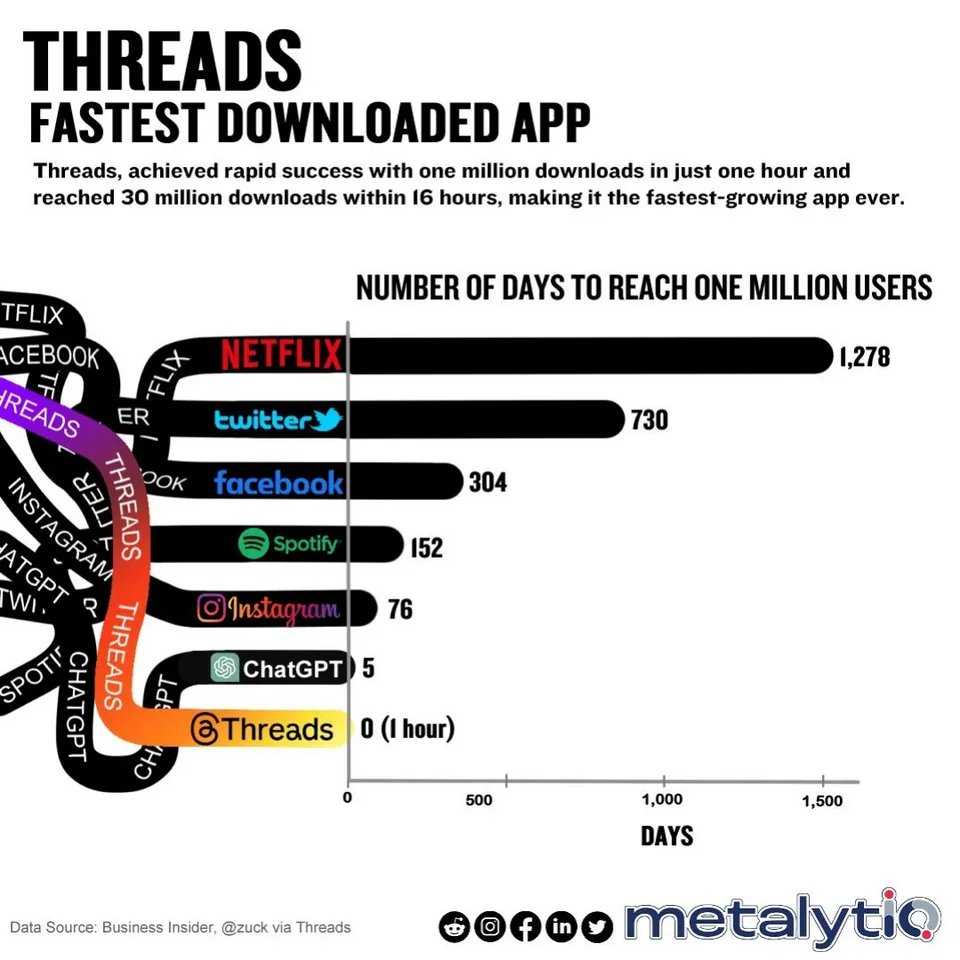
An innovative feature currently in preview, you can now pass image inputs to the GPT-4 model for processing, making it possible to perform tasks like generating captions, analyzing and classifying real-world images, and automated image moderation.
Then there’s the new DALL-E 3 API for automatically generating high-quality images and designs, and an advanced Text-to-speech (TTS) API capable of generating human-level speech with a variety of voices to choose from.
DALLE-3 outclasses Midjourney! Especially when it comes to creating complex images from highly detailed and creative prompts.
DALLE-3 (top) vs Midjourney (bottom). Prompt: “A vast landscape made entirely of various meats spreads out before the viewer. tender, succulent hills of roast beef, chicken drumstick trees, bacon rivers, and ham boulders create a surreal, yet appetizing scene. the sky is adorned with pepperoni sun and salami clouds”. Source: DALL-E 3 vs. Midjourney: A Side by Side Quality Comparison

And we can’t forget the ambitious new Assistants API, aimed at helping devs build heavily customized AI agents with specific instructions that leverage extra knowledge and call models and tools to perform highly specialized tasks.
It’s always awesome to see these ground-breaking improvements in the world of AI, surely we can expect developers to take full advantage of these and produce even more intelligent and world-changing apps that improve the quality of life for everyone.
By Tari Ibaba
/ Last updated on September 12, 2023
It is 35,000 times faster than Python. It is quicker than C. It is as easy as Python.
Enter Mojo: a newly released programming language made for AI developers and made by Modular, a company founded by Chris Lattner, the original creator of Swift.
This 35000x claim came from a benchmark comparison between Mojo and other languages, using the Mandelbrot algorithm on a particular AWS instance.
It’s a superset of Python, combining Python’s usability, simplicity, and versatility with C’s incredible performance.
If you’re passionate about AI and already have a grasp on Python, then Mojo is definitely worth a try. So, let’s dive in and explore 7 powerful features of this exciting language together.
Mojo’s features
I signed up for Mojo access shortly after it was announced and got access a few days later.
I started exploring all the cool new features they had to offer and even had the chance to run some code and see the language in action. Here are 7 interesting Python upgrades I found:
1. let and var declarations
Mojo introduces new let and var statements that let us create variables.
If we like we can specify a type like Int or String for the variable, as we do in TypeScript. var allows variables to change; let doesn’t. So it’s not like JavaScript’s let and var – There’s no hoisting for var and let is constant.
MojoCopied!
def your_function(a, b):
let c = a
# Uncomment to see an error:
# c = b # error: c is immutable
if c != b:
let d = b
print(d)
your_function(2, 3)
2. structs for faster abstraction
We have them in C++, Go, and more.
Structs are a Mojo feature similar to Python classes, but they’re different because Mojo classes are static: you can’t add more methods are runtime. This is a trade-off, as it’s less flexible, but faster.
MojoCopied!
struct MyPair:
var first: Int
var second: Int
# We use 'fn' instead of 'def' here - we'll explain that soon
fn __init__(inout self, first: Int, second: Int):
self.first = first
self.second = second
fn __lt__(self, rhs: MyPair) -> Bool:
return self.first < rhs.first or
(self.first == rhs.first and
self.second < rhs.second)
Here’s one way struct is stricter than class: all fields must be explicitly defined:
3. Strong type checking
These structs don’t just give us flexibility, they let us check variable types at compile-time in Mojo, like the TypeScript compiler does.
MojoCopied!
def pairTest() -> Bool:
let p = MyPair(1, 2)
# Uncomment to see an error:
# return p < 4 # gives a compile time error
return True
The 4 is an Int, the p is a MyPair; Mojo simply can’t allow this comparison.
4. Method overloading
C++, Java, Swift, etc. have these.
Function overloading is when there are multiple functions with the same name that accept parameters with different data types.
Look at this:
MojoCopied!
struct Complex:
var re: F32
var im: F32
fn __init__(inout self, x: F32):
"""Makes a complex number from a real number."""
self.re = x
self.im = 0.0
fn __init__(inout self, r: F32, i: F32):
"""Makes a complex number from its real and imaginary parts."""
self.re = r
self.im = i
Typeless languages like JavaScript and Python simply can’t have function overloads, for obvious reasons.
Although overloading is allowed in module/file functions and class methods based on parameter/type, it won’t work based on return type alone, and your function arguments need to have types. If don’t do this, overloading won’t work; all that’ll happen is the most recently defined function will overwrite all those previously defined functions with the same name.
5. Easy integration with Python modules
Having seamless Python support is Mojo’s biggest selling point by far.
And using Python modules in Mojo is straightforward. As a superset, all you need to do is call the Python.import_module() method, with the module name.
Here I’m importing numpy, one of the most popular Python libraries in the world.
MojoCopied!
from PythonInterface import Python
# Think of this as `import numpy as np` in Python
let np = Python.import_module("numpy")
# Now it's like you're using numpy in Python
array = np.array([1, 2, 3])
print(array)
You can do the same for any Python module; the one limitation is that you have to import the whole module to access individual members.
All the Python modules will run 35,000 times faster in Mojo.
def is flexible, mutable, Python-friendly; fn is constant, stable, and Python-enriching. It’s like JavaScript’s strict mode, but just for def.
MojoCopied!
struct MyPair:
fn __init__(inout self, first: Int, second: Int):
self.first = first
self.second = second
fn‘s rules:
Immutable arguments: Arguments are immutable by default – including self – so you can’t mistakenly mutate them.
Required argument types: You have to specify types for its arguments.
Required variable declarations: You must declare local variables in the fn before using them (with let and var of course).
Explicit exception declaration: If the fn throws exceptions, you must explicitly indicate so – like we do in Java with the throws keyword.
7. Mutable and immutable function arguments
Pass-by-value vs pass-by-reference.
You may have across this concept in languages like C++.
Python’s def function uses pass-by-reference, just like in JavaScript; you can mutate objects passed as arguments inside the def. But Mojo’s def uses pass-by-value, so what you get inside a def is a copy of the passed object. So you can mutate that copy all you want; the changes won’t affect the main object.
Pass-by-reference improves memory efficiency as we don’t have to make a copy of the object for the function.
But what about the new fn function? Like Python’s def, it uses pass-by-reference by default, but a key difference is that those references are immutable. So we can read the original object in the function, but we can’t mutate it.
Immutable arguments
borrowed a fresh, new, redundant keyword in Mojo.
Because what borrowed does is to make arguments in a Mojo fn function immutable – which they are by default. This is invaluable when dealing with objects that take up a substantial amount of memory, or we’re not allowed to make a copy of the object we’re passing.
For example:
MojoCopied!
fn use_something_big(borrowed a: SomethingBig, b: SomethingBig):
"""'a' and 'b' are both immutable, because 'borrowed' is the default."""
a.print_id() // 10
b.print_id() // 20
let a = SomethingBig(10)
let b = SomethingBig(20)
use_something_big(a, b)
Instead of making a copy of the huge SomethingBig object in the fn function, we simply pass a reference as an immutable argument.
Mutable arguments
If we want mutable arguments instead, we’ll use the new inout keyword instead:
MojoCopied!
struct Car:
var id_number: Int
var color: String
fn __init__(inout self, id: Int):
self.id_number = id
self.color = 'none'
# self is passed by-reference for mutation as described above.
fn set_color(inout self, color: String):
self.color = color
# Arguments like self are passed as borrowed by default.
fn print_id(self): # Same as: fn print_id(borrowed self):
print('Id: {0}, color: {1}')
car = Car(11)
car.set_color('red') # No error
self is immutable in fn functions, so we here we needed inout to modify the color field in set_color.
Key takeaways
Mojo: is a new AI programming language that has the speed of C, and the simplicity of Python.
let and var declarations: Mojo introduces let and var statements for creating optionally typed variables. var variables are mutable, let variables are not.
Structs: Mojo features static structs, similar to Python classes but faster due to their immutability.
Strong type checking: Mojo supports compile-time type checking, akin to TypeScript.
Method overloading: Mojo allows function overloading, where functions with the same name can accept different data types.
fn definitions: The fn keyword in Mojo is a stricter version of Python’s def, requiring immutable arguments and explicit exception declaration.
Mutable and immutable arguments: Mojo introduces mutable (inout) and immutable (borrowed) function arguments.
Final thoughts
As we witness the unveiling of Mojo, it’s intriguing to think how this new AI-focused language might revolutionize the programming realm. Bridging the performance gap with the ease-of-use Python offers, and introducing powerful features like strong type checking, might herald a new era in AI development. Let’s embrace this shift with curiosity and eagerness to exploit the full potential of Mojo.
Some great news lately for AI developers from OpenAI.
Finally, you can now fine-tune the GPT-3.5 Turbo model using your own data. This gives you the ability to create customized versions of the OpenAI model that perform incredibly well at specific tasks and give responses in a customized format and tone, perfect for your use case.
For example, we can use fine-tuning to ensure that our model always responds in a JSON format, containing Spanish, with a friendly, informal tone. Or we could make a model that only gives one out of a finite set of responses, e.g., rating customer reviews as critical, positive, or neutral, according to how *we* define these terms.
As stated by OpenAI, early testers have successfully used fine-tuning in various areas, such as being able to:
Make the model output results in a more consistent and reliable format.
Match a specific brand’s style and messaging.
Improve how well the model follows instructions.
The company also claims that fine-tuned GPT-3.5 Turbo models can match and even exceed the capabilities of base GPT-4 for certain tasks.
Before now, fine-tuning was only possible with weaker, costlier GPT-3 models, like davinci-002 and babbage-002. Providing custom data for a GPT-3.5 Turbo model was only possible with techniques like few-shot prompting and vector embedding.
OpenAI also assures that any data used for fine-tuning any of their models belongs to the customer, and then don’t use it to train their models.
What is GPT-3.5 Turbo, anyway?
Launched earlier this year, GPT-3.5 Turbo is a model range that OpenAI introduced, stating that it is perfect for applications that do not solely focus on chat. It boasts the capability to manage 4,000 tokens at once, a figure that is twice the capacity of the preceding model. The company highlighted that preliminary users successfully shortened their prompts by 90% after applying fine-tuning on the GPT-3.5 Turbo model.
What can I use GPT-3.5 Turbo fine-tuning for?
Customer service automation: We can use a fine-tuned GPT model to make virtual customer service agents or chatbots that deliver responses in line with the brand’s tone and messaging.
Content generation: The model can be used for generating marketing content, blog posts, or social media posts. The fine-tuning would allow the model to generate content in a brand-specific style according to prompts given.
Code generation & auto-completion: In software development, such a model can provide developers with code suggestions and autocompletion to boost their productivity and get coding done faster.
Translation: We can use a fine-tuned GPT model for translation tasks, converting text from one language to another with greater precision. For example, the model can be tuned to follow specific grammatical and syntactical rules of different languages, which can lead to higher accuracy translations.
Text summarization: We can apply the model in summarizing lengthy texts such as articles, reports, or books. After fine-tuning, it can consistently output summaries that capture the key points and ideas without distorting the original meaning. This could be particularly useful for educational platforms, news services, or any scenario where digesting large amounts of information quickly is crucial.
How much will GPT-3.5 Turbo fine-tuning cost?
There’s the cost of fine-tuning and then the actual usage cost.
Training: $0.008 / 1K tokens
Usage input: $0.012 / 1K tokens
Usage output: $0.016 / 1K tokens
For example, a gpt-3.5-turbo fine-tuning job with a training file of 100,000 tokens that is trained for 3 epochs would have an expected cost of $2.40.
OpenAI, GPT 3.5 Turbo fine-tuning and API updates
When will fine-tuning for GPT-4 be available?
This fall.
OpenAI has announced that support for fine-tuning GPT-4, its most recent version of the large language model, is expected to be available later this year, probably during the fall season. This upgraded model has been proven to perform at par with humans across diverse professional and academic benchmarks. It surpasses GPT-3.5 in terms of reliability, creativity, and its capacity to deal with instructions that are more nuanced.