
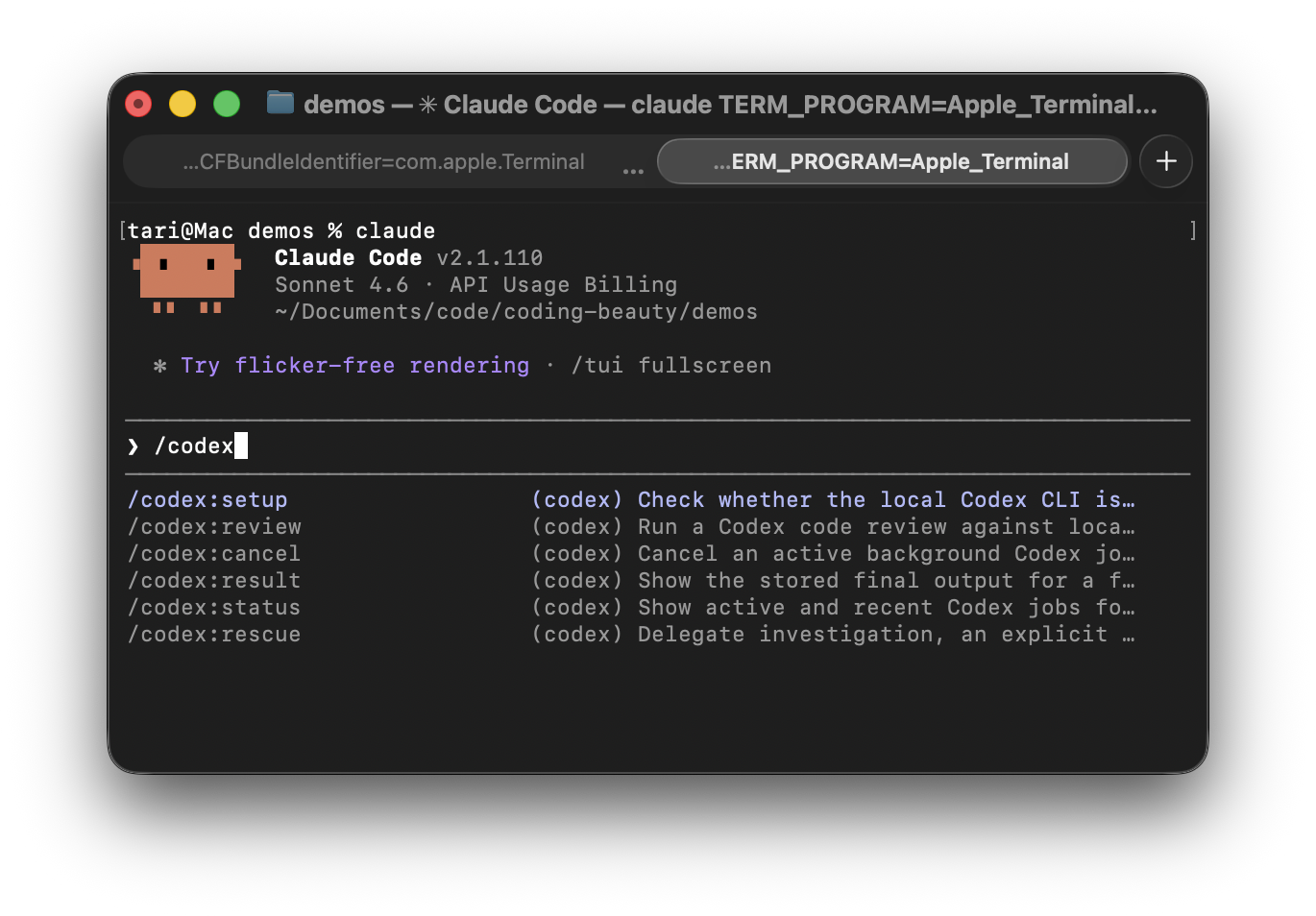
This is unbelievable.
They’ve literally brought their most insane GPT models to elevate Claude Code with their incredible new Codex plugin…
Not even to replace it — but to work side-by-side and fix every possible weakness Claude could possibly have when working on your codebase.
You’re literally getting the best of both worlds now — combining the best of the best in AI coding capability into one single workflow, incredible.
And we’ve been seeing similar things in other tools like Cursor and Google’s Antigravity — it’s very clear where AI-powered software development is heading right now.
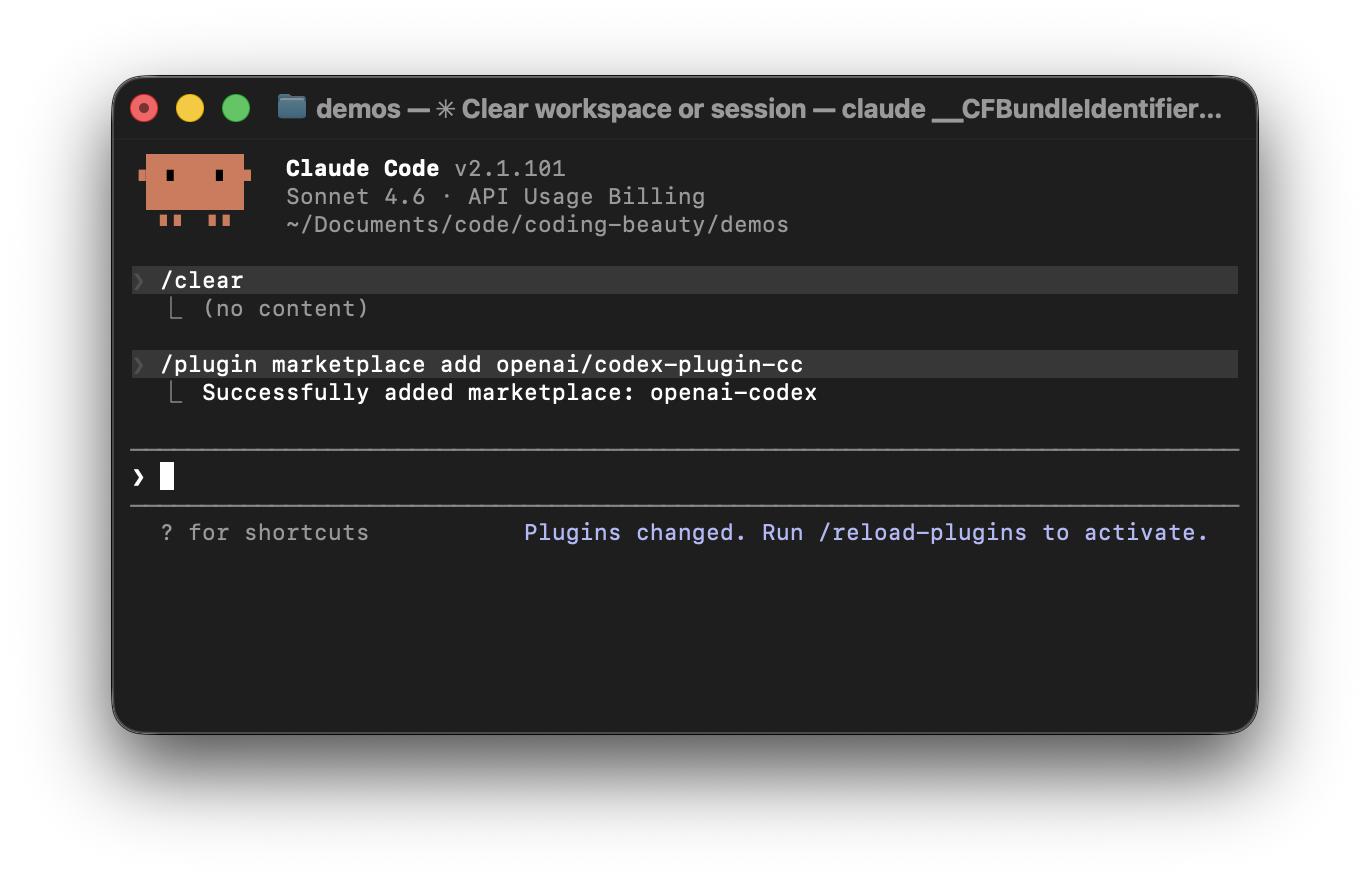
1. Proactive delegation
Definitely one of the most interesting features of this plugin.
With the plugin installed, Claude Code doesn’t have to do everything itself. It can hand off work to Codex using /codex:rescue, which acts like a built-in escalation path.
Just imagine:
- You’re working in Claude Code
- Something gets tricky—maybe a bug, maybe a messy refactor
- Codex instantly step in and take over that part
You don’t need to decide when to switch tools anymore. The system itself is structured so that one agent can call another when needed.
AI transforms from a single assistant into a full-blown coordinated team.
2. Cross-provider review
Review from a different model entirely.
Two main modes:
-
/codex:review→ a standard second-pass code review -
/codex:adversarial-review→ a more critical, challenge-focused review
This is where things get powerful.
Instead of relying on one model’s perspective, you can:
- Write code with Claude
- Then have Codex review it independently
- Or even challenge the approach itself
That matters because different models:
- Learn from different data
- Have different blind spots
- Catch different kinds of mistakes
Now you end up getting:
- Fewer missed bugs
- More robust edge-case handling
- Better overall code quality
It’s not magic—but two perspectives are almost always stronger than one — especially in debugging and design review.
3. Hybrid runtime: local + cloud working together
Another hidden benefit.
Claude Code is very much a local, terminal-first tool. It lives in your environment, works directly with your files, and runs commands on your machine.
Codex on the other hand can operate in sandboxed environments including cloud execution.
Put them together and you get a hybrid setup:
- Claude handles local context, editing, and orchestration
- Codex can step in with isolated execution or deeper analysis
This combination gives you the best of both worlds:
- Speed and control locally
- Safety and scalability when offloading tasks
4. MCP shines yet again
None of this works smoothly without a shared way for tools to communicate.
That’s where Model Context Protocol (MCP) comes in.
Both Claude Code and Codex are built to use MCP — our now-very-standard universal interface for:
- Tools
- data access
- workflows
Because they speak the same “language,” they can:
- Share context
- Access the same tools
- Plug into the same workflows
This is what makes the integration feel natural instead of bolted on.
5. Competitive pricing: follow the strategy
There’s also a business angle here that’s hard to ignore.
OpenAI recently introduced a $100/month Pro tier, landing right in the same range as Anthropic’s Claude Max plan.
Now add the plugin into the picture:
- Developers can keep using Claude Code (Anthropic’s tool)
- But still route meaningful work through Codex (OpenAI’s system)
In other words, OpenAI doesn’t even need to win the interface.
If Codex is:
- Handling reviews
- Fixing bugs
- Running delegated tasks
…then OpenAI still captures usage, even inside a competitor’s environment.
It’s a brilliant move.
What this really means
We’re very clearly moving away from:
- “Which AI is best?”
And toward:
- “How do different AIs work together?”
With this setup:
- Claude acts as the orchestrator
- Codex acts as the reviewer, challenger, or specialist
And you, the developer, are managing a multi-agent workflow instead of a single assistant.
That’s the real story here.
Not just a plugin—but the early shape of AI systems that collaborate, not compete.