
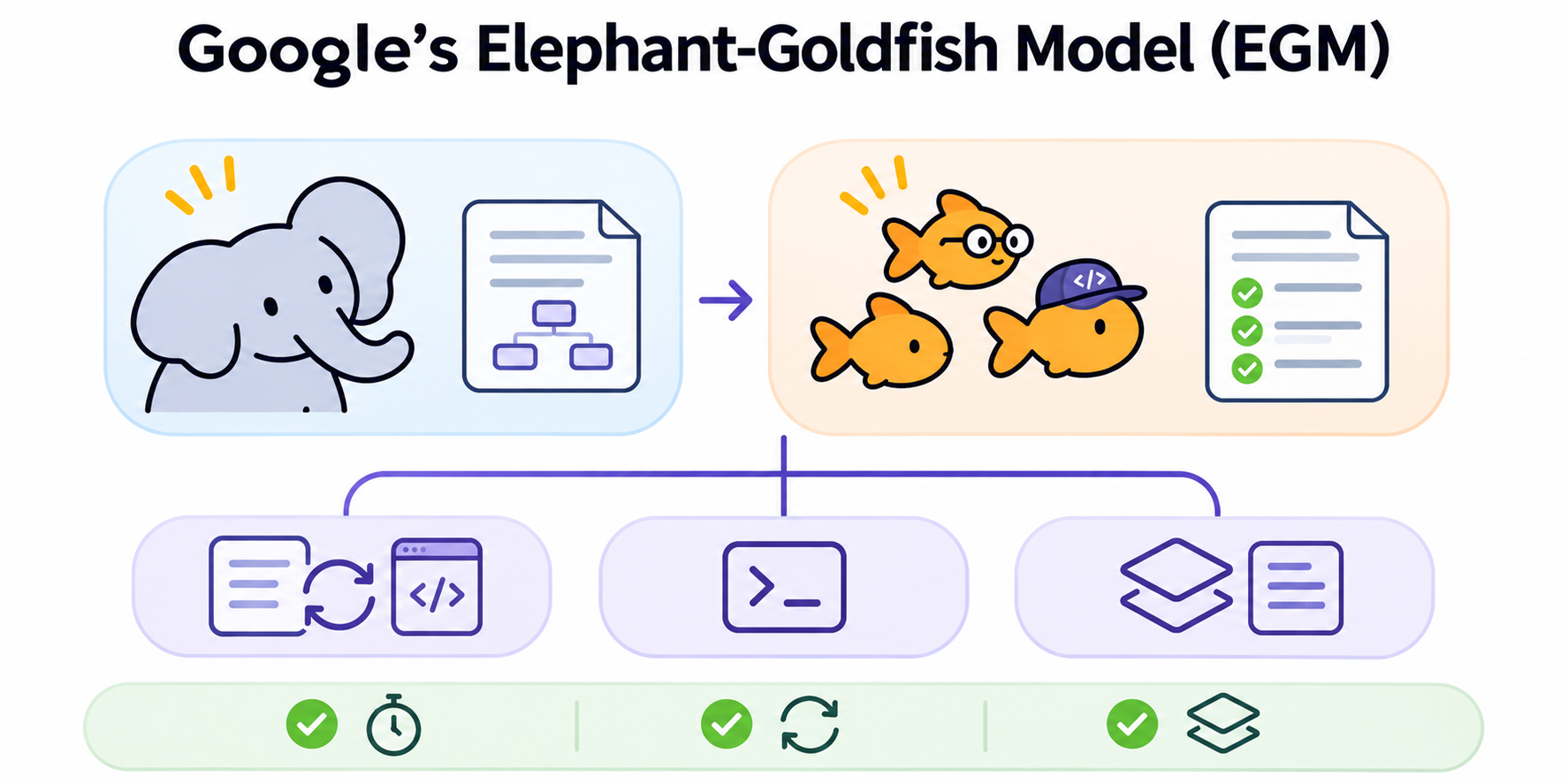
Google just released an powerful new set of Skills and Claude Code extensions.
They are based on this incredible concept called EGM — an innovative way of working with coding agents that thousands of engineers at Google use everyday.
The new Elephant-Goldfish Model (EGM) improves the quality of your software by using an “Elephant” and a “Goldfish” to catch every single design issue before they turn into code.
The Elephant plans the features and then the Goldfishes meticulously challenge and review the plans.
This helps us avoid costly rewrites and catch mistakes much earlier, and it also gives a clearer way of working with AI agents.
1. The Elephant: Think first, code later
The Elephant acts like an experienced software architect who understands your project and what you’re trying to build.
Instead of jumping straight into coding it follows a no-code-first approach. It asks questions and challenges your ideas. It also looks for potential problems and writes a design document like concepts_brief.md.
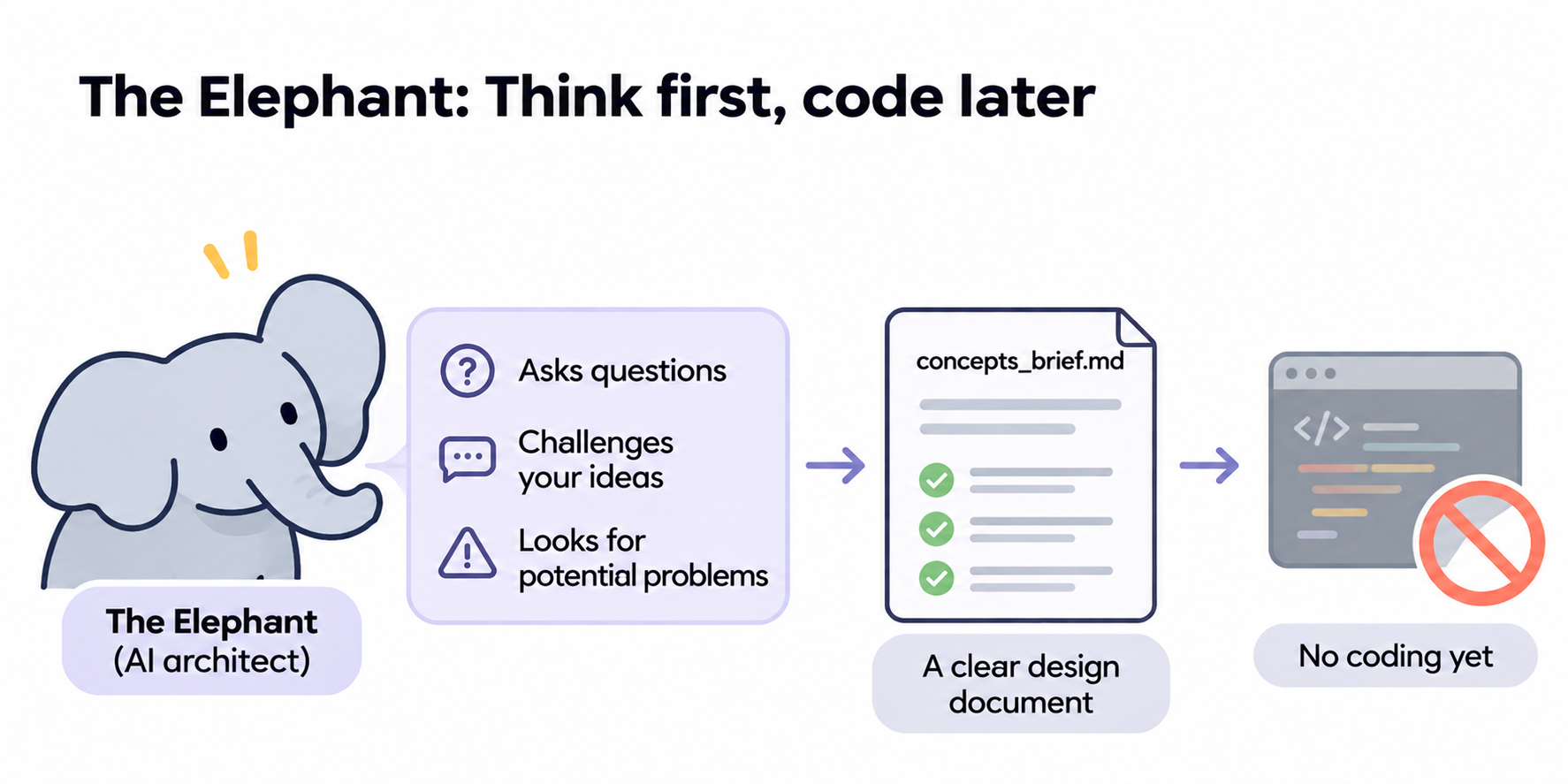
Example: Say you want to build a payment system. Rather than immediately writing APIs the Elephant first asks what happens when a payment fails or someone pays twice. It also considers what happens if the database goes down.
This helps you catch design problems early and avoid rewriting large parts of your application later.
2. The Goldfish: AI agents that challenge your design
Once the Elephant finishes the design EGM brings in independent AI reviewers called Goldfish.
These agents know nothing about earlier design conversations. They only see the design document and relevant code so they can question things the Elephant might have missed.
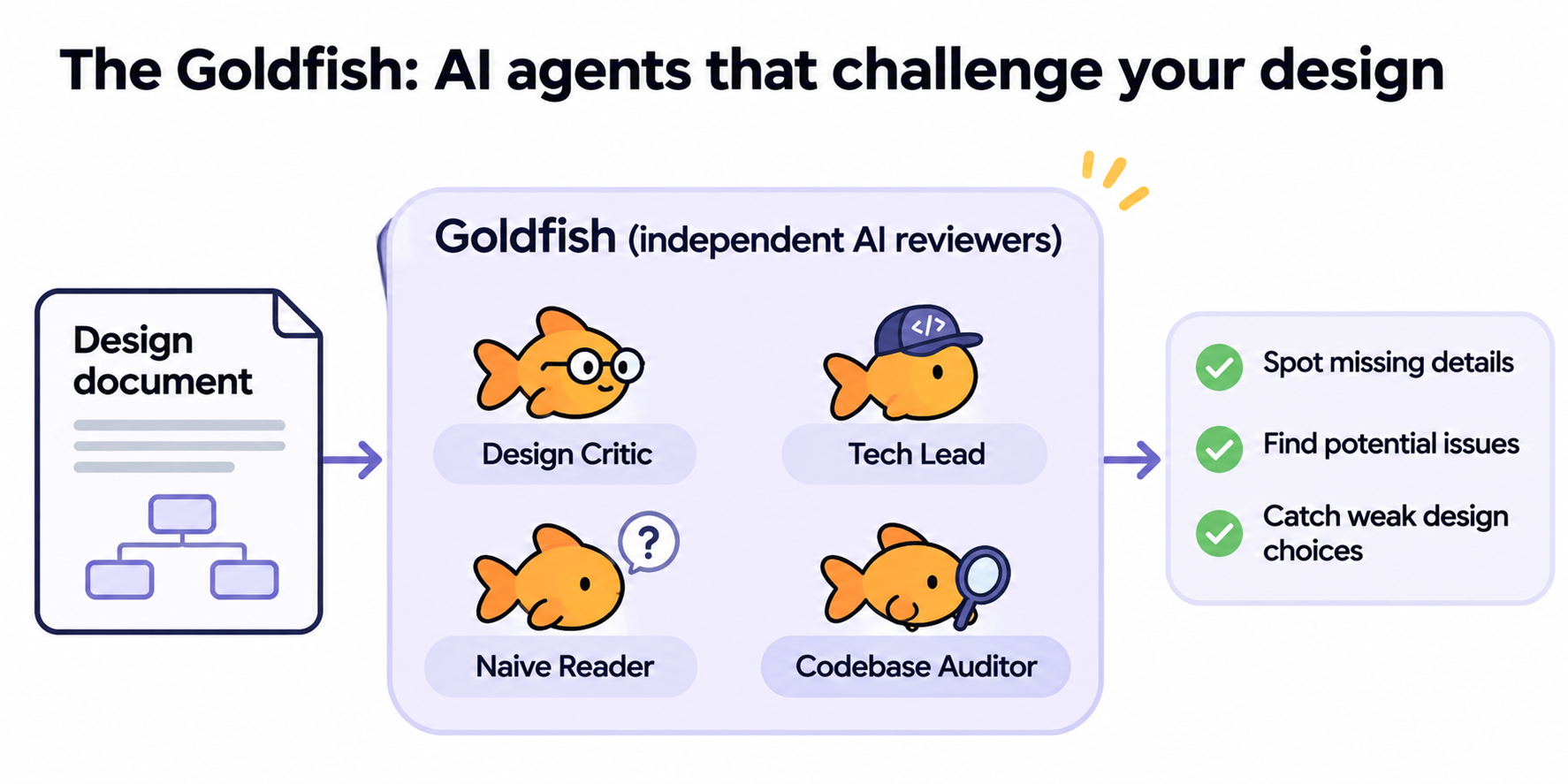
Each Goldfish takes on a different role like Design Critic or Tech Lead. Others act as a Naive Reader or Codebase Auditor.
Example: Say you’re building a login system. One Goldfish might notice missing security checks while another might point out that your password-reset process isn’t clearly explained.
This gives you fresh opinions instead of relying on the same AI that created the design to find its own mistakes.
3. Automated code-to-design drift detection
We all know how quickly documentation becomes outdated. You change your code or add features but forget to update the docs.
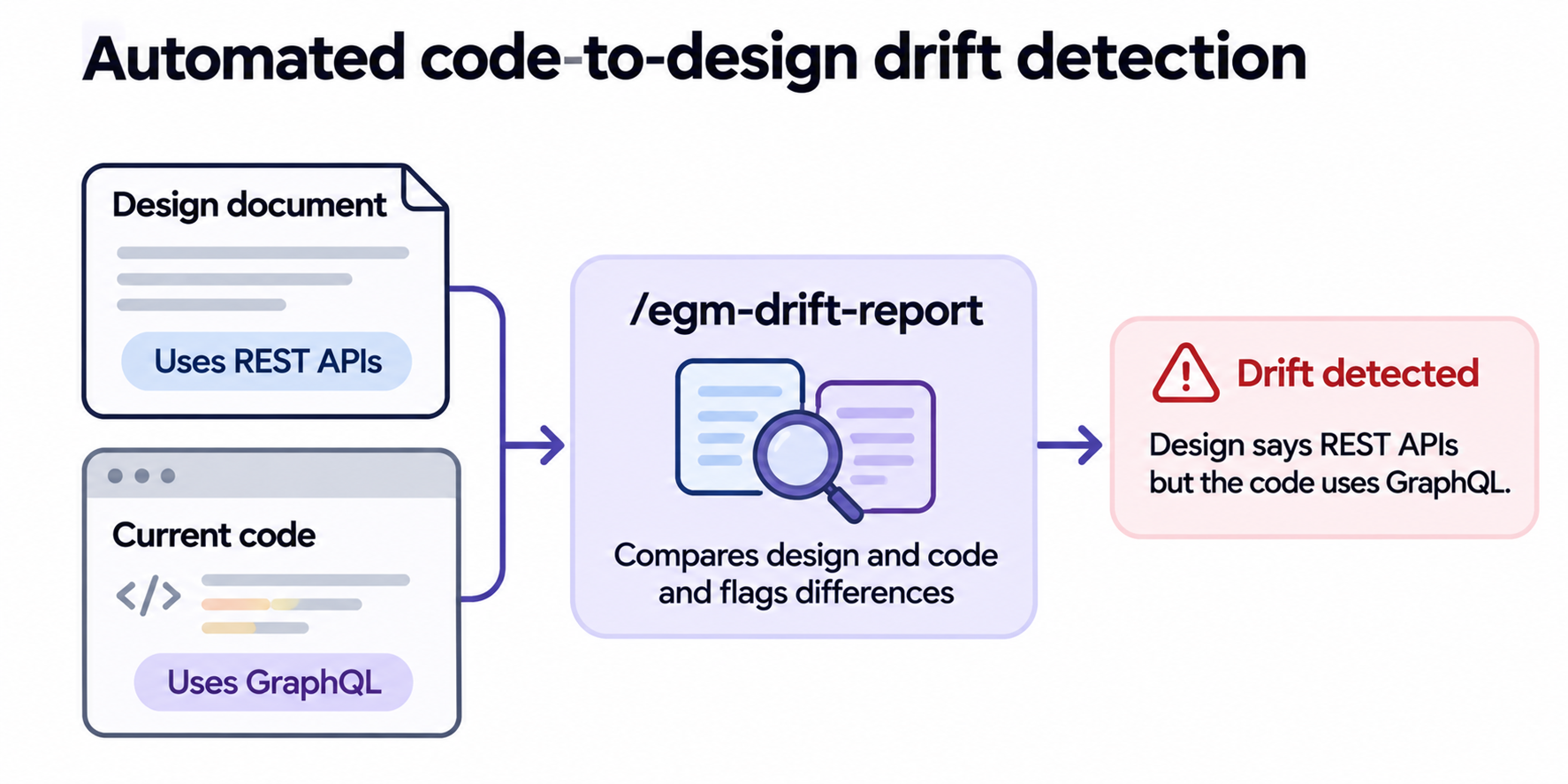
EGM gives us /egm-drift-report. This skill compares your design documents with your current code and flags possible differences.
Example: Your design document says your application uses REST APIs but you’ve moved some features to GraphQL. EGM can flag that difference so you can update the docs or review the code.
This helps you keep your documentation in sync with your code and gives future AI agents more accurate project information.
4. Spec-driven development: A clear way to work with AI
Instead of jumping between random prompts EGM gives us a clear process for planning and reviewing features using simple commands, like:
/egm-brainstorm— Explore ideas and requirements./egm-draft— Turn ideas into a detailed design./egm-review— Let independent AI agents check the design.
You can store these documents in your repository under docs/designs/.
Example: Say you want to add real-time notifications to your e-commerce app. You start with /egm-brainstorm to compare WebSockets and polling. Next you use /egm-draft to write the design. Then you run /egm-review to catch missing details before coding.
This lets you spend less time fixing AI-generated code and more time reviewing plans and making technical decisions.
5. Recursive codebase bootstrapping
If you’ve ever joined a project with thousands of files and little documentation then you know how hard it can be to understand.
EGM gives us /egm-bootstrap. This skill explores your codebase and creates README.md files across folders to explain what each part does and how everything connects.
Example: In a large e-commerce app it can create documentation explaining how your authentication and inventory modules work and how they connect with payment and order processing.
This helps you and your AI agents understand unfamiliar projects faster without digging through every file.
Google’s Elephant-Goldfish Model helps us move beyond writing code faster by making it easier to plan better and catch mistakes early. The goal is simple: spend less time fixing avoidable problems and more time building the right thing.