

CLAUDE.md is so much more than most developers realize.
It’s supposed to be a special file for providing persistent instructions and context to Claude Code.
But many developers think they can just dump whatever they like inside it — some feel it’s just a fancy way to avoid writing the same prompts over and over.
Some don’t even ever use it — missing out on one of the most powerful ways to shape how Claude behaves inside a project.
The reality is that CLAUDE.md is far more nuanced than it appears. Understanding a few non-obvious facts about it can completely change how you work with Claude Code, and the results it produces for you.
Here are five things every developer should know about CLAUDE.md.
1. It’s not a README or project summary
Actually not a very good CLAUDE.md:
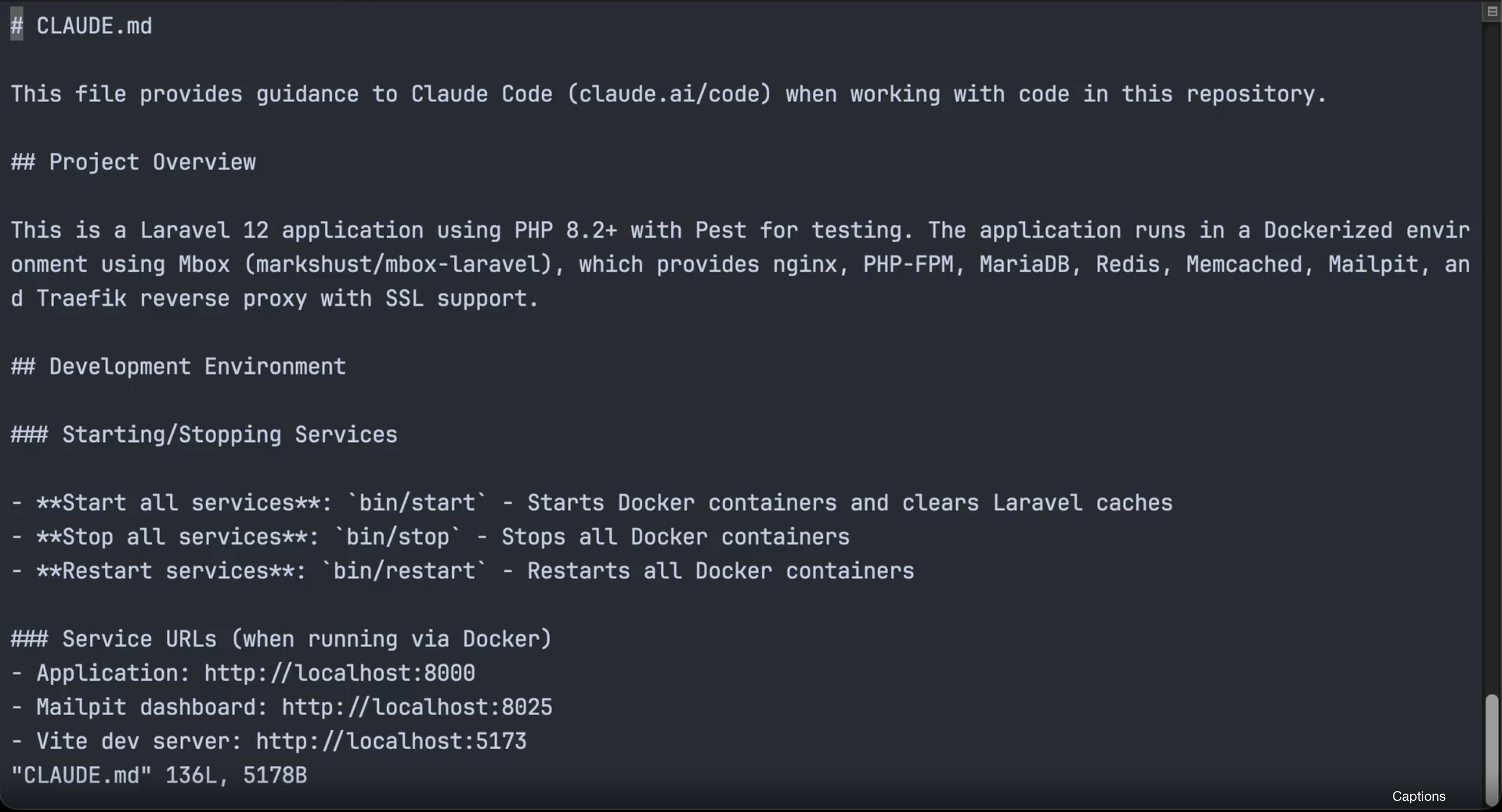
A README exists to explain a project.
A CLAUDE.md exists to guide an agent working inside that project.
The most effective files don’t try to document everything. Instead they focus on specific expectations, workflows, constraints, and preferred ways of working.
For example:
- Particular project-specific commands to run — or NOT run
- What must happen before code is merged
- Which patterns should be avoided when responding to prompts
- How tasks should be approached
Thinking of CLAUDE.md as documentation often leads to bloated files. Thinking of it as a behavioral contract usually leads to better results.
2. It’s not a system prompt
One common misconception is that CLAUDE.md functions like a system prompt.
It doesn’t.
Claude Code loads the contents of the file into the model’s normal user context — it’s treated as important guidance rather than an untouchable source of truth.
It’s not an unbreakable instruction layer that reigns over every other context.
This is why clear, specific instructions tend to work much better than vague recommendations.
3. There can be more than one CLAUDE.md
Many developers assume there is a single CLAUDE.md at the root of a project.
But actually Claude Code supports a layered memory system.
Instructions can exist at multiple levels and be combined as Claude works through different parts of a codebase.
This makes CLAUDE.md less like a project configuration file and more like a hierarchy of contextual instructions that shapes behavior in different situations.
4. Claude can automatically generate your first CLAUDE.md
A surprising number of developers still start from a blank file.
Claude Code includes an /init command that can inspect a repository and generate an initial CLAUDE.md automatically.
The generated file won’t be perfect, but it provides a useful starting point and can save time by capturing common project information that would otherwise need to be written manually.
For many teams, it’s the fastest way to establish a baseline memory file.
5. CLAUDE.md is only one layer of Claude’s massive memory system
Perhaps the most important thing to know is that CLAUDE.md is not Claude Code’s entire memory system.
It’s just one layer.
Claude can draw context from user-level memory, project-level memory, session context and many other memory sources.
So when Claude successfully remembers how your team works, that behavior is often influenced by more than a single file.
The most interesting thing about CLAUDE.md is that it represents a new way of programming behavior.
Traditional software is configured through code and settings. Claude Code introduces the idea of configuring an agent through natural language instructions.
That’s why two developers can use the same model and get very different outcomes. The difference isn’t the model — it’s the behavior defined by the memory and instructions surrounding it.