
This is hands down one of the most powerful Claude Code features right now.
The /code-review command elevates your workflow and catches all the bugs in your code long before they reach production.
It can intelligently group the potential issues based on severity and even fix them automatically. It can even distinguish between bugs from your recent changes and pre-existing bugs that have silently been around for a while.
You catch bugs early, save time with rapid review of small changes, and fix issues faster without having to switch between tools.
1. From lightning-fast checks to deep code reviews
Not every code change needs a deep review.
Claude Code gives us five effort levels:
- Low: Quick, surface-level checks for obvious bugs with minimal false alarms.
- Medium: Balanced, everyday checks that catch clear logic flaws fast.
- High: Deeper analysis that proactively probes for edge cases and hidden bugs.
- XHigh: Heavy reasoning checks that catch complex multi-file and concurrency bugs.
- Max: Exhaustive reviews that rigorously test every edge case and security risk.
Say I just fixed a button. I can run:
/code-review lowBut if I’ve changed how users log in I might want a deeper check:
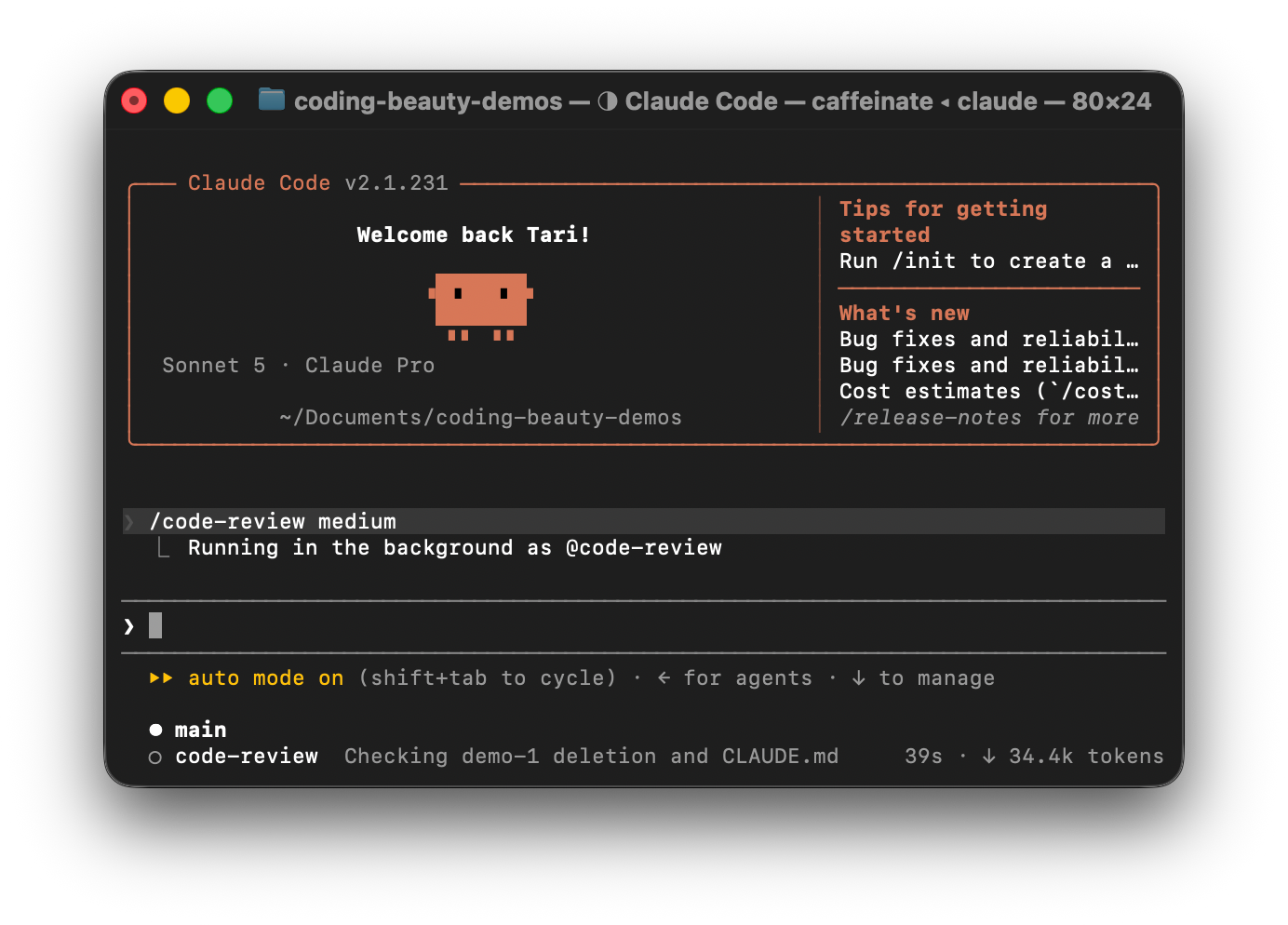
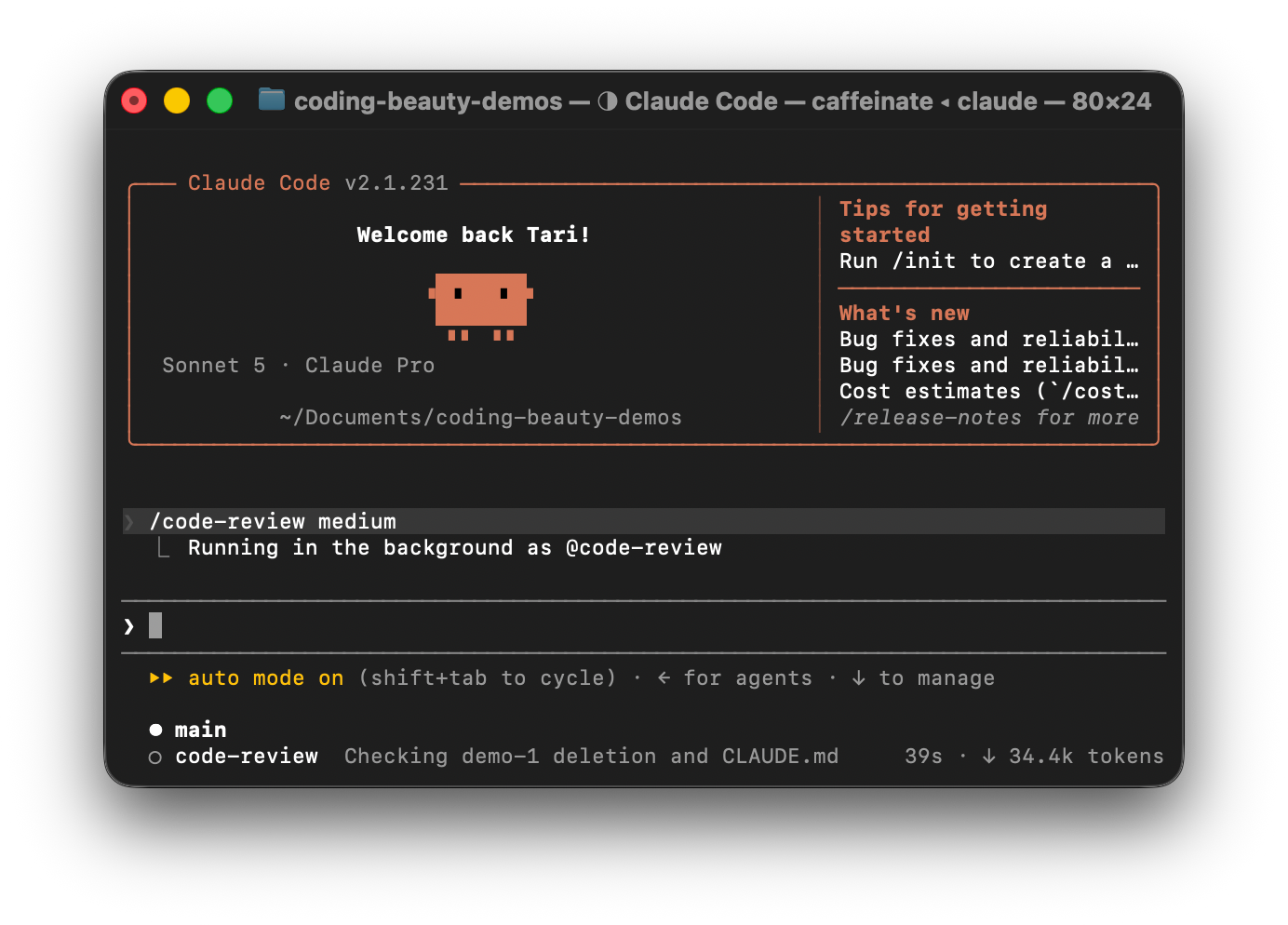
/code-review highHere I review some demo code using the medium effort. Review started:
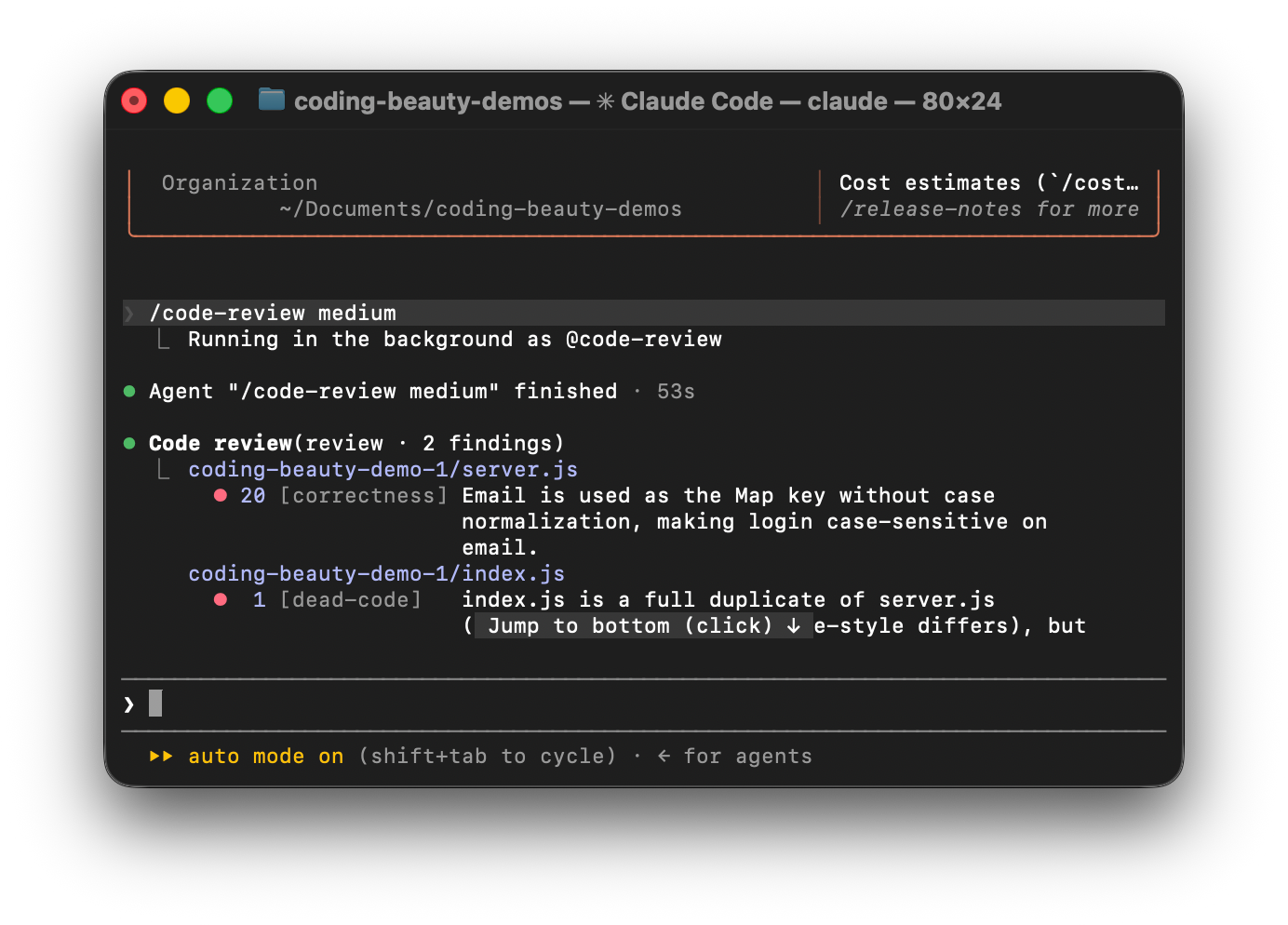
Review ready — all the finding for each file are comprehensively laid out:
All this lets you us less time reviewing small changes and more time checking important ones.
2. Ultra: Unleash a team of AI agents on your codebase
For very big changes like major features, we can use Ultra mode:
/code-review ultraUltra (previously /ultrareview) uses multiple AI agents that work at the same time in a cloud sandbox.
Each agent checks different things:
- Logic bugs: Does the code work as expected?
- Edge cases: What happens with unusual inputs?
- System impact: Could the changes break other features?
- Performance: Could the changes slow things down?
For example if I’m changing how my app handles payments. One agent might check balance calculations while another looks for problems when two payments happen at once.
Ultra also checks its own findings. It tries to verify bugs before reporting them and filters out findings that don’t hold up.
This helps us spend less time chasing false alarms.
3. Fix bugs and add PR Comments effortlessly
Claude Code gives us two useful flags.
–fix: Apply fixes automatically
/code-review high --fixSay Claude finds that your code crashes when an API returns null. It can update the code to handle that case.
You can then run git diff to check the changes.
–comment: Add comments to pull requests
/code-review high --commentClaude can post findings directly to GitHub pull requests or GitLab merge requests.
It points to the code that needs attention so your team knows what to fix.
This means you can find bugs and share feedback without jumping between tools.
4. Make reviews follow all your project rules with CLAUDE.md
Every project has its own rules.
Maybe your team doesn’t want database queries inside controllers. Or maybe you prefer returning errors instead of throwing exceptions.
You can add these rules to your CLAUDE.md file:
# Review Guidelines

- Focus on bugs and security issues.

- Ignore generated files.

- Keep database queries out of controllers.

- Prefer returning errors over exceptions.
Claude uses these instructions when reviewing your code.
So if you accidentally add a database query inside a controller Claude can point it out.
You don’t need to repeat your rules every time.
5. Cut through the noise and focus on what actually matters
Nobody wants a code review full of unnecessary warnings.
Claude Code groups findings into three categories:
- Important: Bugs you should fix before merging.
- Nits: Small issues that aren’t urgent.
- Pre-existing: Bugs that were already there.
Say you add a payment function that accepts negative amounts. Claude might mark that as Important because it could lead to incorrect balances.
If it finds an unrelated bug in old code it can mark it as Pre-existing.
Claude also explains why it flagged an issue and how it checked the problem.
This helps you know what to fix first.
Final thoughts
Claude Code’s /code-review gives us more than a simple bug checker.
We can choose how deep reviews should go and use multiple AI agents for complex changes. We can also apply fixes and share findings with our team.
It won’t catch every bug. We still need to test our code.
But as we use AI to write more code it makes sense to use AI to help us review it too.