
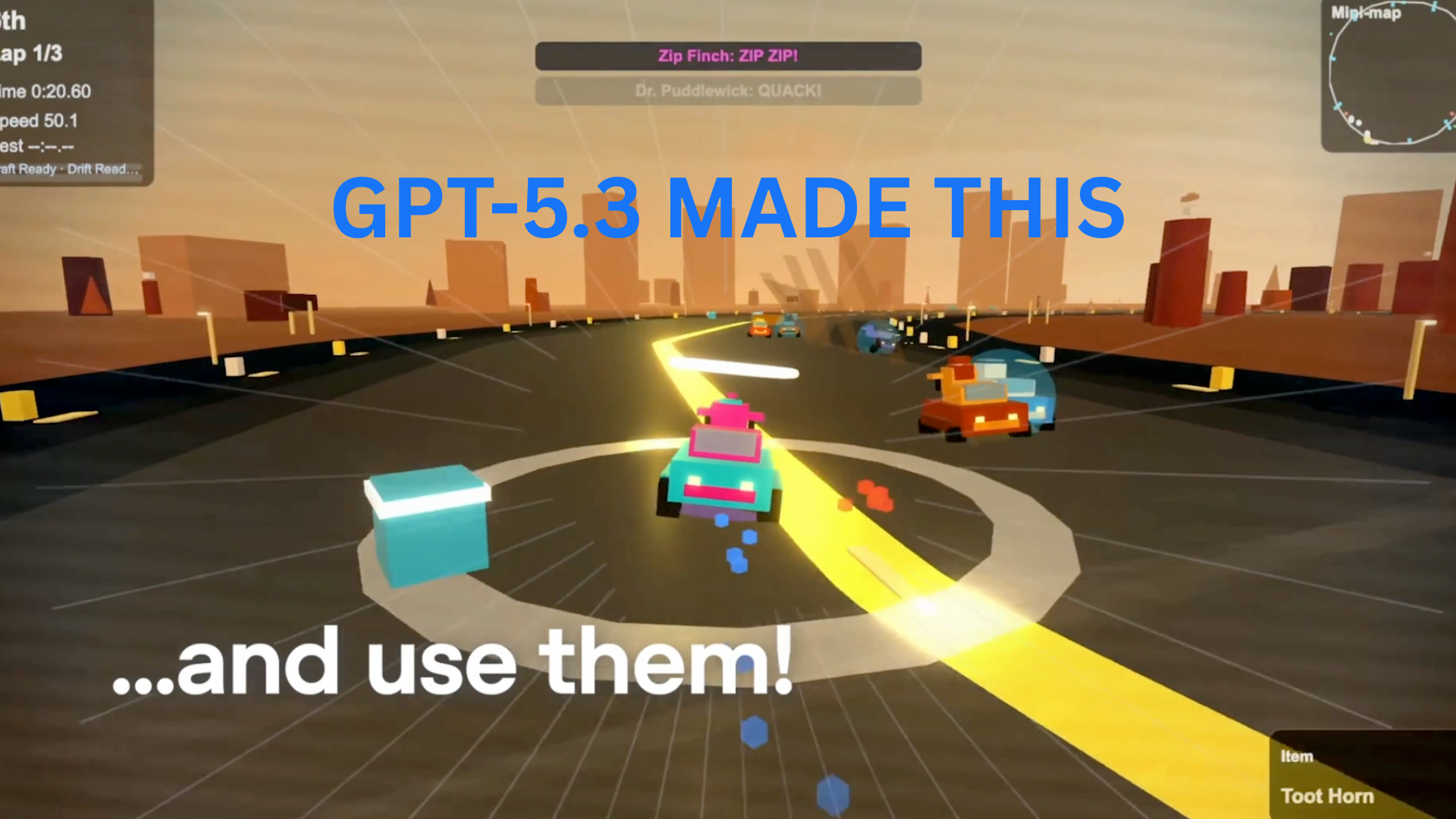
I’ve been seeing a lot of demos of the new GPT-5.3 Codex and they’ve been looking really exciting.
I see Codex definitely heading in a good direction if they keep this up.
Big improvements and brand new features too.
Check out this awesome 3D racing game it made all on its own:
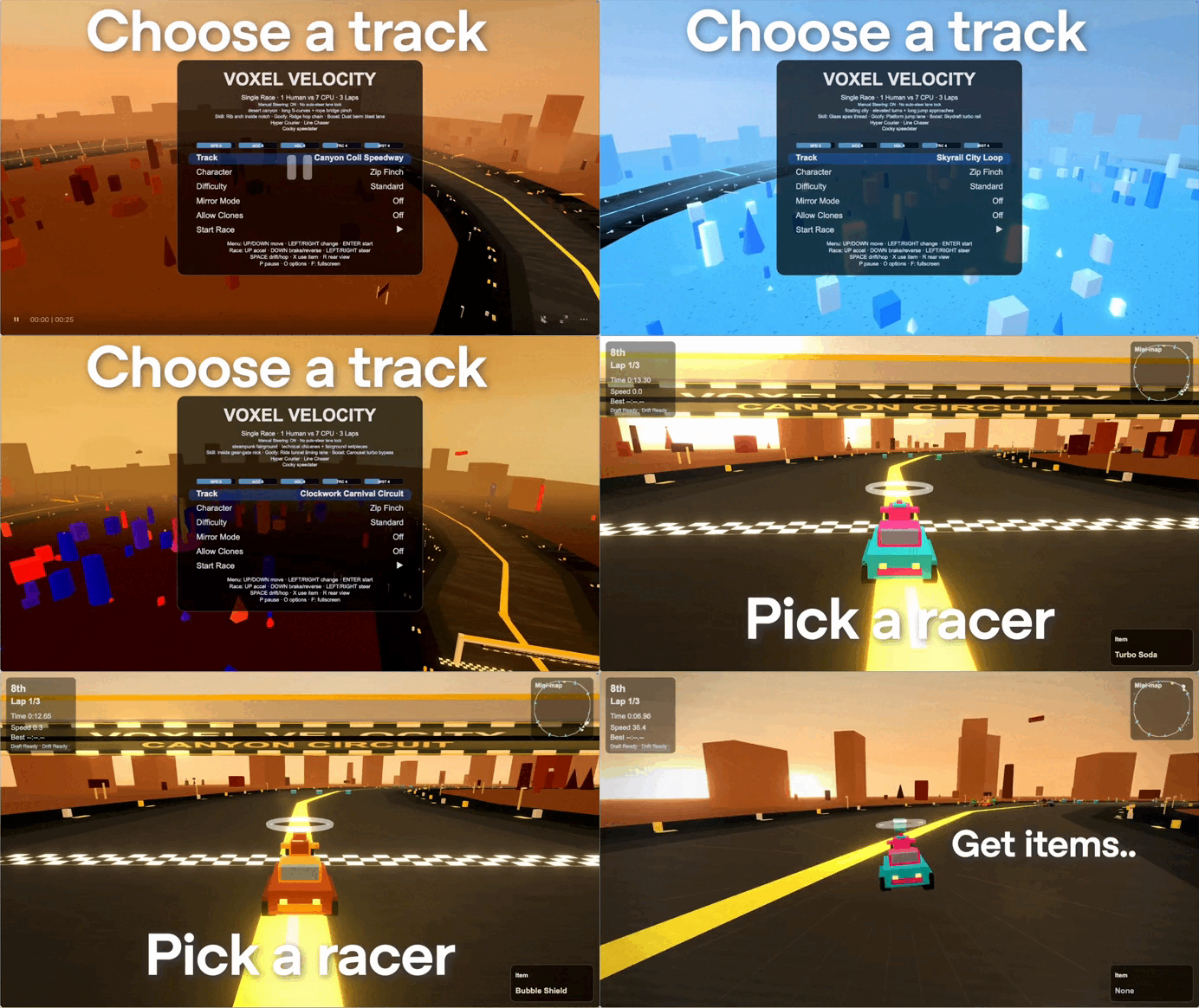
All it took was a one-shot prompt and a few follow-up prompts to create something this comprehensive.

Using the develop web game skill and preselected, generic follow-up prompts like “fix the bug” or “improve the game”, GPT‑5.3-Codex iterated on the games autonomously over millions of tokens.
OpenAI

And here’s a new feature: I can now talk to the Codex as it’s responding to me — without having for it to completely finish.
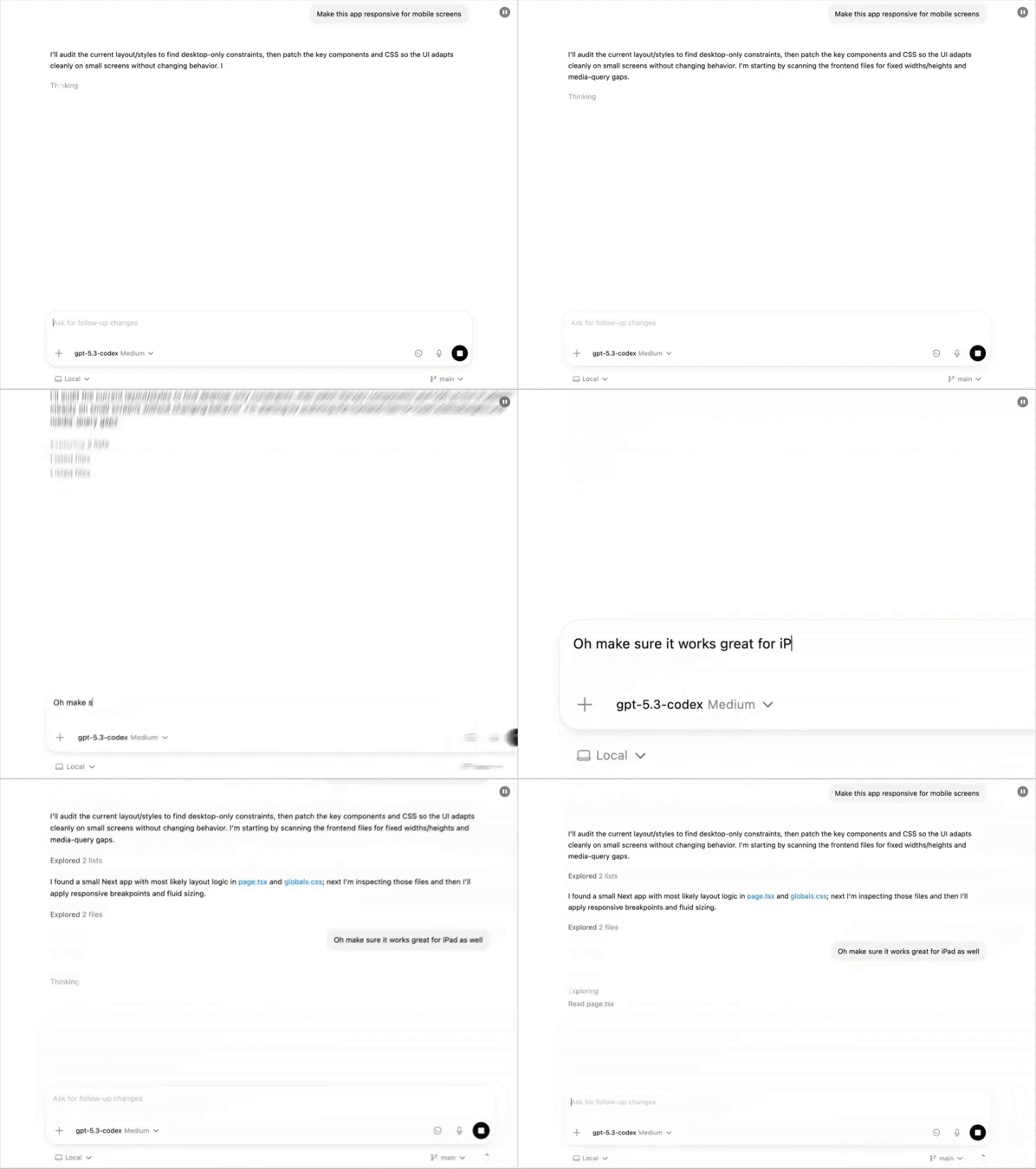
Like for those times when I want to add an extra detail to the prompt without having to start over and lose all the progress.
5 big improvements in GPT-5.3-Codex for software developers
1. Long-running workflows (new in Codex)
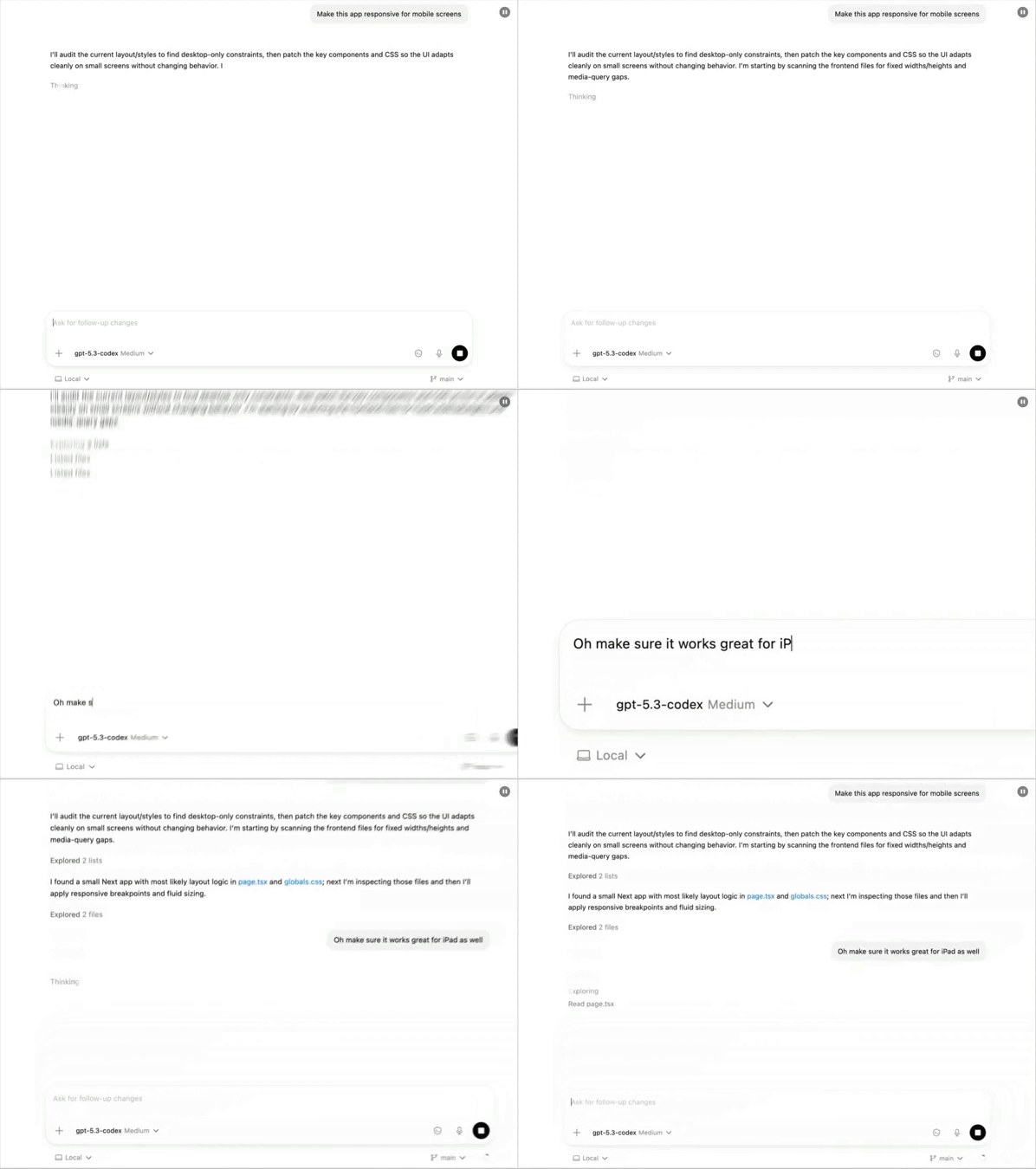
One of the most important additions is the ability to guide the model while it’s working. Instead of waiting for a finished result, developers can interact with GPT-5.3-Codex in real time — asking questions, changing direction, or refining goals mid-task.
The model provides ongoing updates about what it’s doing and why, allowing users to:
- Adjust approaches as work progresses
- Clarify intent without restarting tasks
- Stay involved in decisions while execution continues
This makes the experience feel more like collaborating with a teammate than issuing commands to a tool.
2. Stronger real-world coding performance
We’ve moving just caring about how syntactically correct the code from these AI models are.
GPT-5.3-Codex does better on realistic engineering tasks — the kind that involve messy repositories, incomplete documentation, and multiple moving parts.
SWE-Lancer IC Diamond (advanced engineering tasks)
- GPT-5.3-Codex: 81.4%
- GPT-5.2-Codex: 76.0%
- GPT-5.2: 74.6%
So we’re talking:
- Better understanding of existing projects
- More reliable debugging
- Fewer breaks when working across large codebases
3. Faster execution
With this update, we are also now running GPT‑5.3-Codex 25% faster for Codex users, thanks to improvements in our infrastructure and inference stack, resulting in faster interactions and faster results.
— OpenAI
Speed matters when AI is performing multi-step work.
GPT-5.3-Codex runs noticeably faster in agent-style workflows, which helps reduce the back-and-forth cycle between writing code, testing, and fixing errors.
For us developers, that translates into:
- Shorter iteration cycles
- Faster experimentation
- Less waiting during long tasks
4. Coding plus reasoning
GPT-5.3-Codex isn’t limited to writing code. It combines programming ability with stronger reasoning, allowing it to help with:
- Documentation
- Architecture discussions
- Code explanations
- System-level decisions
The result is a broader role in the engineering workflow, not just the coding phase.
5. Better interaction with tools and environments
Modern development doesn’t happen in isolation and this new model reflects that.
It’s improved at working with terminals, commands, and development tools, meaning it can interpret outputs and adjust its approach instead of generating code blindly.
AI builds AI now
One of the more talked-about aspects of the release is that earlier versions of GPT-5.3-Codex were reportedly used internally during development. The system helped diagnose issues, debug workflows, and improve processes along the way.
This just shows us how AI tools are increasingly speeding up the creation of newer AI systems — a feedback loop that could accelerate progress across the industry.
Why this matters
The release comes during an intense race to build more capable AI coding systems. But the competition is no longer just about who generates the best code. The real question is now:
- Which system helps teams ship software faster?
- Which reduces complexity instead of adding to it?
- Which fits naturally into real development workflows?
GPT-5.3-Codex is clearly here to answer these type of questions.
If earlier tools made developers faster, systems like GPT-5.3-Codex aim to change how development itself is organized — moving toward a model where AI handles execution while humans focus on direction and decision-making.
Whether that becomes the standard approach remains to be seen. But one thing is clear: AI coding tools are no longer just assistants. They’re becoming active participants in building software.