
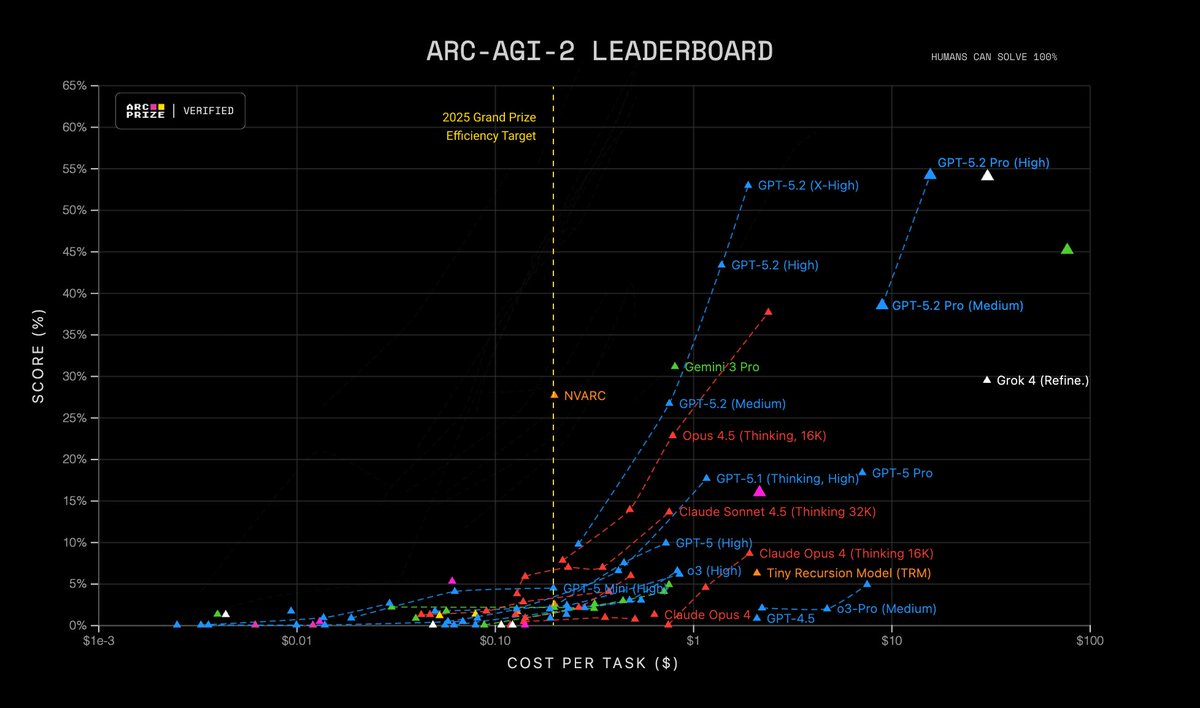
Just look at the incredible 3D ocean wave simulation GPT-5.2 created:
It generated all these 3D elements from scratch for the app:
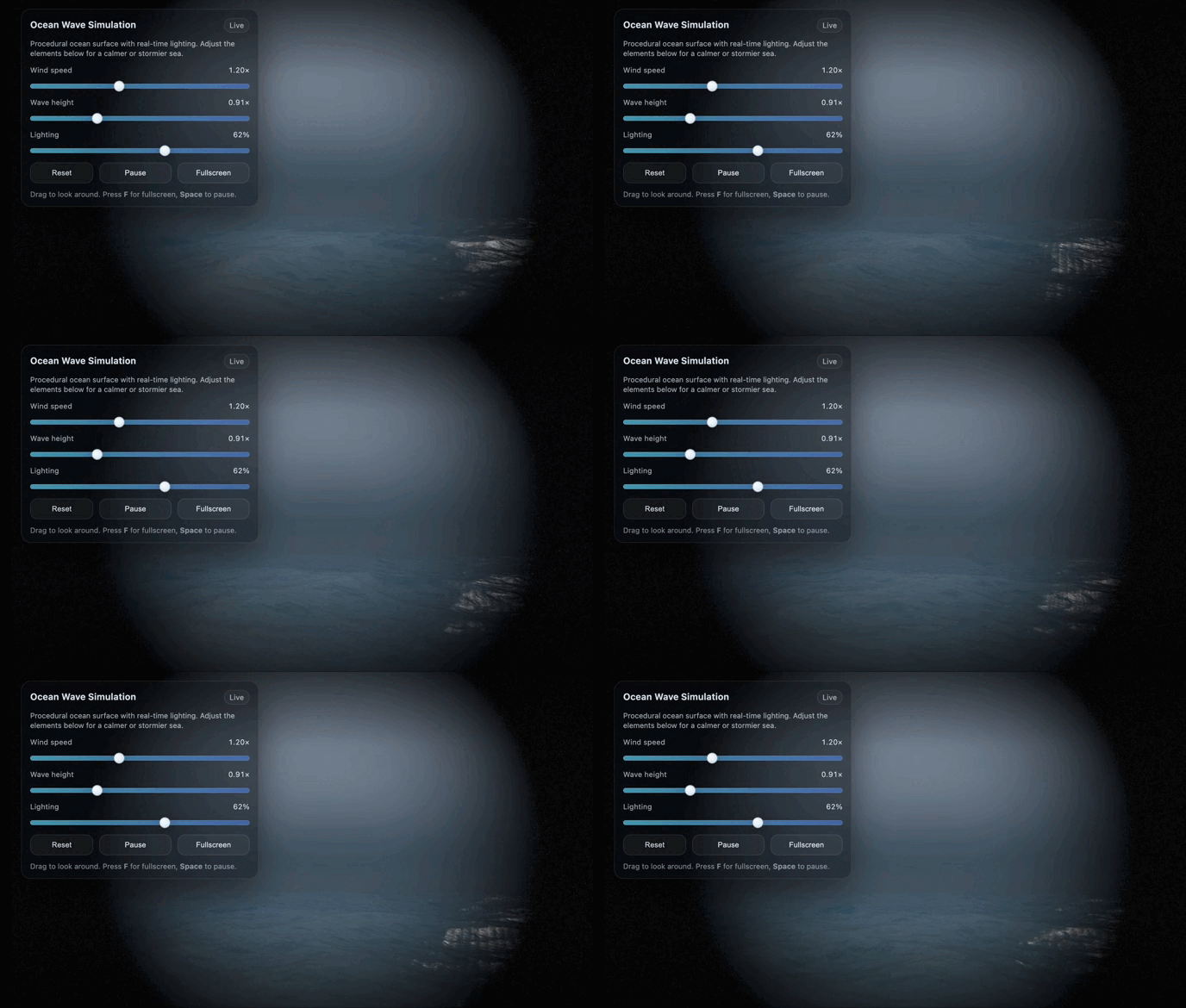
Look what happens when we adjust one of the settings — like the height of the ocean waves:
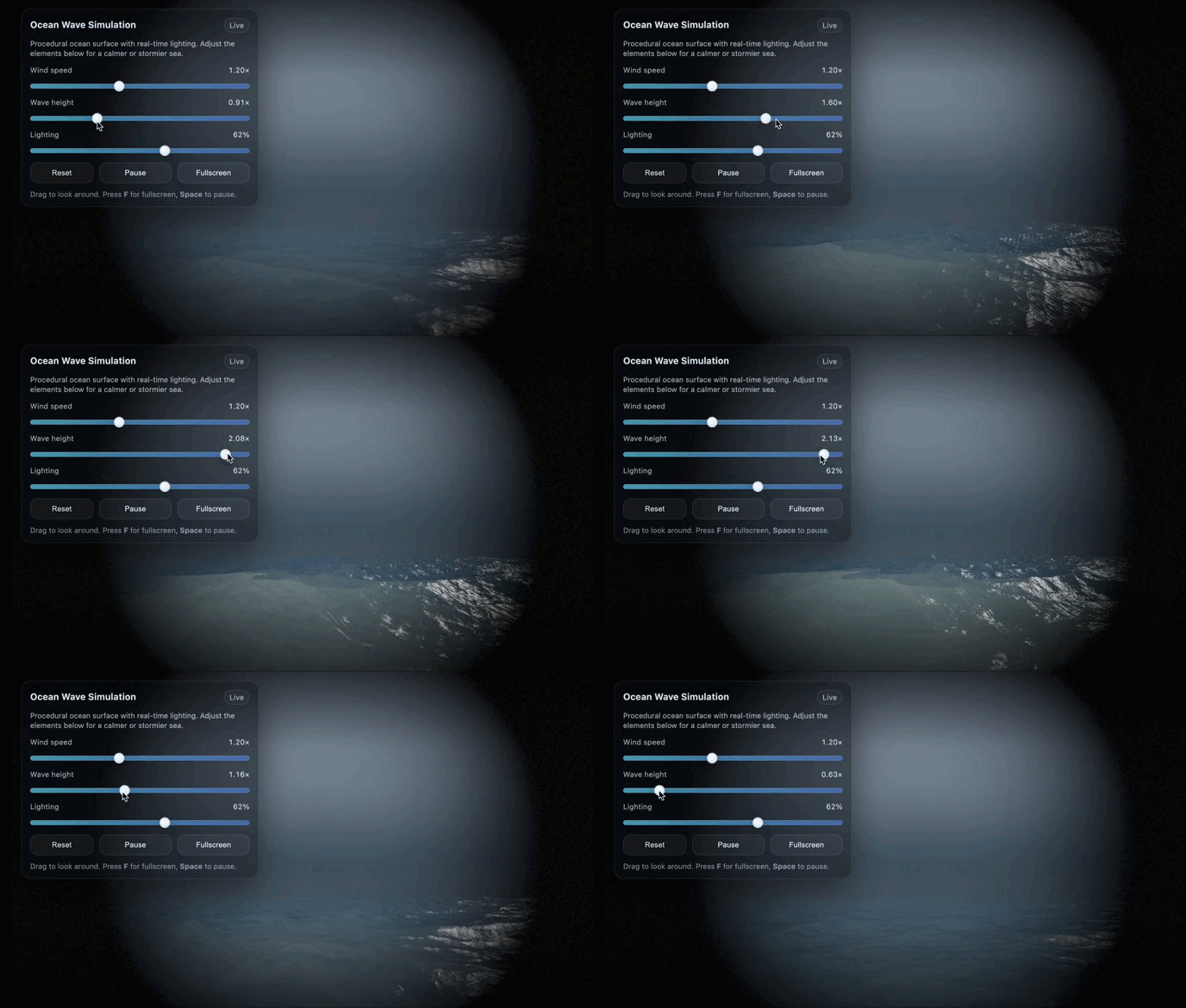
And all this from a single prompt mind you.
This is huge.
Barely a month after the last GPT upgrade from OpenAI and another one is already here.
Google has been at their neck non-stop with major AI upgrade after upgrade — so this is no time to mess around and be complacent.
This model isn’t trying to be a fun novelty — it’s aiming to be a serious coworker with more structured responses.
A sophisticated typing game from a single GPT-5.2 prompt:
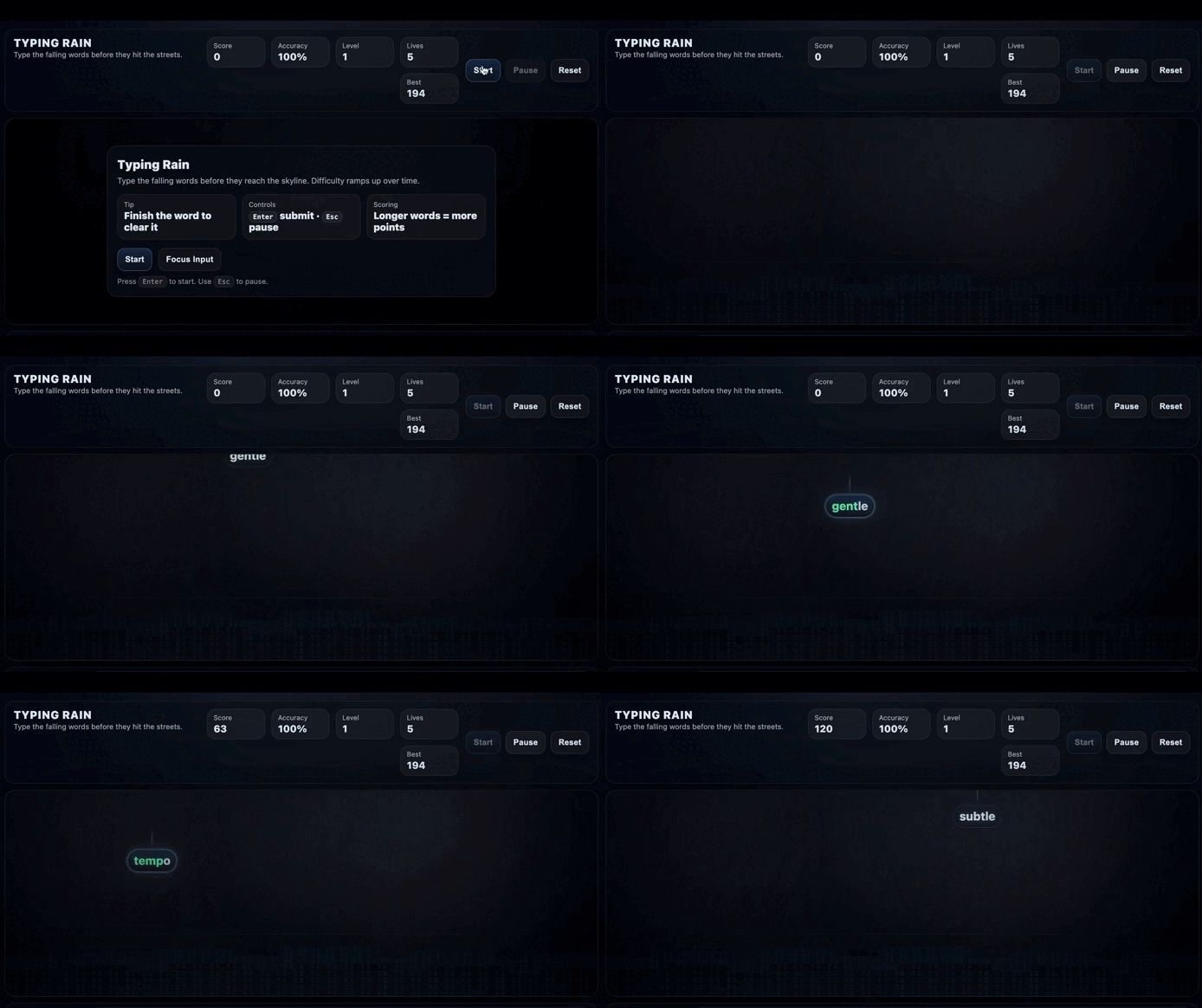
If GPT-5.1 is a sharp assistant then GPT-5.2 is someone you could actually hand a complex project to and expect them to deliver a full, coherent draft back.
What GPT-5.2 actually is
It comes in three main flavors inside ChatGPT:
- Instant — the fast, “answer my question now” mode
- Thinking — slows down to reason, plan, calculate, and work through multi-step tasks
- Pro — the heavyweight, tuned for tough math, science, coding, and research problems
Everything under the hood is upgraded: its reasoning is stronger, its responses are more grounded, and it’s noticeably more consistent on tasks where earlier models sometimes drifted or hallucinated.
Where it genuinely improves
One of the big demos OpenAI pushes is how GPT-5.2 performs on actual knowledge-work tasks — things like building spreadsheets, creating financial models, drafting slides, writing briefs, planning events, or summarizing huge reports.
GPT-5.2 Thinking reportedly matches or outperforms human experts on most tasks, and it does the work far faster. The difference is visible in everyday use: when you ask it for something complex, it now knows how to structure the work instead of just giving a surface-level answer.
Coding
On software engineering benchmarks, GPT-5.2 sets a new high score. It fixes bugs more reliably, handles multi-file reasoning better, and performs more stable refactors. Developers online who use tools like Windsurf, JetBrains IDEs, and other AI coding assistants say it can stick with a problem longer without losing track.
You’ll feel this immediately if you work with front-end code, UI components, or large codebases.
Long context and agent workflows
This is a big upgrade: GPT-5.2 in the API can handle up to 400,000 tokens in one go. That’s hundreds of pages of text, or a genuine codebase, or a giant research bundle.
On top of that, there’s a new feature that lets the model compact long histories so that an agent or assistant can keep working for hours or days without choking on context limits. Practically, this means long-running workflows — customer support, research assistants, data-analysis bots, project managers — are becoming way more feasible.
Science, math, and deep reasoning
GPT-5.2 is now OpenAI’s strongest science and math model. The Pro version in particular handles graduate-level problems with clarity, showing more stable reasoning steps and fewer “pretty but wrong” explanations.
There’s even an example where GPT-5.2 helped with a real research problem in statistical learning theory, which human researchers later verified. It’s not replacing scientists, but it’s clearly becoming a powerful collaborator when guided well.
What about safety?
Safety hasn’t been ignored. GPT-5.2 reduces hallucination rates noticeably and improves responses on sensitive topics like mental health, self-harm, and emotional dependency. The guardrails feel tighter and more consistent.
Still, the usual rules apply: don’t outsource legal, medical, or financial decisions to an AI without human review. The model is powerful, not infallible.
So what does this mean for you?
In simple terms:
- It’s better for real work, not just chat.
- It’s much stronger in code, especially on big or tricky tasks.
- It handles huge documents without falling apart.
- It’s more stable, thoughtful, and accurate across the board.
GPT-5.2 positions itself less as a toy and more as a teammate. It won’t replace an expert human, but for drafting, exploring, planning, coding, and building first versions of complex ideas, it’s easily the strongest general-purpose model OpenAI has released so far.