
I guess it was too soon to call this 4.0 — but don’t let the 3.1 fool you.
This was way more than just a minor upgrade.
This was one of the biggest capability jumps we’ve seen in a while — especially if you care about reasoning, research, and actually shipping well-built, high-quality work.
Everyone has been talking about 1 particular unbelievable improvement with this new update.
Imagine going from scoring 31.1% in a reasoning test… to 77.1% and being the absolute best in the same test just a few months later — but this is what Gemini 3.1 just shocked the world with.
More than a 100% upgrade in capabilities.
And this is abstract reasoning we’re talking about — not memorization or “glorified autocomplete”. It had to solve problems with completely new logic patterns, problems it had never seen before — or something like before.
This is huge.
And this makes the 1 million context window it has even more lethal for coding and every other use case we can think of.
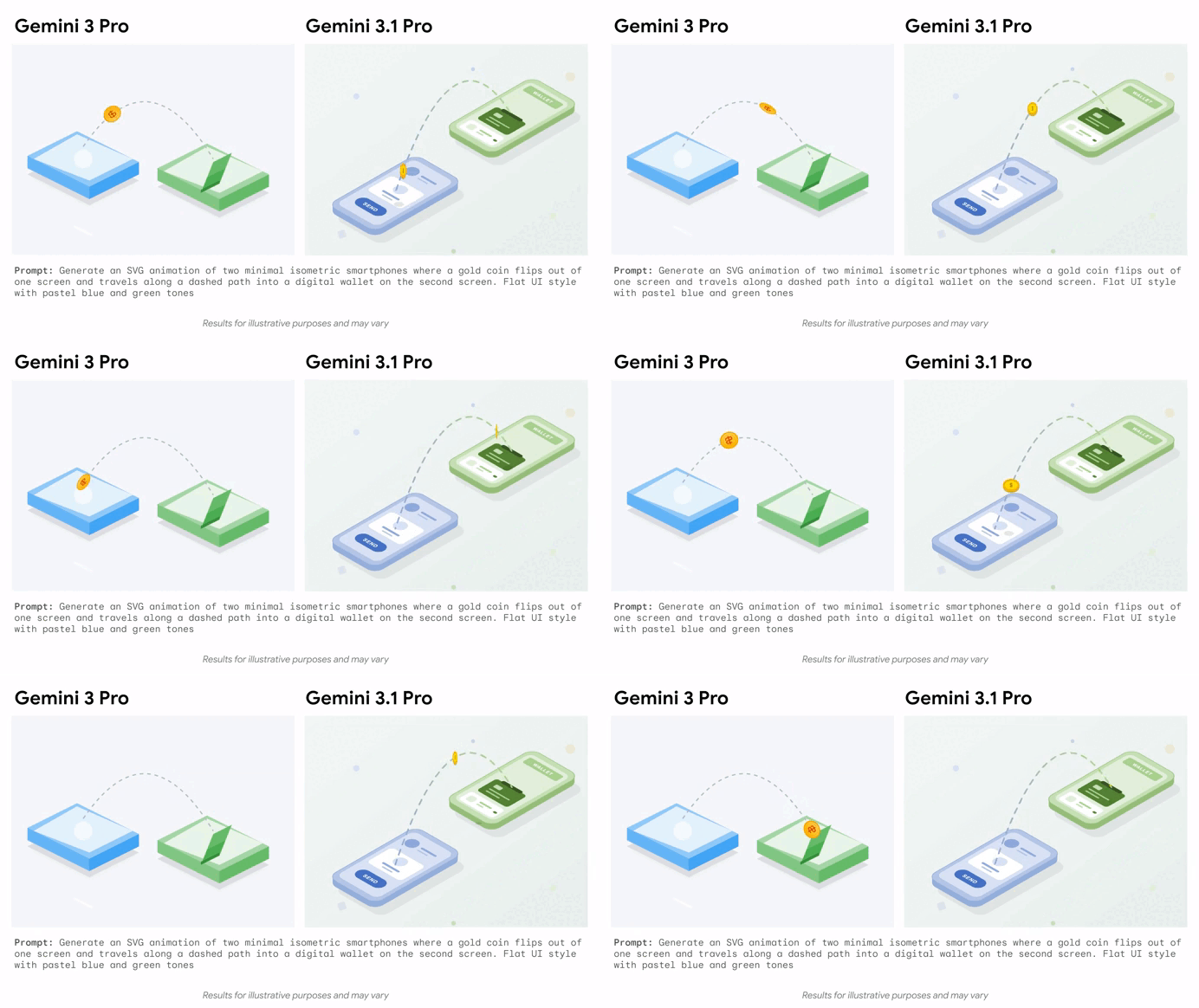
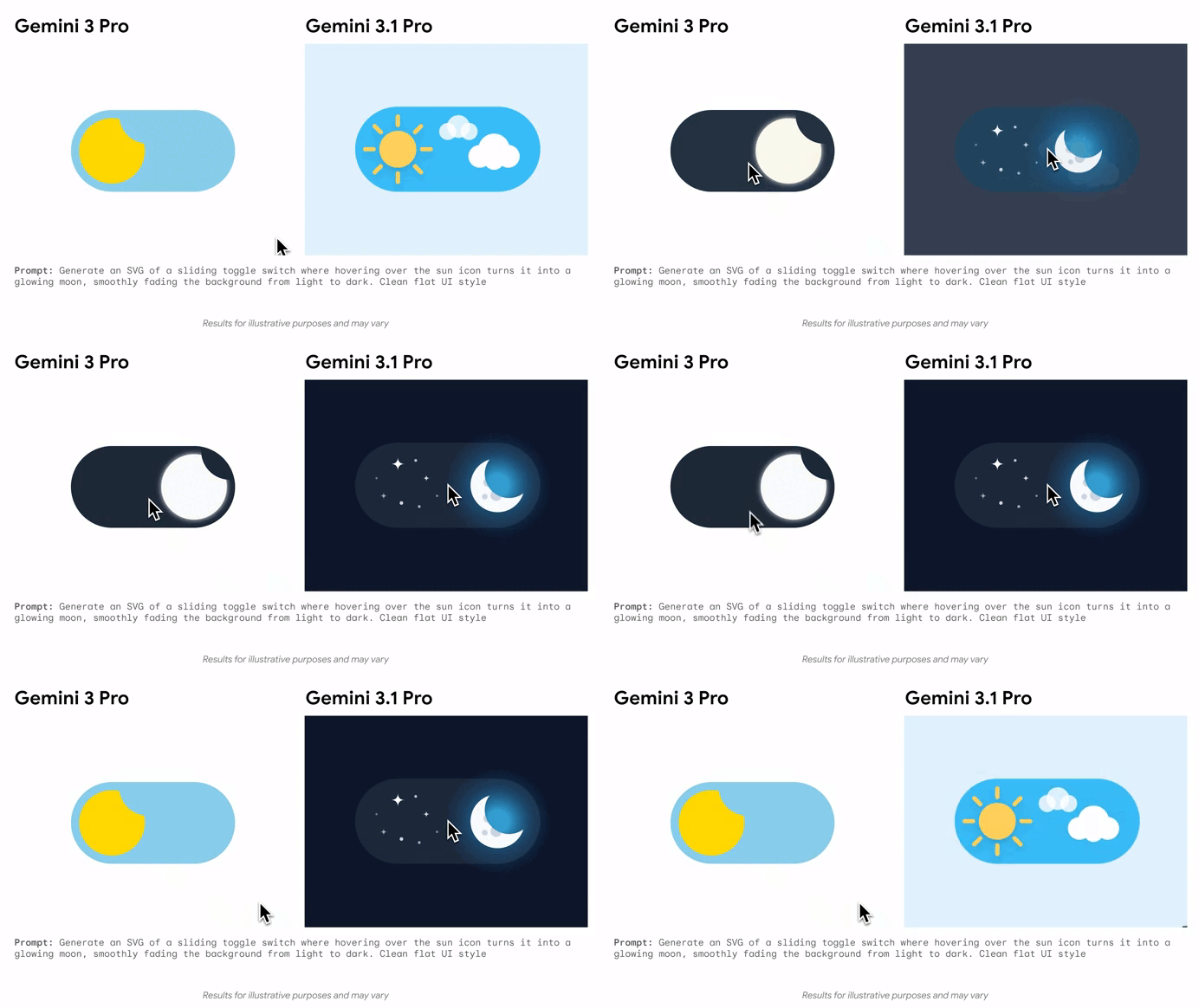
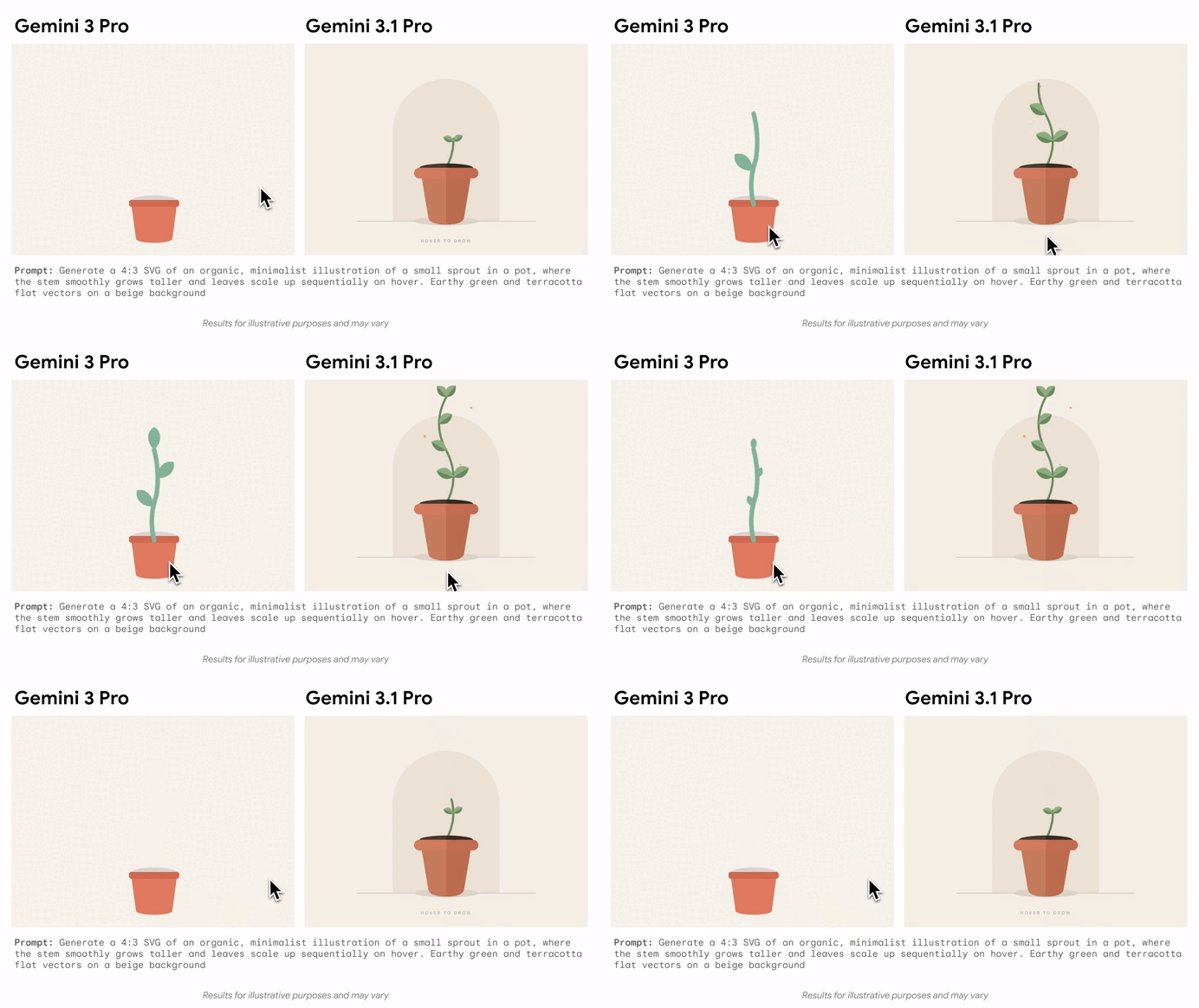
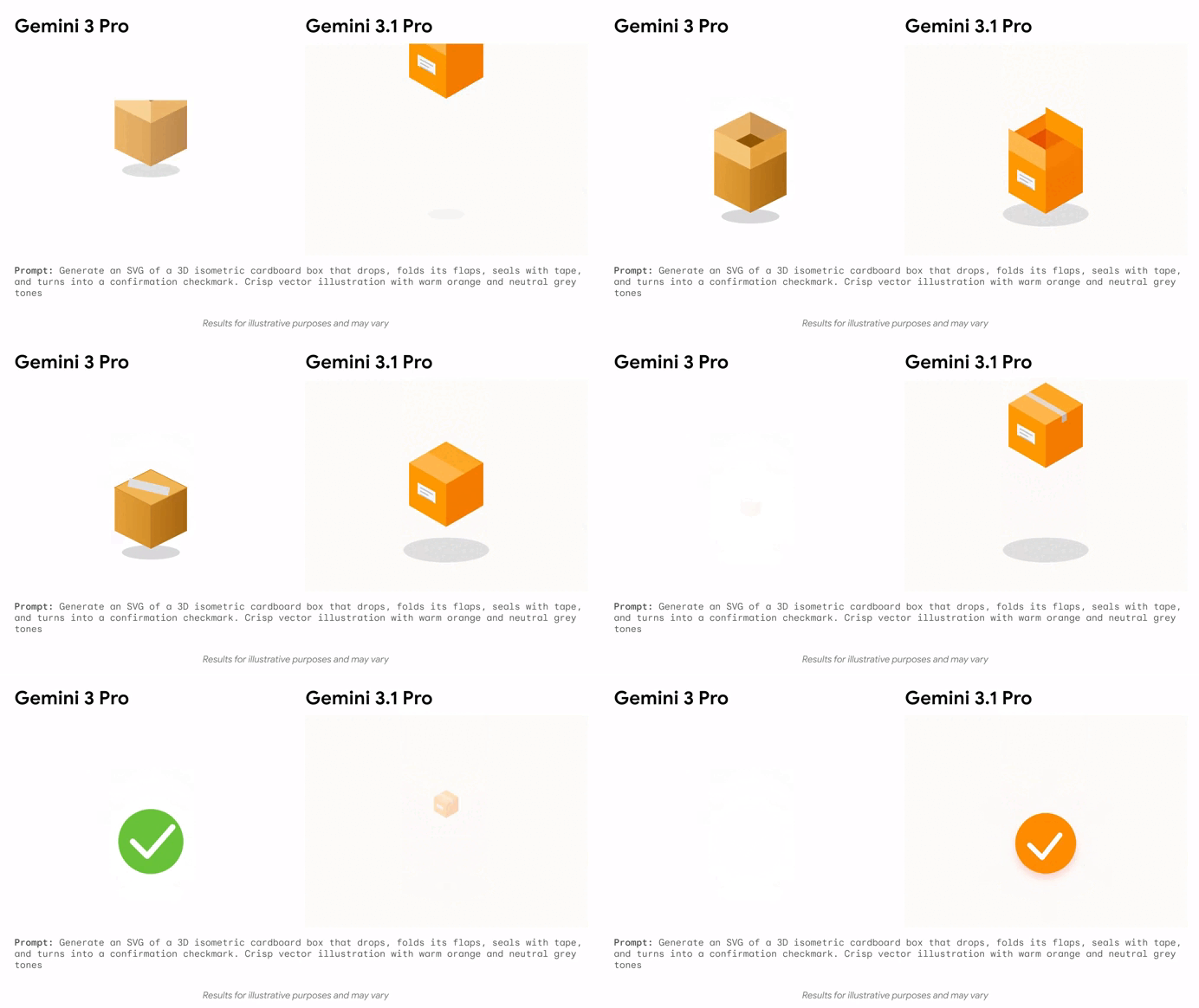
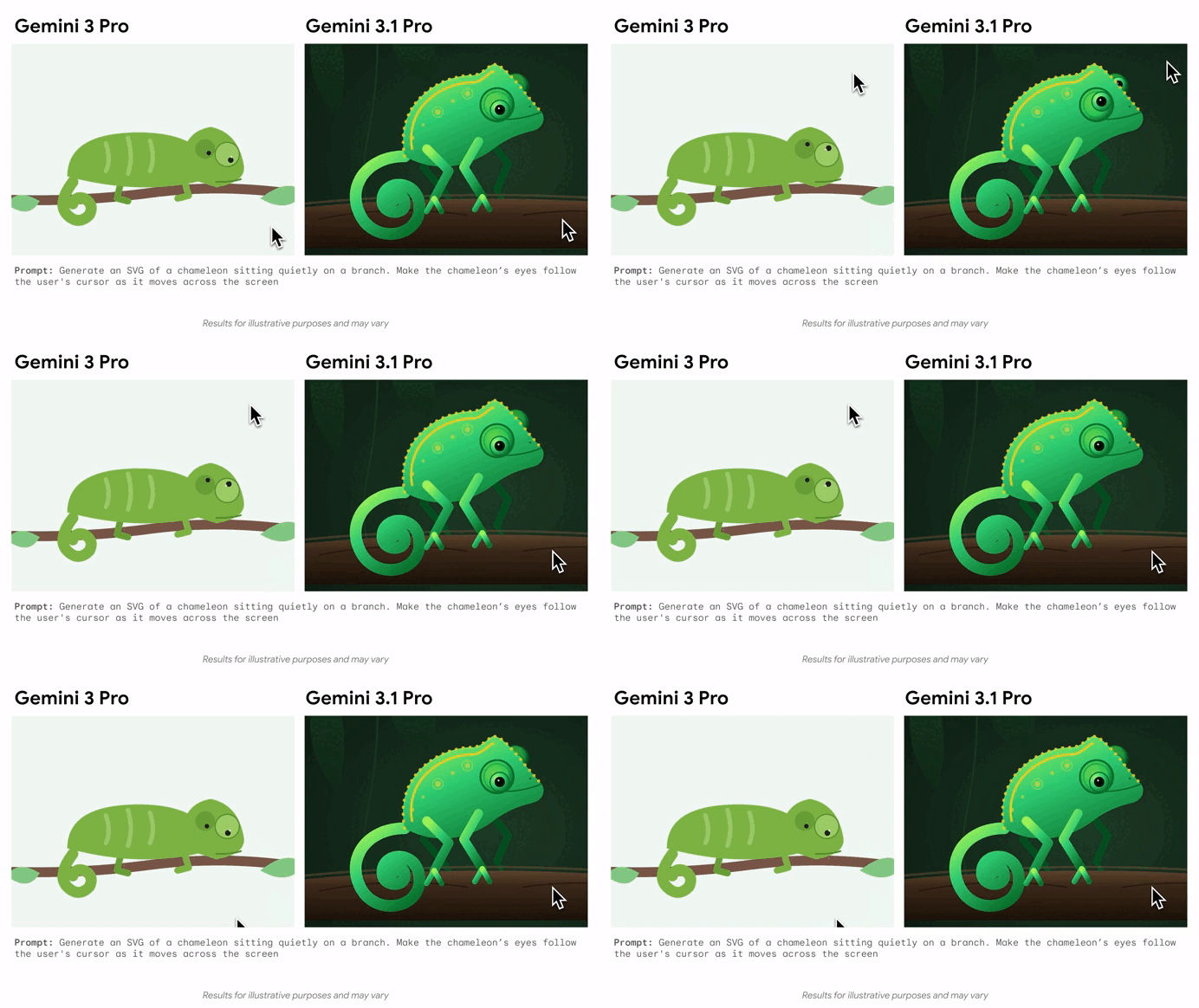
It’s vastly superior to its predecessor in every way. The graphics and SVG generation are so good — which is also a huge win for web developers.
1. Web browsing got dramatically better: 59.2% →…
This one is just as important.
On BrowseComp — a benchmark that measures how well a model can use web tools and navigate information — Gemini 3.1 Pro jumped from 59.2% to 85.9% — overtaking all Claude models, including the recently released Sonnet 4.6.
That’s huge.
The difference between those two numbers isn’t cosmetic. It’s the difference between:
- Surface-level summaries vs. actual synthesis
- Grabbing the first answer vs. cross-checking sources
- Losing context across tabs vs. maintaining a clear research thread
If you use AI for research, competitive analysis, trend tracking, sourcing stats, or building content from multiple references, this upgrade matters a lot.
Better browsing doesn’t just mean “it can search.” It means it’s better at deciding what to search for, what to ignore, and how to combine findings into something coherent.
That’s a big shift.
2. This reasoning upgrade is not a joke
And neither was the test that measured it.
On ARC-AGI-2 — a standard benchmark designed to test abstract reasoning (not pattern regurgitation, but actual problem-solving) — Gemini jumped from 31.1% to 77.1%.
That’s not incremental improvement. That’s a different class of performance.
What does that mean in real life?
It means:
- Fewer moments where the model “almost” understands your problem but misses a key constraint.
- Better step-by-step thinking when tasks require multiple logical hops.
- Stronger performance on planning, debugging, and structured workflows.
- More reliable outputs when you’re building agents or automation.
If you’ve ever felt like an AI model lost the thread halfway through a complex task — this is the kind of upgrade that directly addresses that frustration.
3. Expanded output limits (aka: it can finally finish the job)
One of the most powerful upgrades — this model can now generate more output tokens than ever in a single go.
Gemini 3.1 Pro supports:
- Up to ~1 million tokens of input context
- Up to 65,536 tokens of output
In practical terms?
You can feed it massive documents, long threads, multi-file codebases, research dumps — and it doesn’t immediately choke.
And when it generates output, it doesn’t stop halfway through a spec or give you a half-written guide that needs three “continue” prompts.
For developers, creators, educators, founders, and product teams, this means you can:
- Generate full-length documentation
- Draft detailed product requirement docs
- Create structured courses or long-form content
- Produce complex code scaffolds in one go
The difference between “smart” and “usable” is often just output capacity. This pushes it firmly into usable territory.
4. Native SVG and creative coding
This part is honestly fun — and useful.
Gemini 3.1 Pro can generate native SVG animations directly from text prompts.
Not screenshots. Not image files. Actual, editable, website-ready SVG code.
Why does that matter?
Because SVG is:
- Scalable (perfect at any resolution)
- Lightweight
- Editable
- Animatable
- Easy to embed into websites and apps
That means you can prompt:
“Create an animated SVG of a pulsing network graph with gradient nodes.”
And get code you can drop straight into a project.
For designers, indie hackers, frontend devs, educators, or anyone building interactive content, this opens up a new workflow:
Prompt → tweak → ship.
It’s creative coding without the blank-page paralysis.
And it hints at something bigger: AI models that don’t just generate text or images — they generate real artifacts you can deploy.
Gemini 3.1 Pro is not just “a bit smarter”.
It’s:
- Dramatically better at abstract reasoning
- Dramatically better at tool-based research
- Capable of handling much larger context and outputs
- More useful for real creative and technical production
If you build things, research things, or create things, this version is meaningfully different from what came before.
And if this trajectory continues, we’re moving from “AI that assists” toward “AI that actually executes complex workflows with you.”