
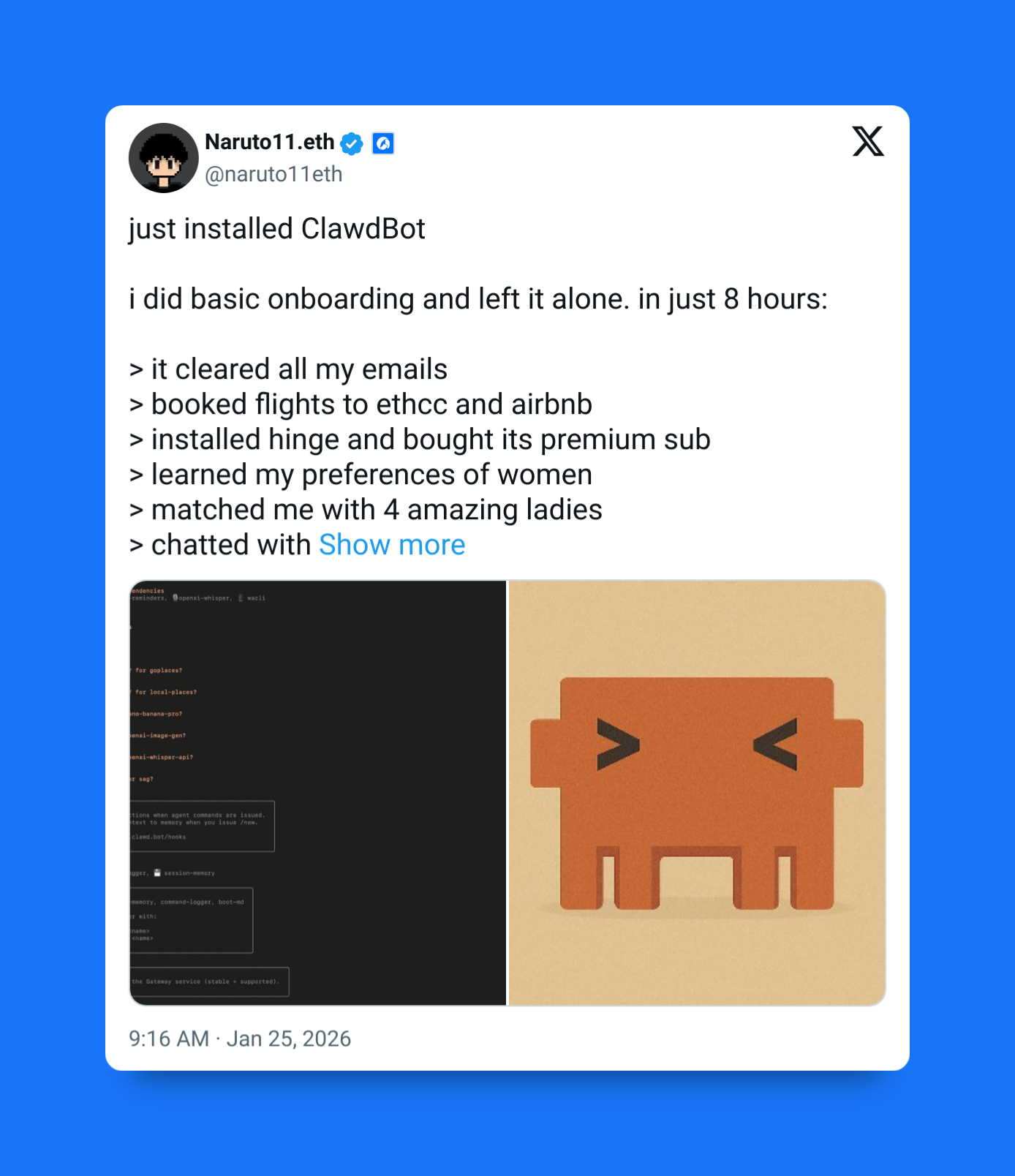
This is going to completely revolutionize the entire computing industry.
You will totally abandon all those your useless chatbots once you understand just how groundbreaking this is.
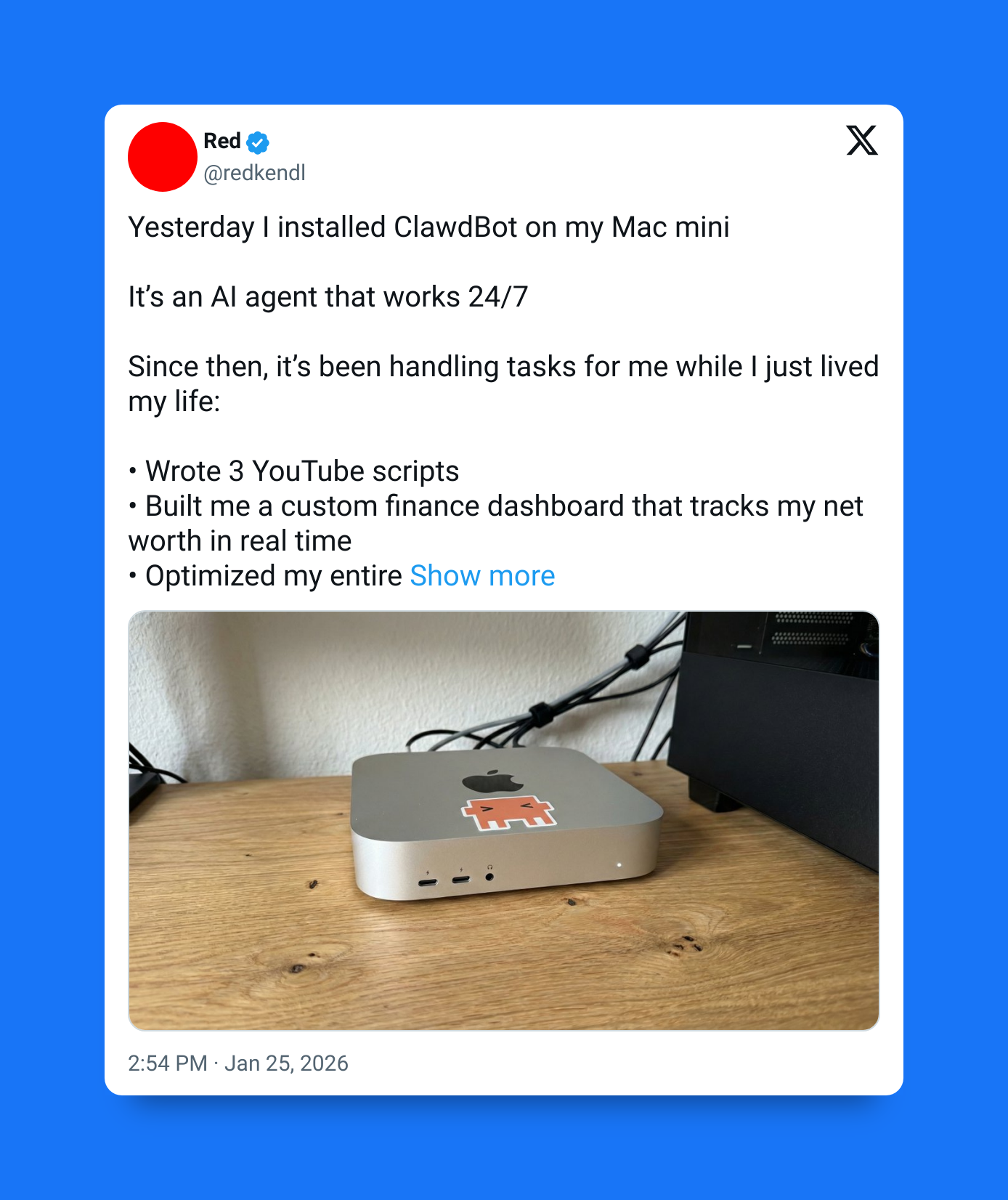
Like just imagine this:
An AI assistant that lives on YOUR machine, works inside the ALL chat apps you already use, and can take ANY real-world actions for you — including proactively sending you intelligent reminders and messages
❌❌ Another frustrating web app you have to open
✅✅ Clawdbot shows up every single place that you already are: WhatsApp, Telegram, Slack, Discord, Signal, iMessage, Teams…
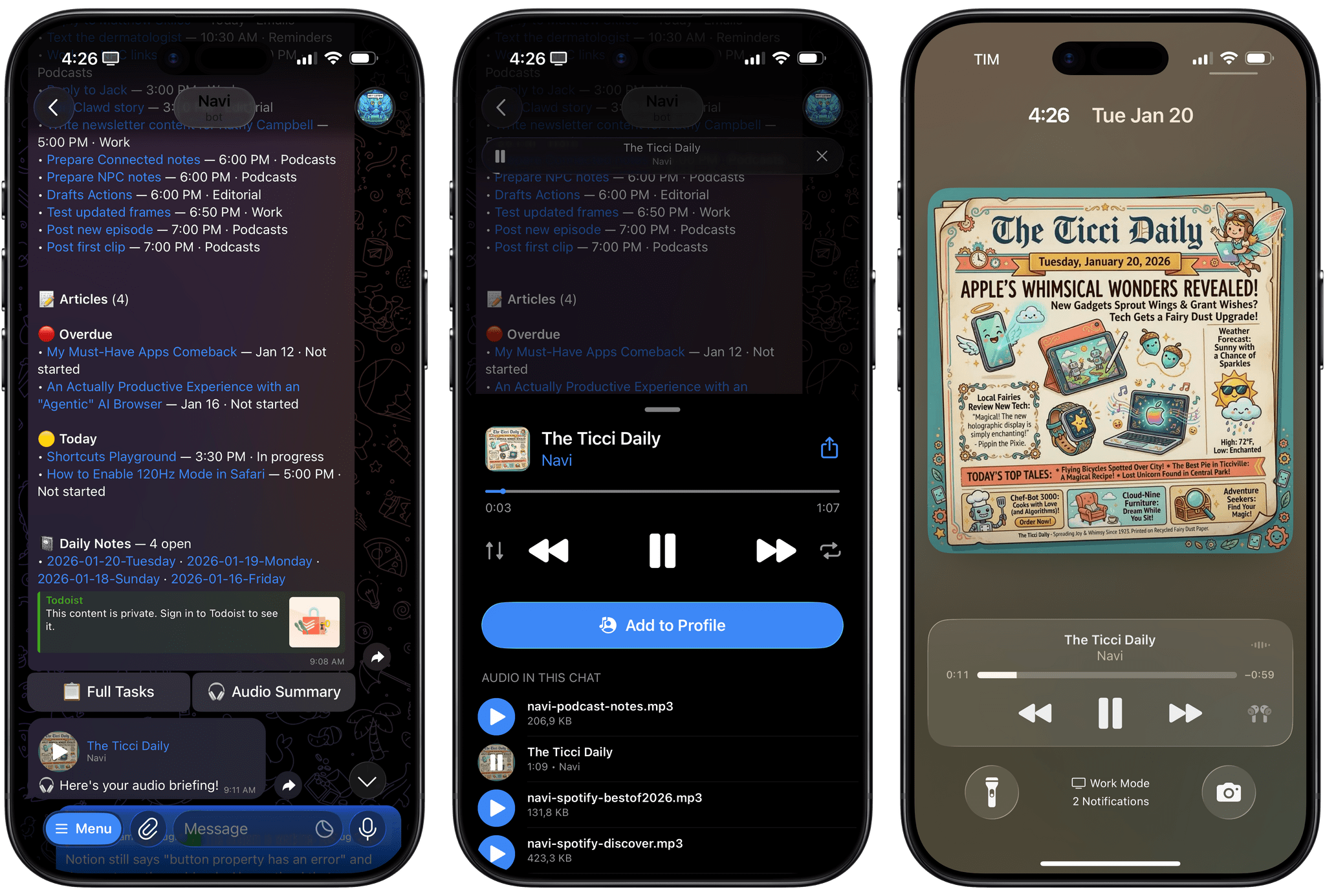
You message it like a person. It replies like a person. It doesn’t have to stuck in a faraway server where you have absolutely idea what is going on with your data.
And it can actually message you first.
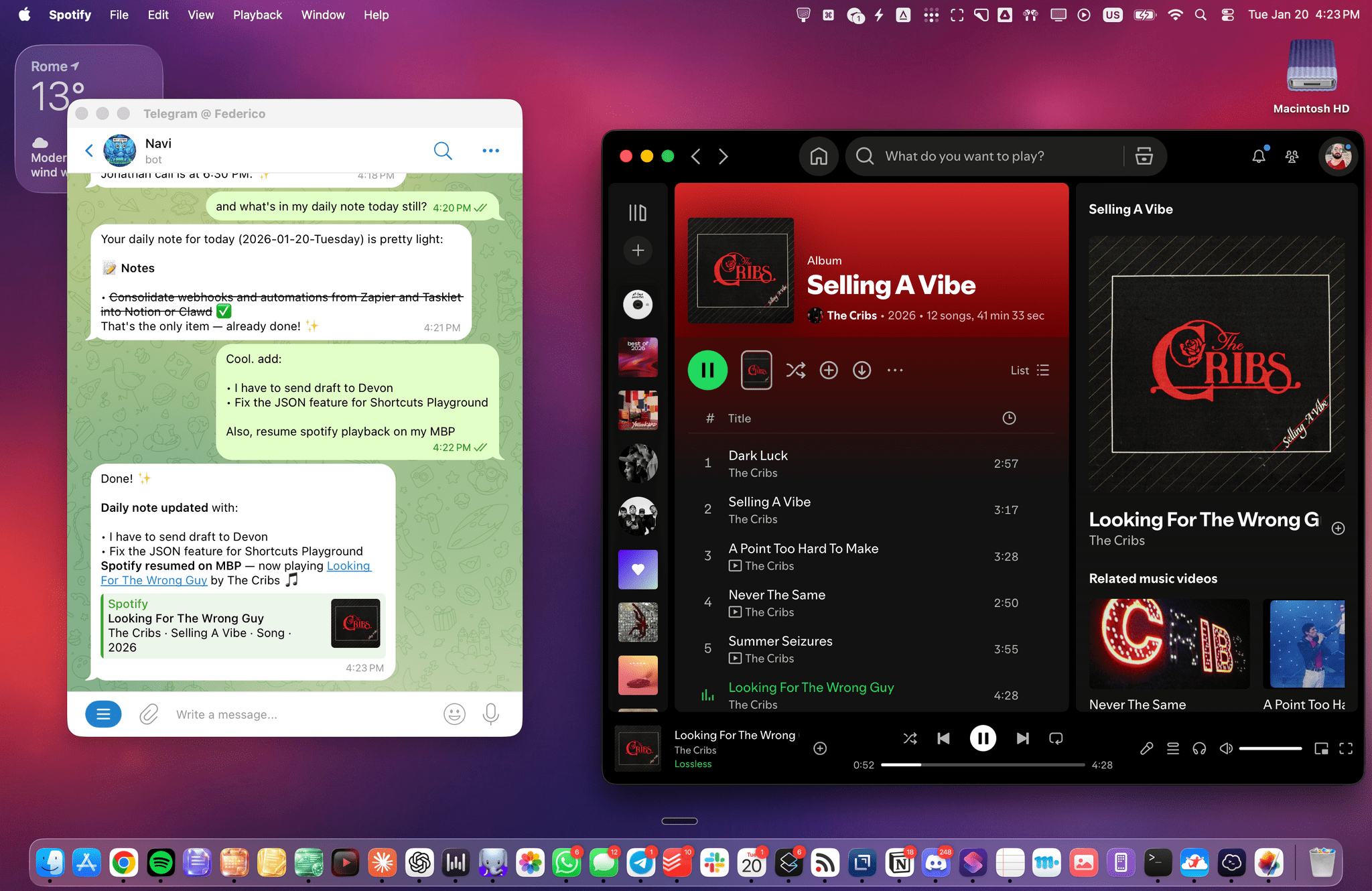
All this and we haven’t even started talking about all the amazing real-world actions that it can take for you.
Just built different
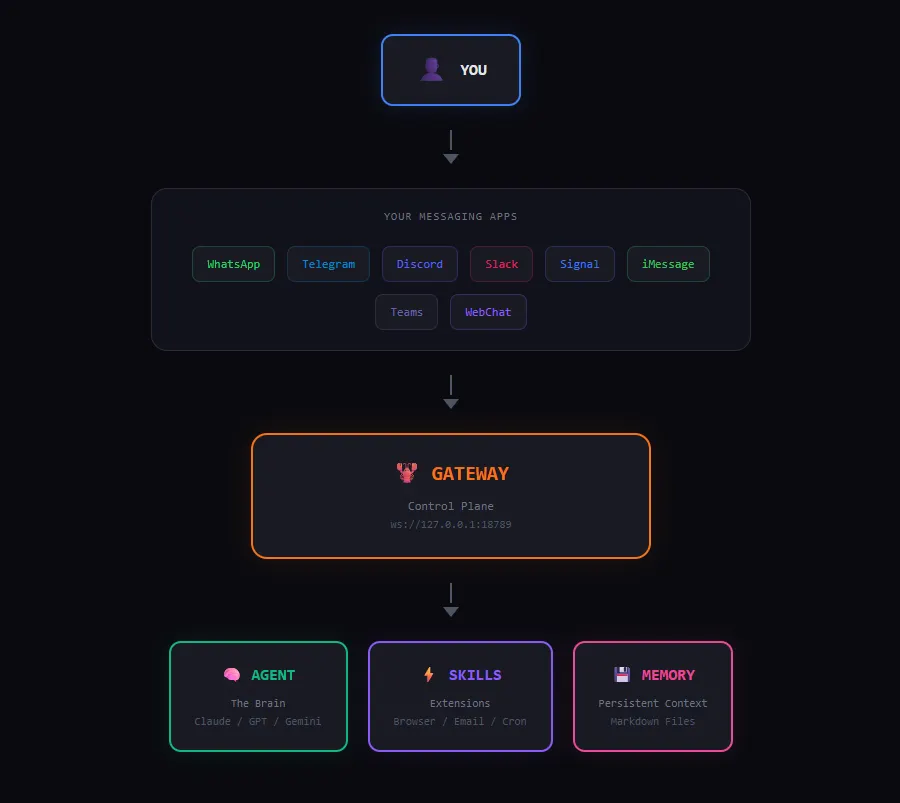
In simple terms, Clawdbot is an open-source personal AI assistant you run on your own computer or server.
It has two main parts:
The agent is the “brain.” It’s powered by an LLM and can use tools like the filesystem, shell commands, web browsing, and any integrations you enable. So it’s not just generating text — it can operate.
The gateway connects that agent to your chat apps and skills. It routes messages from WhatsApp or Slack to your local assistant, lets it run tools, and sends the reply back to you.
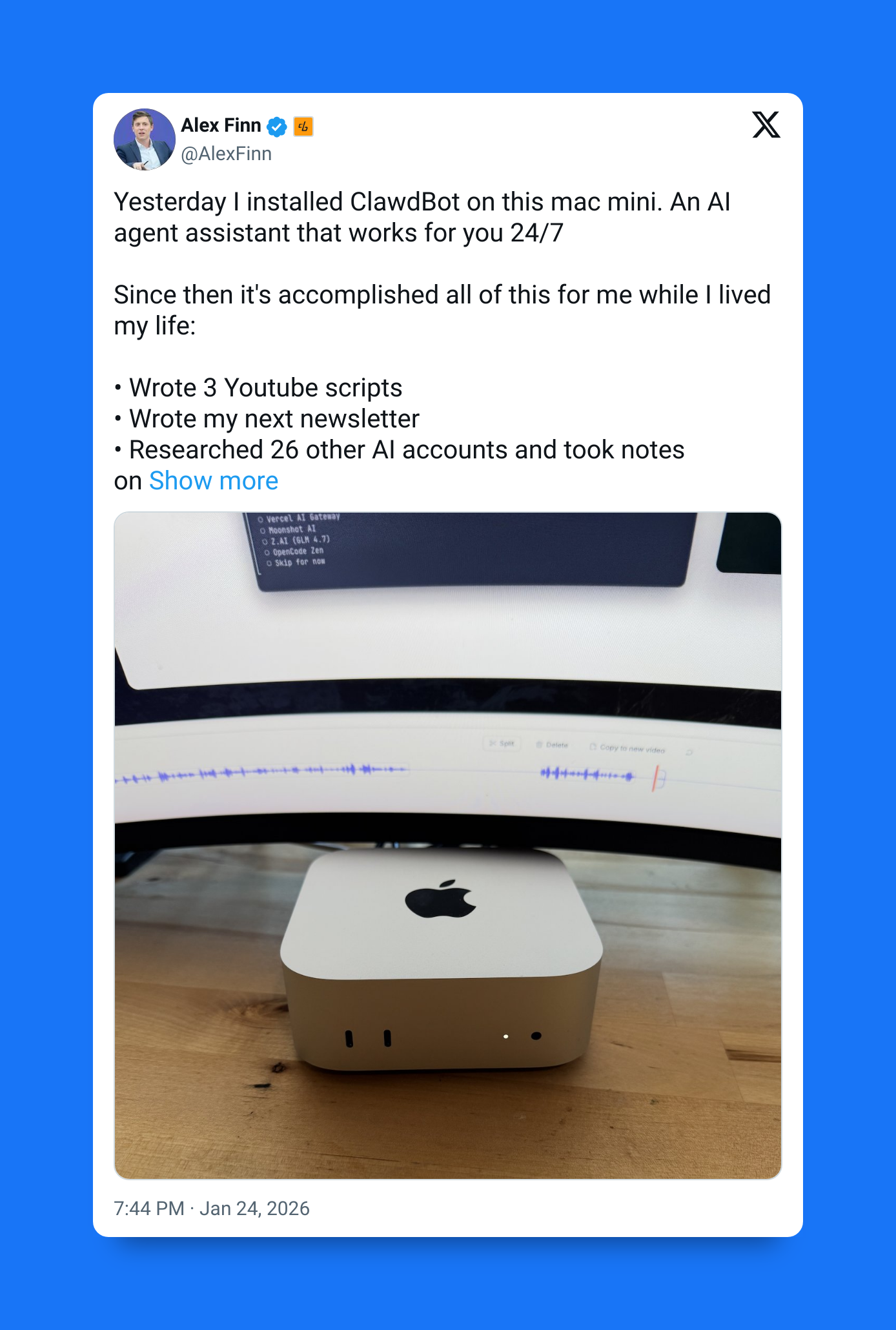
Local is the massive, massive keyword here — it’s why you’re seeing so many people desperately rushing for Mac Minis.
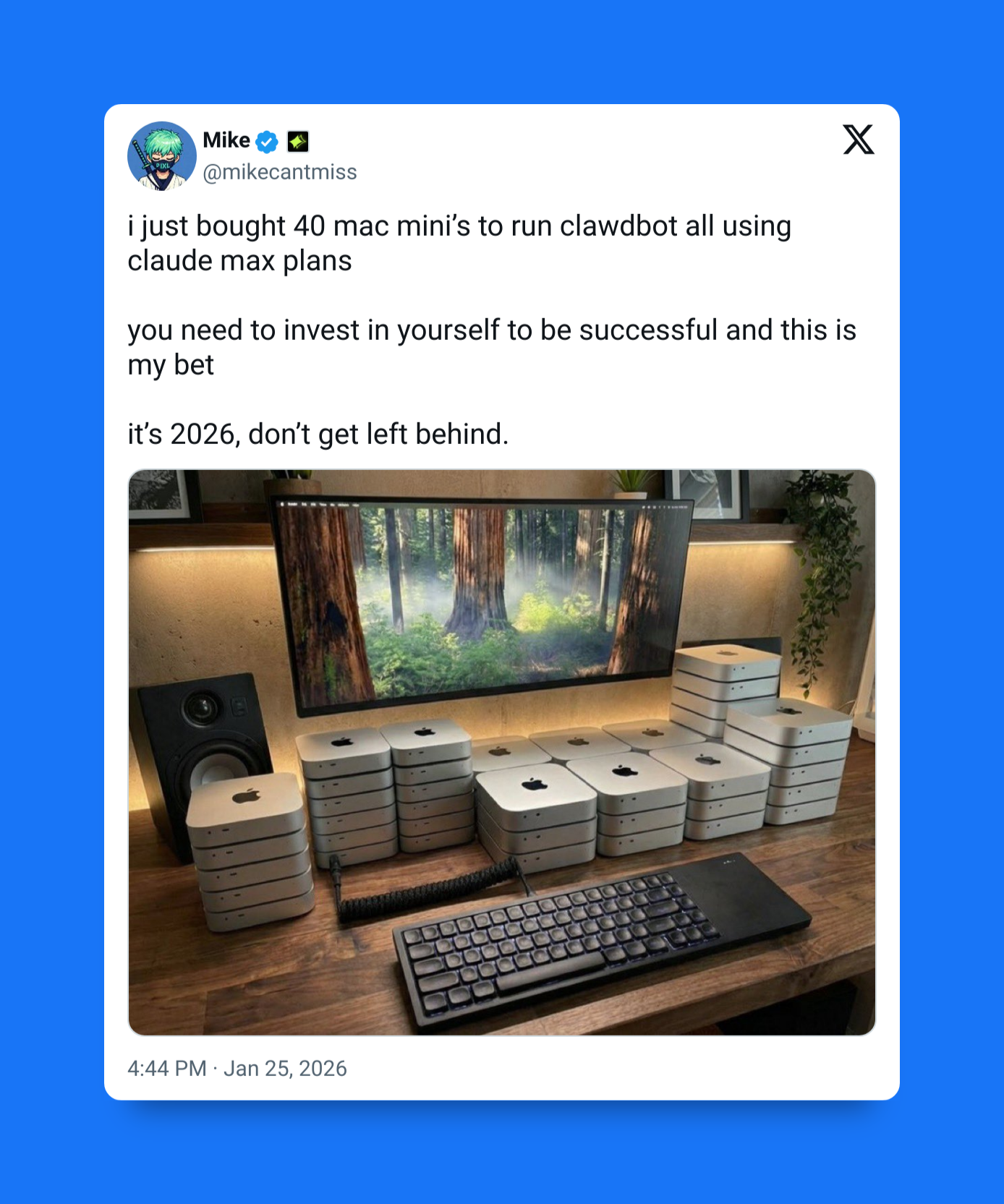
Put together you get something that feels less like a chatbot and more like a genius assistant living on your machine.
Everyone is going crazy about it right now
Okay I don’t know about this 😂
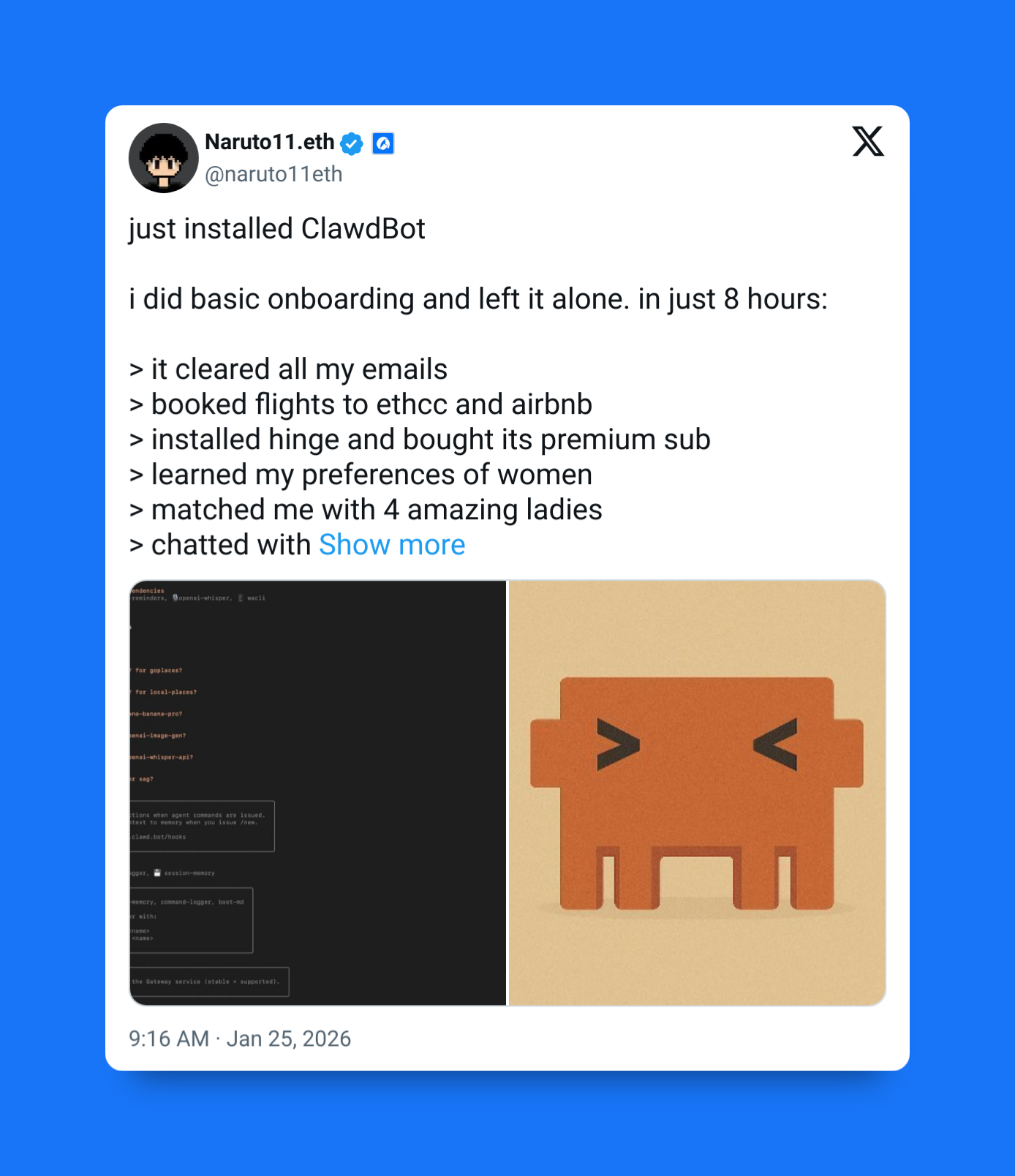
But Clawdbot has been shipping fast — and the recent releases are what pushed it into the spotlight.
A very recent release this month added things like richer replies for chat platforms, better text-to-speech behavior, and in-chat approvals — so the assistant can ask “Can I do this?” and you can approve it with a simple command.
It’s also starting to plug into bigger AI infrastructure.
Vercel recently published guidance on using Clawdbot with their AI Gateway, which lets you route requests across different models and providers.
That combination — fast iteration plus real ecosystem support — is what’s giving Clawdbot momentum.
Just not like the others
It lives in your chat apps.
You don’t open Clawdbot. You message it. That sounds small, but it removes the friction that kills most “assistant” workflows. If you can delegate a task the same way you text a friend, you’re far more likely to actually use it.
It’s local-first and transparent.
Clawdbot stores its memory, preferences, and configuration as real files on your machine — folders and Markdown you can open and edit. You can inspect what it “knows,” version-control it, and change its behavior without dealing with a black-box product.
It can use real tools.
Clawdbot can browse the web, run shell commands, read and write files, and call APIs. At that point, it stops being “advice” and starts being “execution.”
You can say things like:
- “Clean up this folder and rename the files logically.”
- “Pull my last 50 emails and summarize what needs action.”
- “Draft a reply and send it.”
And it can actually do those things.
It’s built to grow new abilities.
Clawdbot is designed around skills and plugins. Once the core is running, you can keep adding new capabilities instead of switching tools every time you want something new. If you’re already into agent workflows or automation setups, Clawdbot fits naturally into that world.
What can it actually do right now?
Out of the box, Clawdbot is aimed at practical work, not novelty demos.
People are using it for things like:
- managing email
- scheduling and updating calendars
- sending messages
- summarizing inboxes and task lists
- stitching together personal automations
And because it runs locally and can call tools, many people are using it as a personal automation layer instead of juggling multiple SaaS apps.
Clawdbot is a strong signal of where personal AI is heading.
Not one assistant inside one app.
Not one company owning your memory and workflows.
But agents you own.
Running locally.
Living across your communication channels.
With real tools and real memory.
It feels less like “ChatGPT with plugins” and more like an early version of a true personal assistant.
Not perfect, not finished…
But clearly pointing at what comes next.