
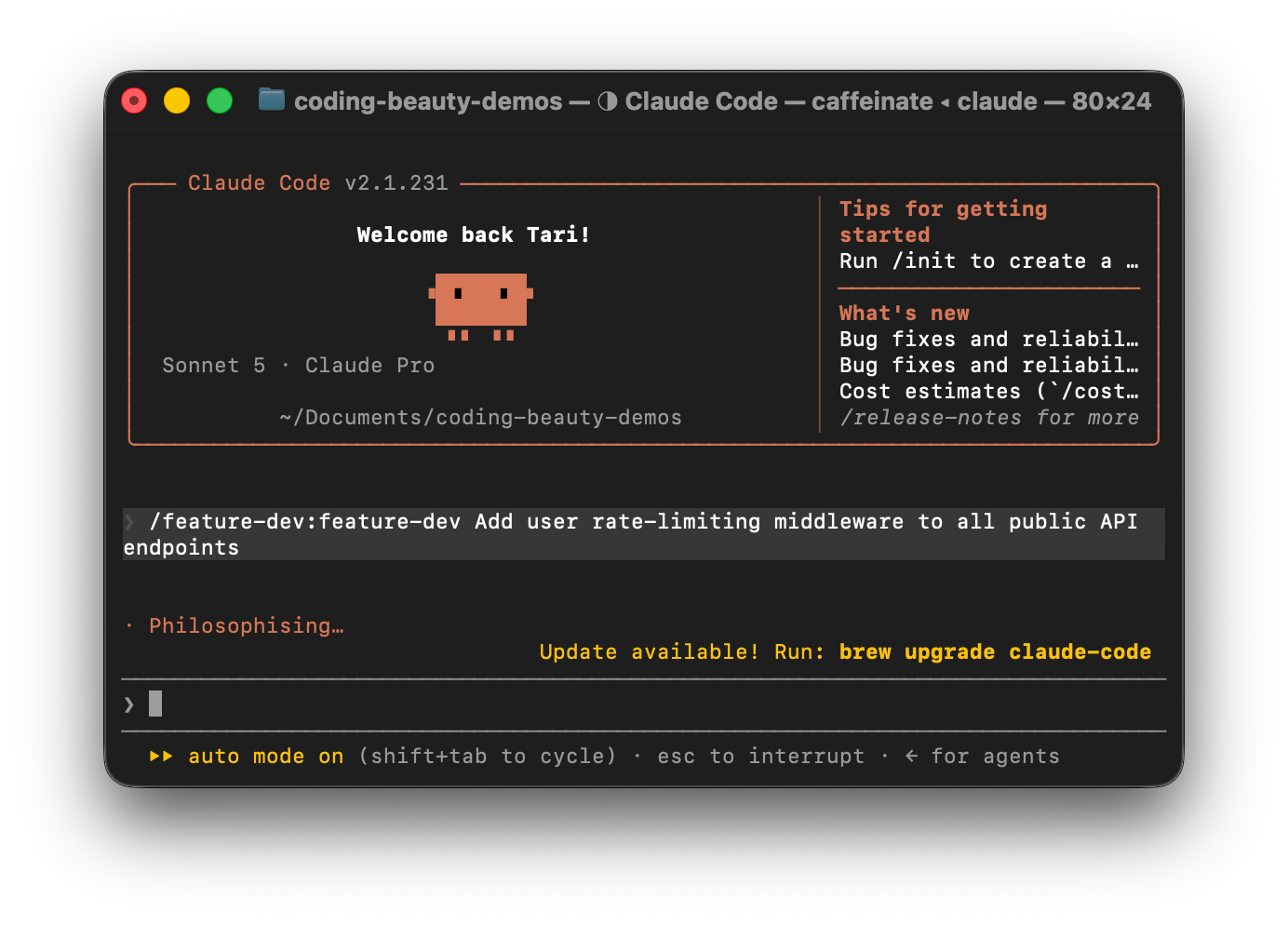
This is one of the most essential skills that every developer should have.
The /feature-dev skill plugin makes you write code with far fewer mistakes, spend less time fixing AI-generated code and make much better architectural decisions.
It does this through specialized AI agents that handle different tasks and a structured seven-step workflow that takes you from understanding your codebase to building and reviewing your feature.
1. Multi-agent specialization: Better codebase understanding and fewer mistakes
Normally one AI agent handles everything from reading your code to planning and reviewing it.
Feature Dev uses three specialized agents:
-
code-explorer: Goes through your codebase to understand how things work and trace dependencies without changing files. -
code-architect: Plans the feature and suggests different approaches while spotting possible problems. -
code-reviewer: Checks for bugs and type issues. It also looks for security risks and possible regressions.
This lets each agent focus on one task instead of handling everything in the same context.
For us developers this means fewer mistakes caused by missing context. It also reduces duplicate code and the risk of breaking existing features.
2. Seven-step workflow: Less back-and-forth and more predictable development
Feature Dev doesn’t just take your prompt and start coding.
It follows seven steps:
- Discovery: Understand what you want to build.
- Codebase exploration: Look through your existing code.
- Clarifying questions: Ask about anything that’s unclear.
- Architecture: Plan how to build the feature.
- Implementation: Write the code.
- Quality review: Check the code and run relevant tests.
- Summary: Explain what changed and prepare the work for review.
This gives you a clear picture of what’s happening at each stage.
Instead of constantly correcting the AI with new prompts you get a more organized process. You can review important decisions and catch problems early.
3. Upfront clarification: Less rework and fewer wasted hours
One frustrating thing about AI coding tools is how quickly they make assumptions.
Say you ask Claude to add file uploads to your app.
It should first ask questions like:
- What file types should users upload?
- What’s the maximum file size?
- What happens when an upload fails?
- Where should the files go?
A regular AI assistant might make these decisions without asking you.
Feature Dev asks questions before writing code so you can clear up missing requirements early.
This means less time fixing misunderstood requirements and fewer unnecessary code changes.
It’s easier to answer a few questions upfront than to rewrite several files because the AI made the wrong assumptions.
4. Architectural trade-offs: Less technical debt and more control
Instead of choosing one approach and immediately writing code the code-architect agents explore different ways to build your feature.
They compare things like:
- Complexity: How difficult is the solution?
- Maintainability: How easy will it be to change later?
- Existing code: How much needs to change?
- Trade-offs: What do we gain or lose?
You then choose what makes the most sense for your project.
Say you’re adding caching. You might prefer a simple in-memory solution instead of Redis depending on your app’s needs.
This helps us avoid unnecessary complexity and technical debt while keeping you in control of the architecture.
5. Persistent artifacts: Easier handoffs and less lost context
One problem with AI coding sessions is losing track of decisions when you pause your work or hand it over to a teammate.
You can make Feature Dev more useful by pairing it with Markdown files like:
-
proposal.md: What we’re building and why. -
design.md: How we’ve decided to build it. -
tasks.md: What’s done and what’s left.
Feature Dev doesn’t create these files by default. But you can combine it with tools like OpenSpec or your own instructions.
This makes it easier to resume work and share plans with teammates. You can also review code against the original design without digging through a long AI conversation.
Final thoughts
Feature Dev gives us a clearer process and more control over how we build features with AI.
You might not need it for small fixes. But for complex features it can save time and help you avoid unnecessary mistakes.
The goal isn’t just to write code faster. It’s to spend less time fixing mistakes and more time building the right thing.