
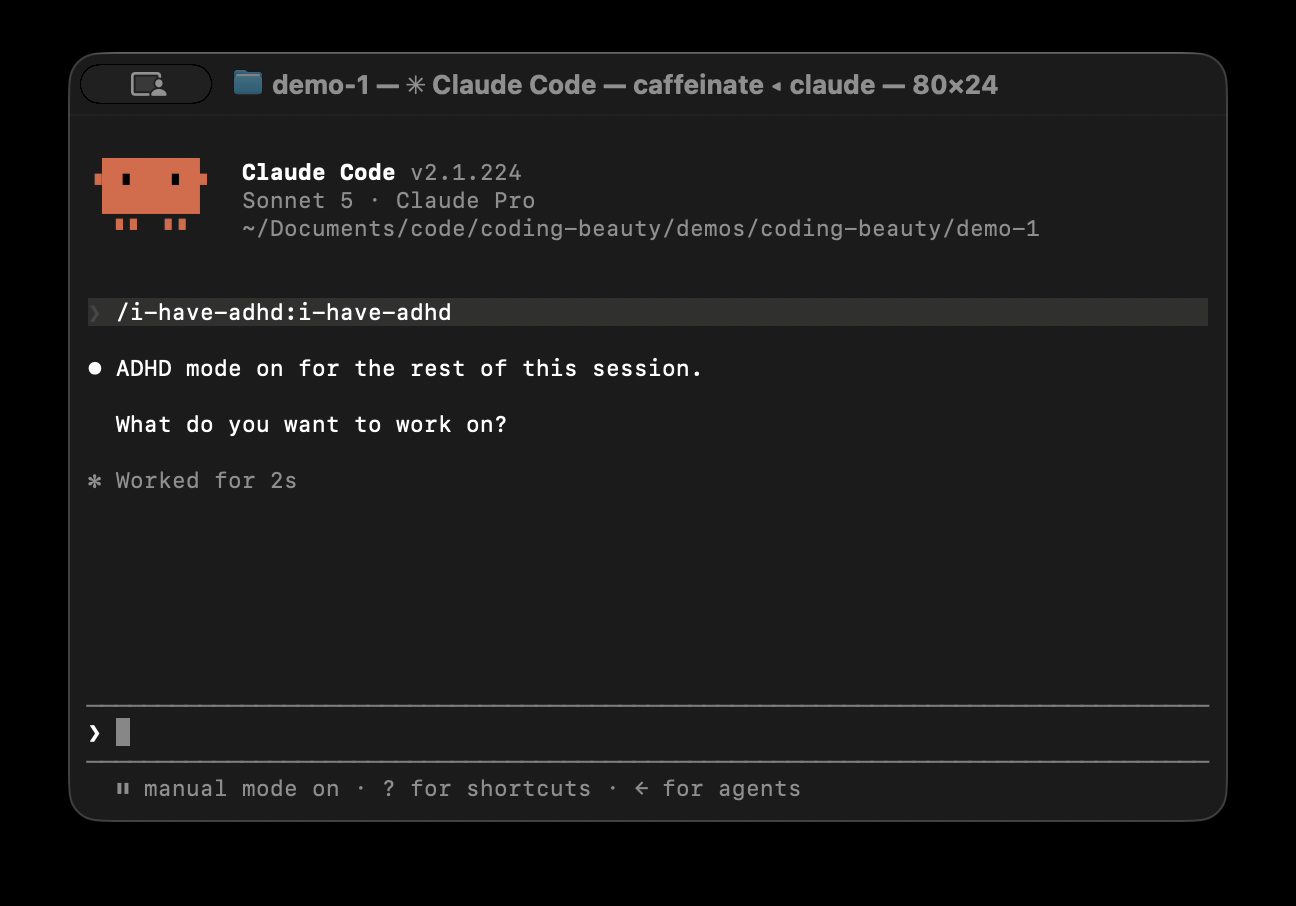
This new viral Skill is an absolute game changer for Claude Code.
The I Have ADHD Skill massively upgrades the quality and clarity of Claude’s responses by encouraging it to communicate in a much more direct, structured, and action-oriented way.
It removes all the fluff and goes straight to the point — saving you so much token costs and improving your mental model of the task at hand.
The crucial problem it’s here to solve
AI coding assistants often answer simple questions with long explanations before getting to the solution.
That style can be useful for learning — but when you’re debugging, shipping features, or reviewing code, it creates unnecessary friction.
The “I Have ADHD” skill solves that by encouraging Claude to prioritize the next action instead of lengthy context.
How the Skill works
The skill dramatically changes how Claude structures its responses.
Instead of long introductions, it’s encouraged to:
- Start with the immediate next step.
- Break work into numbered tasks.
- Remove unnecessary filler.
- Show progress throughout a task.
- Finish with one clear next action.
You end up getting an AI that isn’t just intelligent, but also extremely easy to work with.
Why so many developers love it
The project quickly gained over 10,000 stars on GitHub within days of launch.
Because it addresses a frustration many developers have long had with AI assistants: too much explanation and not enough execution.
Whether you’re debugging, refactoring, or navigating a new codebase, concise responses reduce cognitive load and help you stay focused.
How to get started with the I Have ADHD skill
Install it easily with these commands:
claude plugin marketplace add ayghri/i-have-adhd

claude plugin install i-have-adhd@i-have-adhd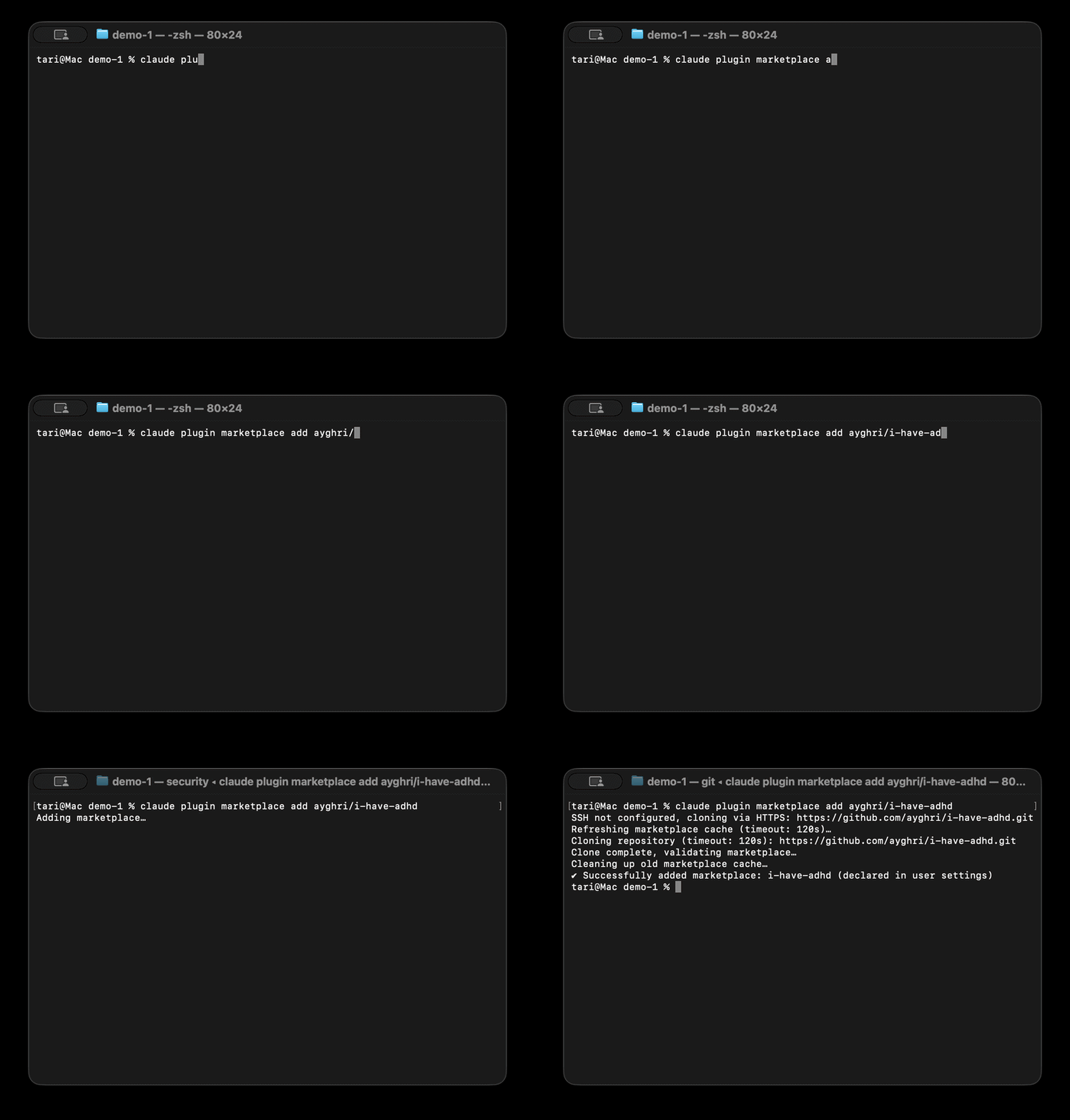
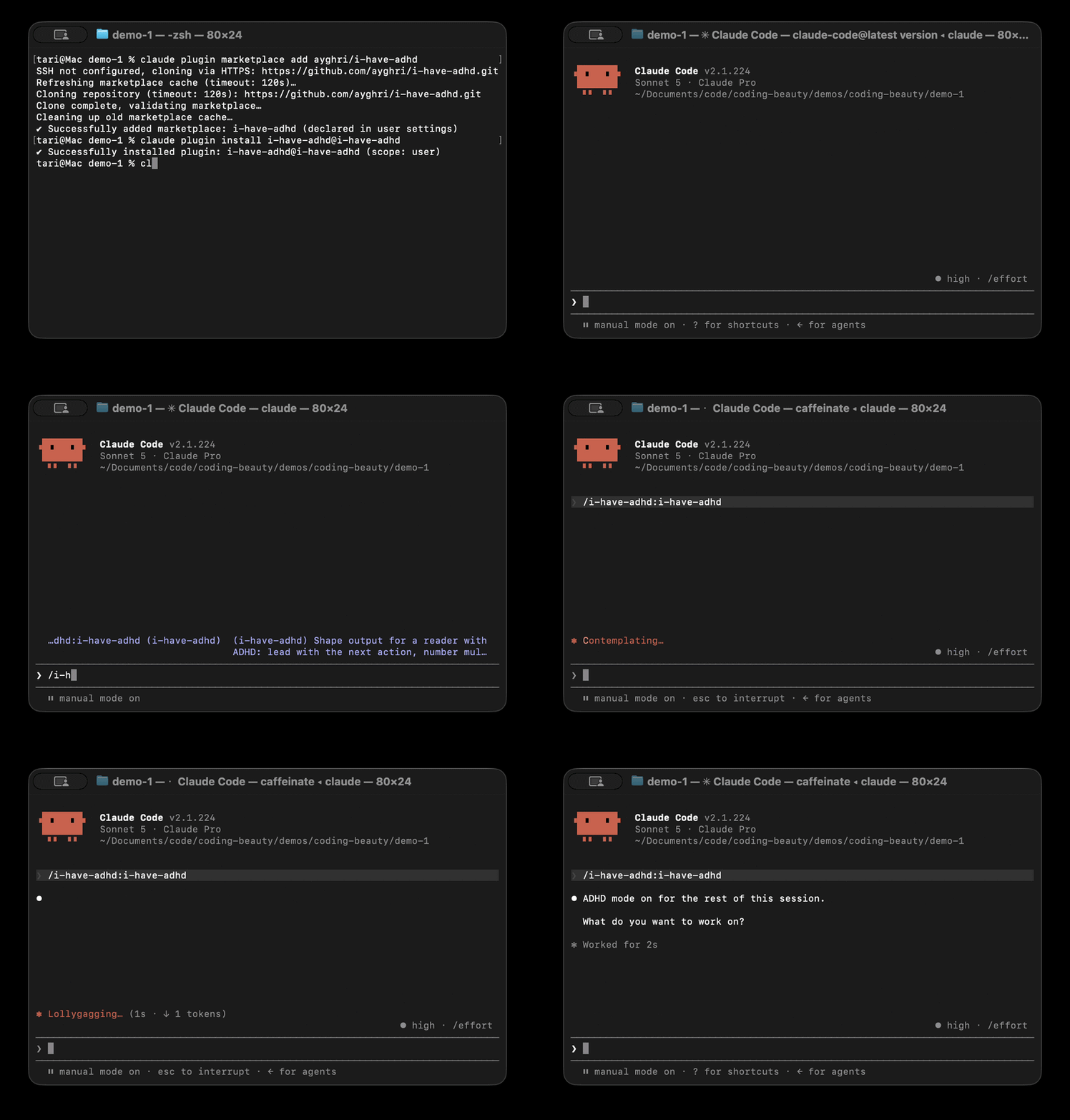
Then type /i-have-adhd in a Claude Code session to activate it — all the responses will be structured according to the rules of the skill for the rest of the session:
How to use it to transform your workflow (5 practical use cases)
1. Debugging production issues
Without the skill
There are several reasons your API could be returning a 500 error. Let's begin by understanding how Express middleware works before we explore possible causes...With the skill
1. Check server logs.

2. Verify DATABASE_URL.

3. Run:

   curl http://localhost:3000/health

4. Report the output.
Why it matters: When production is down, you need the next action — not a lesson.
2. Refactoring legacy code
Without the skill
There are multiple approaches to refactoring this codebase. Before making changes, let's discuss architecture, design patterns, and technical debt...With the skill
Plan:

✓ Identify dead code

✓ Extract duplicate logic

□ Add tests

□ Rename interfaces

Current step:

Extract duplicate validation logic.
Why it matters: Breaking work into milestones makes large refactors feel manageable.
3. Building large features
Without the skill
Let's build a complete authentication system. First, here's the architecture...

[Hundreds of lines covering models, JWTs, middleware, RBAC, testing, deployment, and security.]
With the skill
Phase 1

✓ User model

✓ Login endpoint

Phase 2

□ JWT middleware

□ Refresh tokens

Phase 3

□ Role middleware

□ Permissions
Why it matters: You stay focused on one phase instead of being overwhelmed by the entire implementation.
4. Learning an unfamiliar codebase
Without the skill
This project uses a layered architecture with controllers, services, repositories, middleware, utilities, shared modules, and configuration files...

Let's walk through every directory.
With the skill
Read these first:
1. routes.ts

2. auth.ts

3. middleware.ts

Ignore everything else for now.
Why it matters: You can understand the project faster by focusing only on the files that matter.
5. Reviewing pull requests
Without the skill
Overall this is a solid pull request. I noticed a few issues of varying importance, so let's review each one in detail...With the skill
Critical

- SQL injection risk

Important

- Missing null check

Minor

- Rename variable

Approve after fixing the first two.
Why it matters: Prioritized feedback makes reviews quicker to understand and easier to act on.
Final thoughts
You don’t just need a smarter assistant — you need an assistant that helps you get things done faster.
Sometimes the biggest productivity improvement isn’t giving an AI more knowledge. It’s simply teaching it to get to the point.