
This is unbelievable.
The new Kimi K3 is sending major shockwaves across the entire tech world.
For years people have been writing off open-source AI models, dismissing them as dumbed down version of “the real deal”.
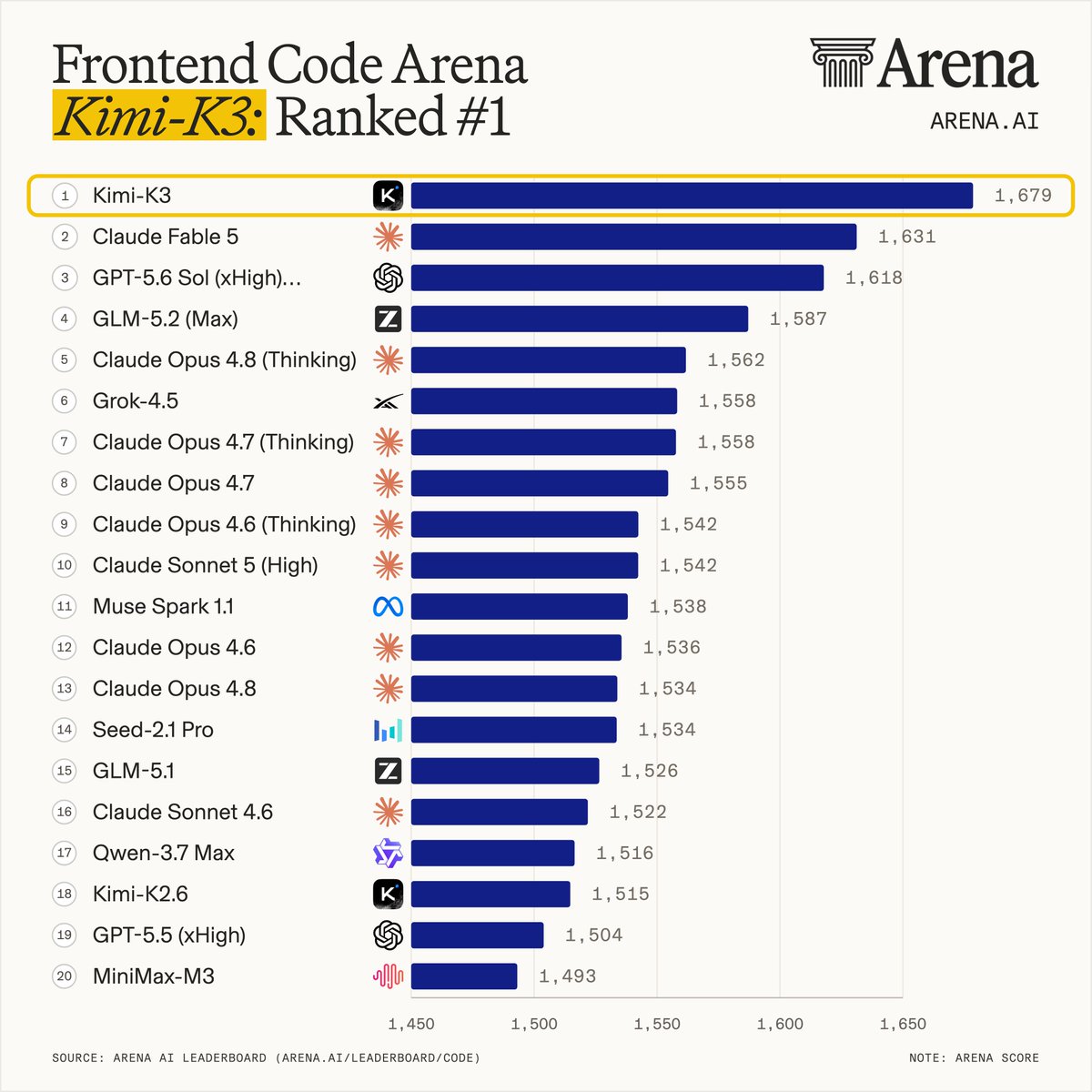
But now, this Chinese company just released a open-source model that matches up to Claude Fable 5 in every single way — and even dominates it multiple critical areas.
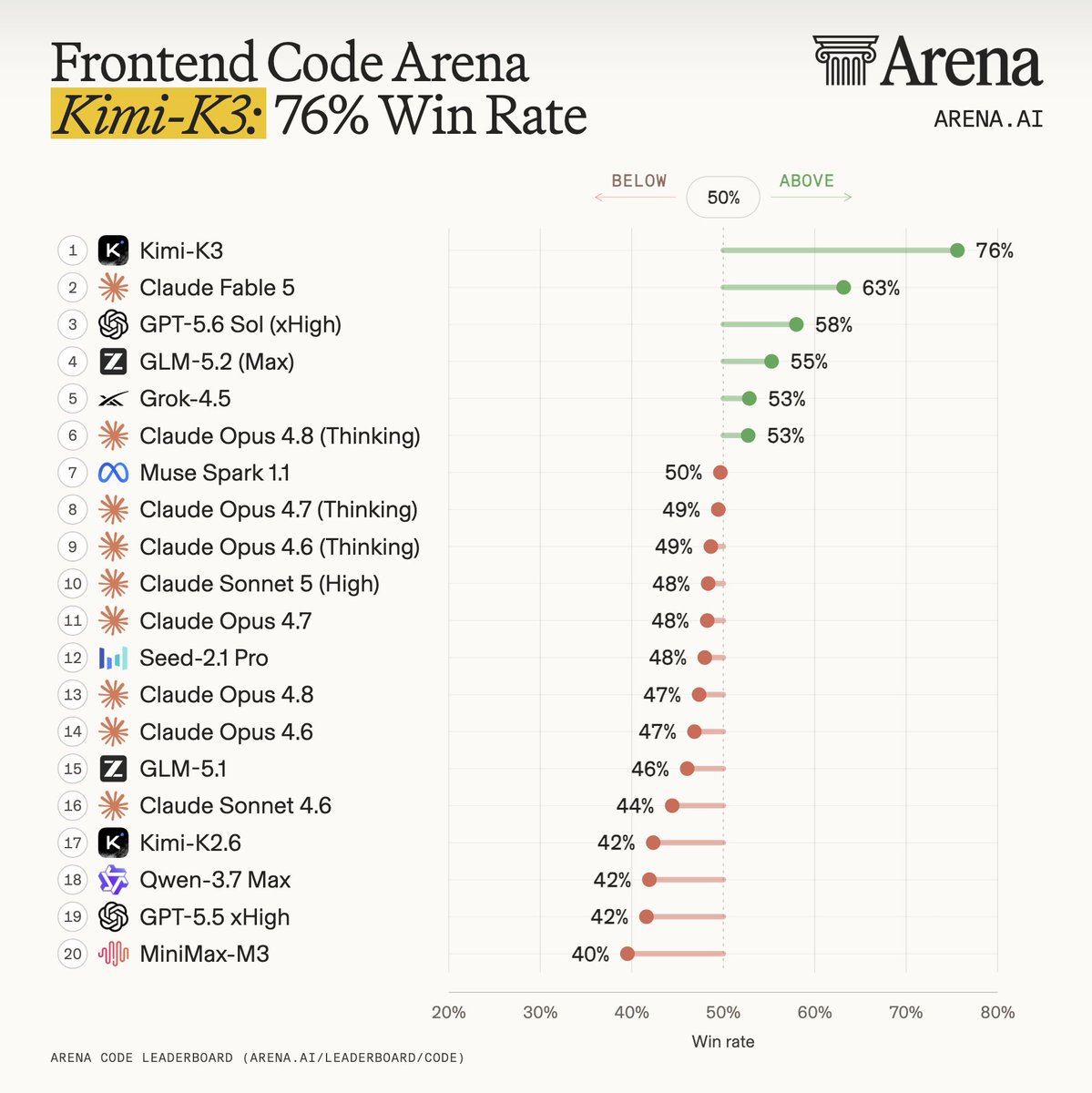
Kimi K3’s output was preferred 76% of the time when matched up again other models for the exact same task:
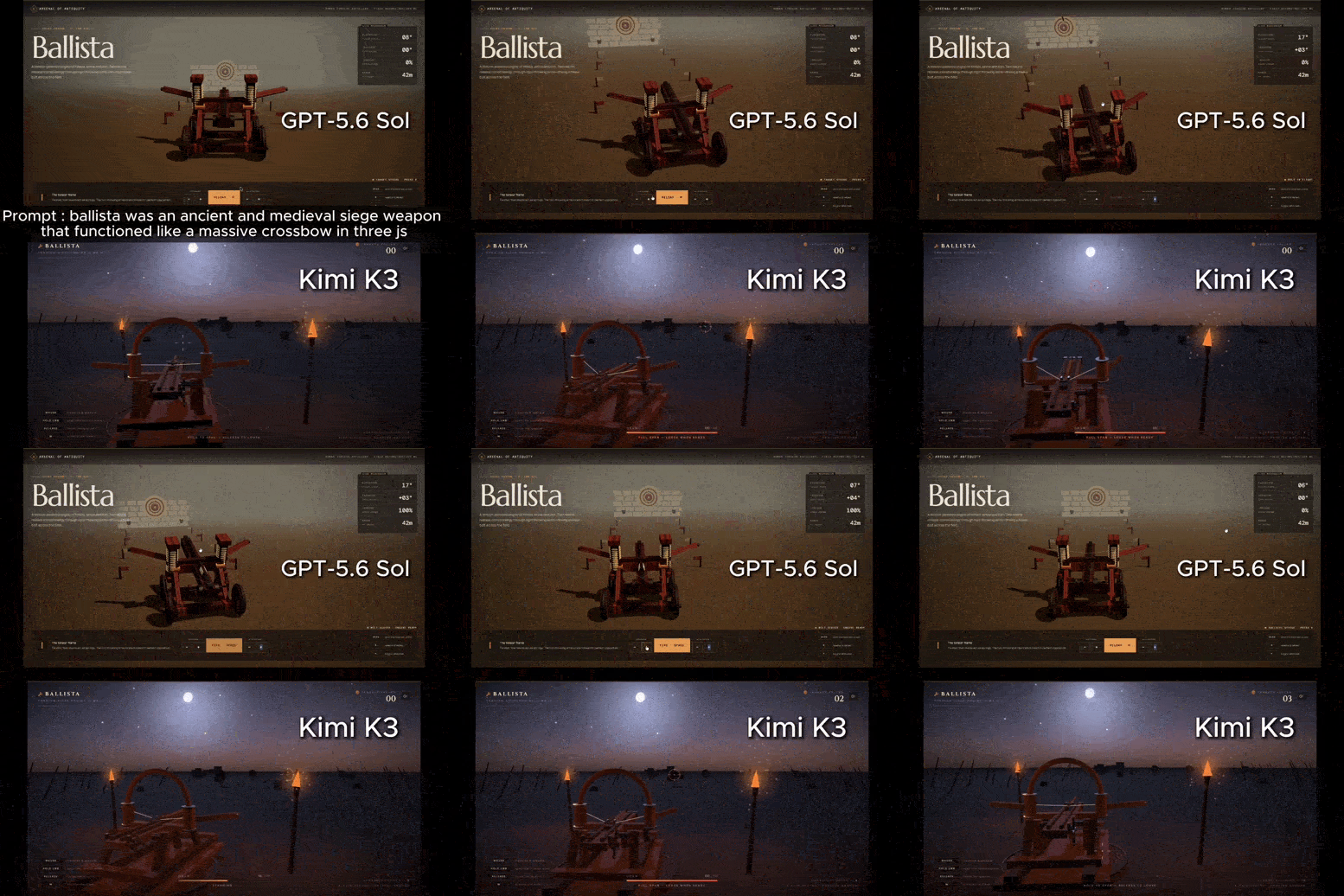
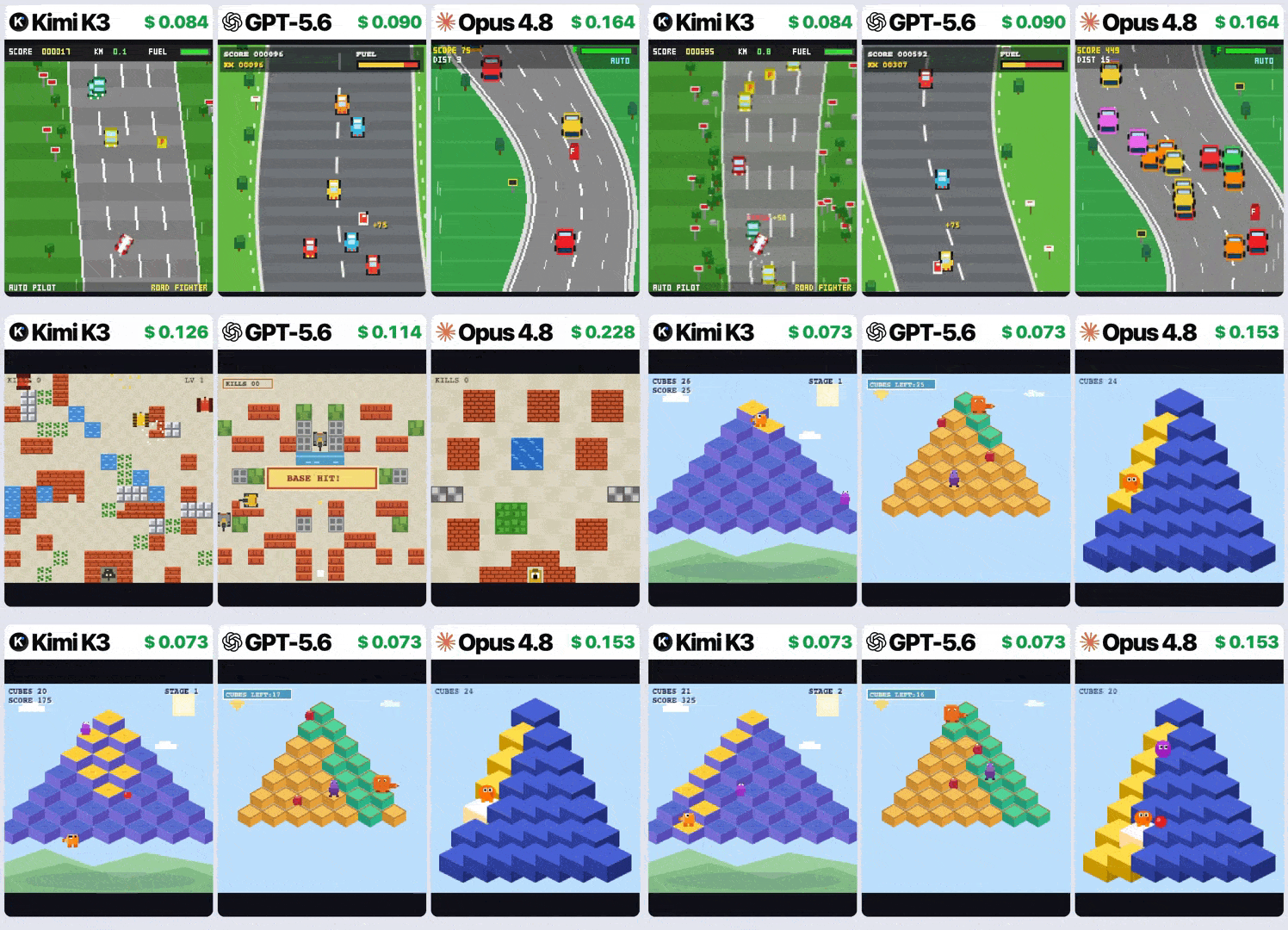
Kimi K3 utterly dominates the recently released GPT-5.6 in generation of mini shooting game:
And if you think this is just another tiny “12B” model, you’re so dead wrong.
You won’t believe how massive this model is, and every other feature it has to offer…
1. 2.8 trillion parameters
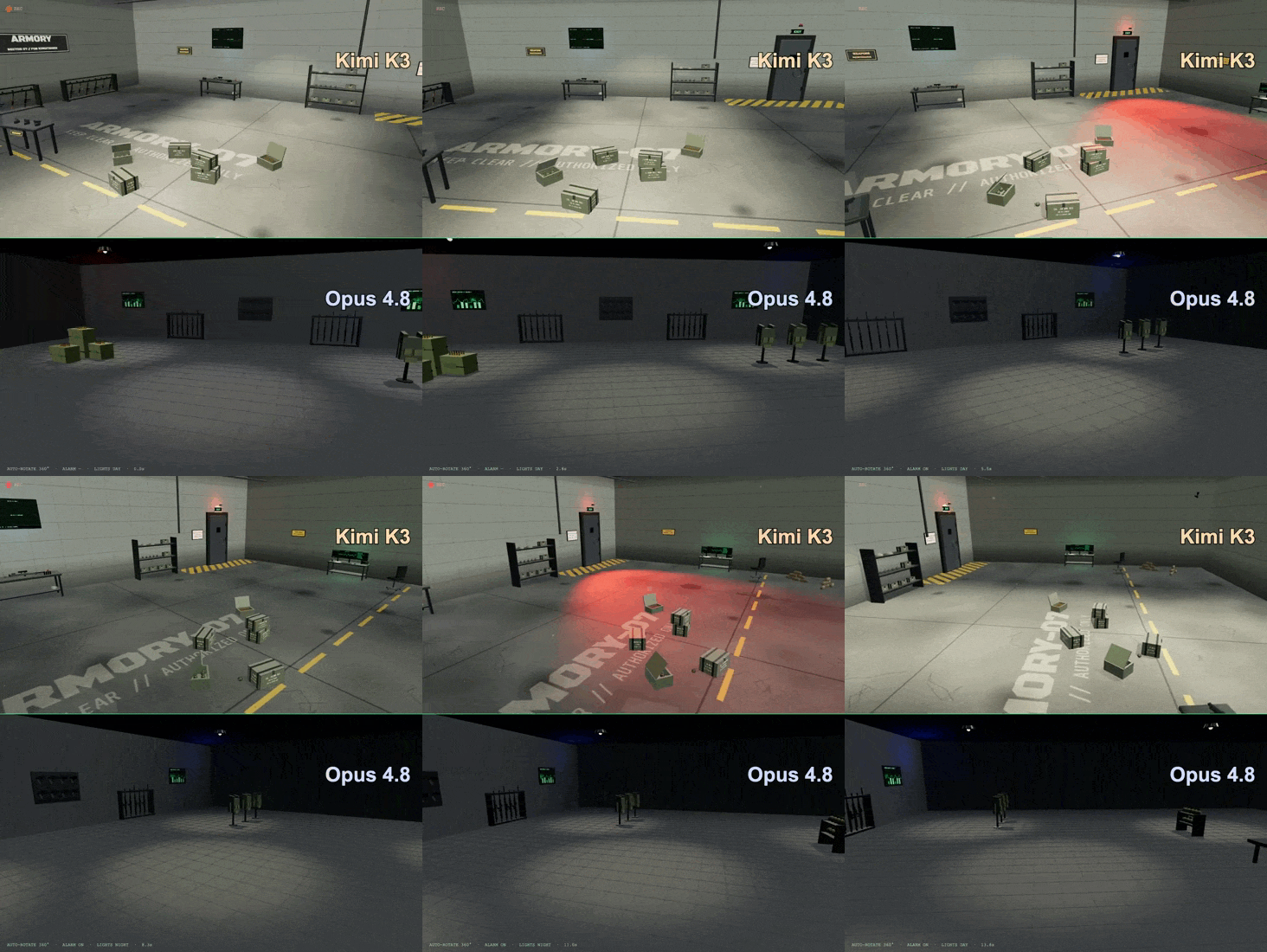
Kimi K3 blows Claude Opus 4.8 out of the water in a 3d scene generation of a military armory:
Until now, many people in the AI space thought open-source only made sense for scrappy 8B or 70B models.
That trillion-parameter frontier giants could only be available in the strictly private domain of mega-corporations with infinite budgets.
Kimi K3 totally demolishes this.
At 2.8 trillion parameters, it’s hands-down the largest open-weight model ever developed.
It matches the rumored scale of closed-source giants like Claude Fable 5, proving developers don’t have to compromise on raw power to keep things open.
- 2.8T Mixture-of-Experts: Massive scale, but hyper-efficient.
- 16 Active Experts: Only activates what it needs per token, keeping compute costs sane.
- No More Compromises: Puts proprietary-grade cognitive muscle into the public’s hands.
2. Coding with open-source models is no longer a joke
Kimi K3 demonstrates superior game physics and logic compared to GPT-5.6 and Opus:
Before now, a lot of software developers never really saw an open-source model as an option for coding.
Most tasks from complex software engineering to sleek frontend design were always handed off to Claude and other closed-sourced models.
With the new Kimi K3, many are starting to realize just how wrong they were. K3 immediately claimed the #1 spot on LMArena’s Frontend Code Arena, dethroning Claude Fable 5.
It doesn’t just write code; it thrives on complexity, creating fully playable 3D games and gorgeous interfaces entirely from scratch.
- LMArena Champion: Beat the best proprietary models in frontend design.
- Coded with Taste: Understands aesthetics, layout, and user experience natively.
- Ambitious Generation: Spits out functional, interactive applications in one go.
3. “Long-horizon” autonomy isn’t restricted to closed APIs
We never actually needed closed, guarded infrastructure for this.
For all those long-running autonomous agents that run for hours to solve complex, multi-step tasks, Kimi K3 is here and it’s built from the ground-up for the marathon.
In testing, it ran autonomously in sandboxes for up to 48 hours. It didn’t break; instead, it built its own GPU programming compiler (MiniTriton) from scratch and solved graduate-level astrophysics.
- 48-Hour Autonomy: Stays on track for days without human hand-holding.
- Hardware-Level Mastery: Optimizes kernels and compiles code natively.
- True Agency: Moves open-source from simple chatbots to actual digital workers.
4. Defeating the memory bottleneck of 1M+ context windows
Running a 1-million-token context window on a giant model doesn’t really require hyper-optimized, proprietary hardware.
And Kimi K3 demonstrated this perfectly.
Instead of throwing more hardware at the problem, Moonshot AI used clever architecture.
By introducing Kimi Delta Attention and Attention Residuals, they slashed the memory needed for the model’s short-term cache by up to 75%, making massive inputs actually run on standard hardware.
- 75% Memory Savings: Drastically lowers the hardware bar for giant datasets.
- Kimi Delta Attention: Smart compression that keeps long chats incredibly fast.
- Open-Source Innovations: Anyone can now study and build on these memory-saving breakthroughs.
5. Demolishing the “delayed release” pattern
Before now, “Open-weights” used to mean getting yesterday’s technology.
We assumed labs would keep their shiny, cutting-edge flagship models closed, only releasing weaker, older versions to the public.
Moonshot AI completely breaks out of that mindset.
They’ve bypassed the “lite” versions and released the weights of their absolute crown jewel under a Modified MIT license.
They are putting the absolute state-of-the-art directly in our hands.
- No “Lite” Gatekeeping: The actual, uncompromised flagship is being released.
- Modified MIT License: Built for developer freedom and commercial innovation.
- Running Neck-and-Neck: Proves open-source isn’t a step behind anymore—it’s setting the pace.