
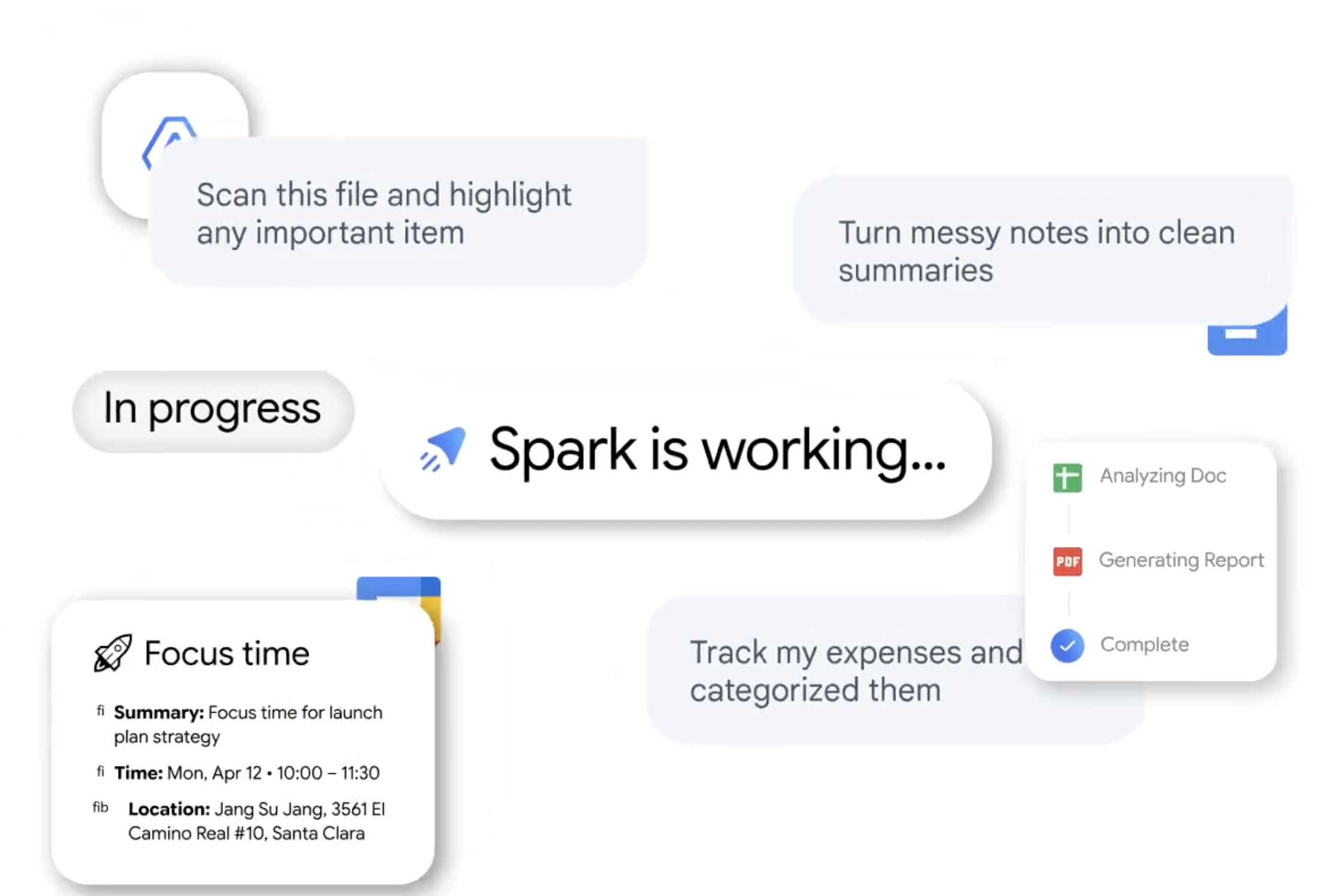
Wow this is amazing.
Google just unleashed a major new competitor to OpenClaw — Gemini Spark is going to totally transform how so many people approach their goals from now on.
And always-on AI system — always operating continuously in the background.
Seamlessly connects to every single one of your tools to work on any of your goals.
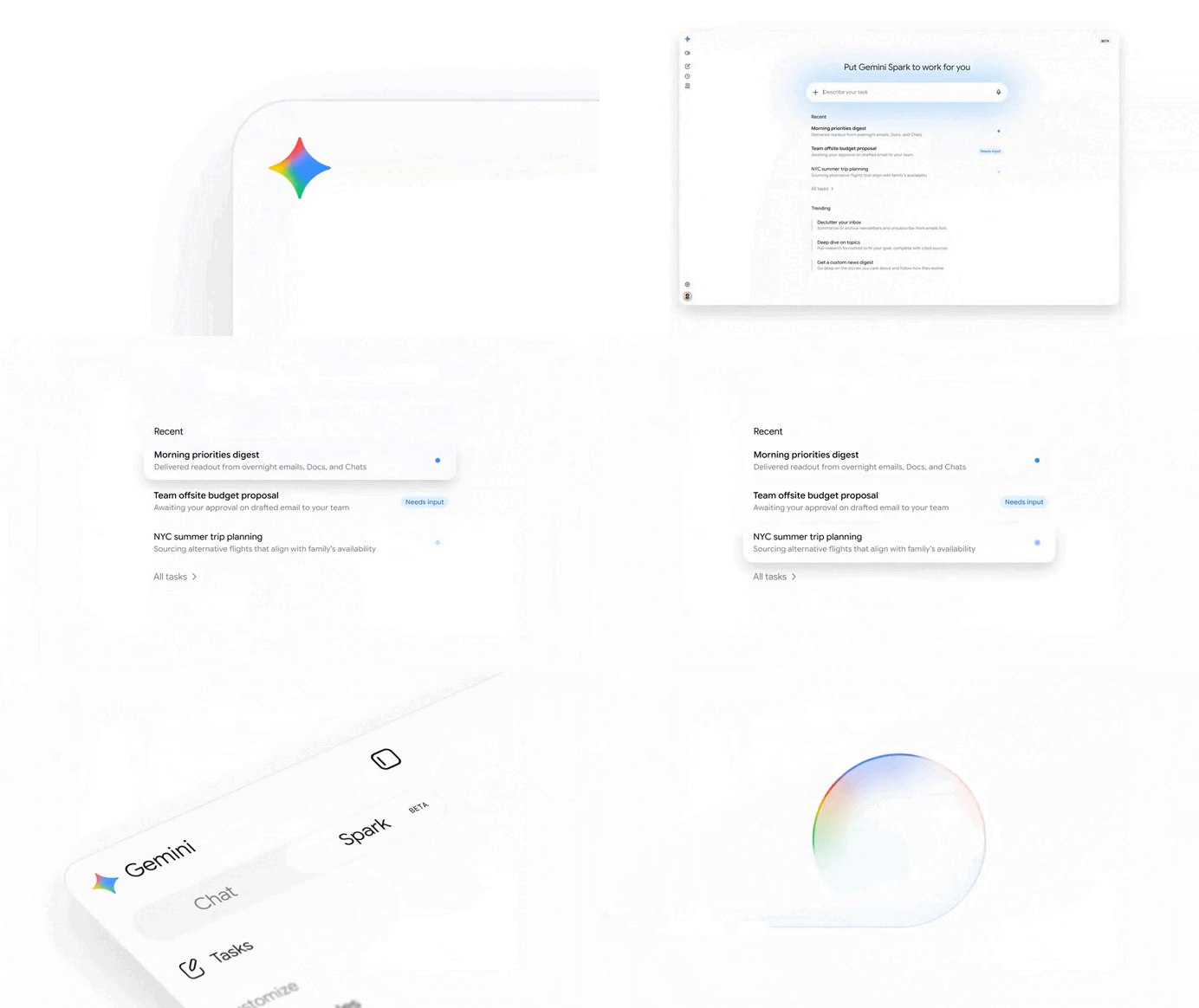
Intelligently adapts to your workflows and style and powered by the most advanced AI models on the planet.
1. Always on: set and forget
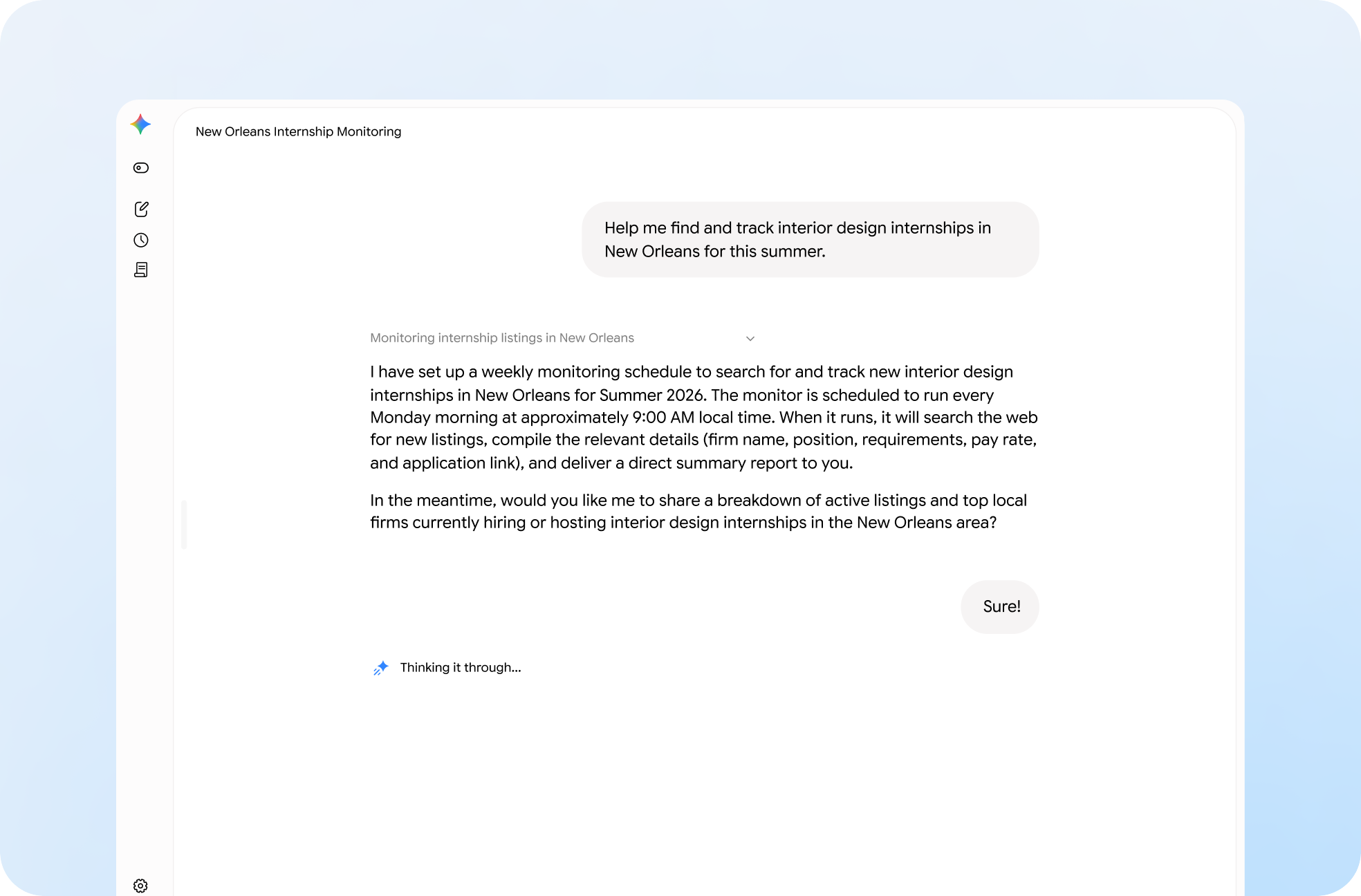
One of Spark’s biggest selling points is the always-on background execution.
Most AI products today still behave like sessions (one of the main reasons why OpenClaw blew up so much).
You ask → It responds → The interaction ends
Spark changes that model by allowing workflows to continue running after the conversation is over. Google positions it as an agent capable of monitoring, organizing, and acting in the background instead of waiting for repeated prompts.
That means less time restarting the same processes every day.
You can literally schedule anything at any time you want.
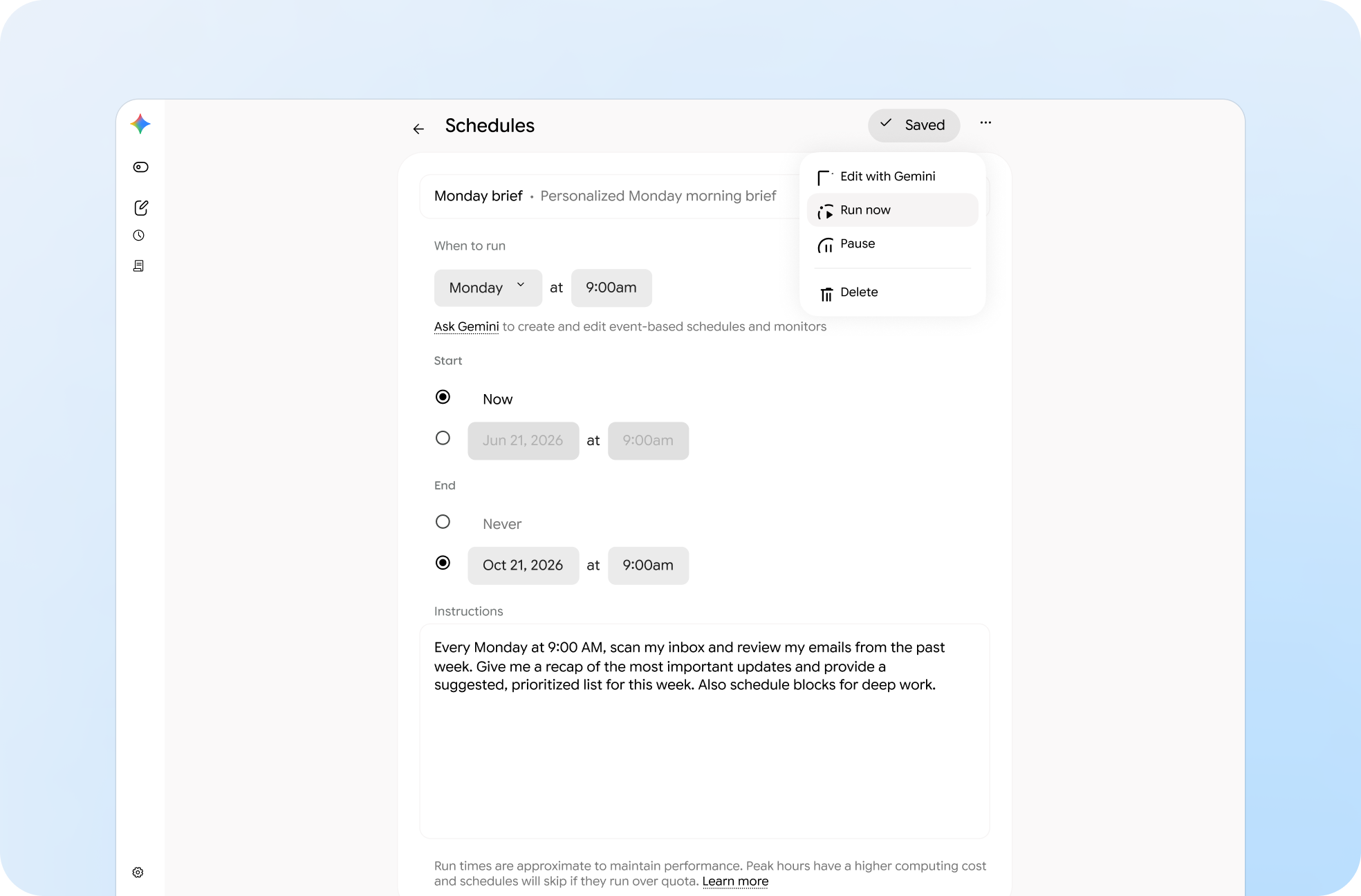
Think about workflows like:
- Monitoring emails and surfacing important updates
- Tracking ongoing projects and deadlines
- Watching dashboards or reports for changes
- Running recurring research and summaries
The value here isn’t raw speed.
It’s continuity — working on complex tasks endlessly, so you can get to more important things.
2. Teachable reusable Skills
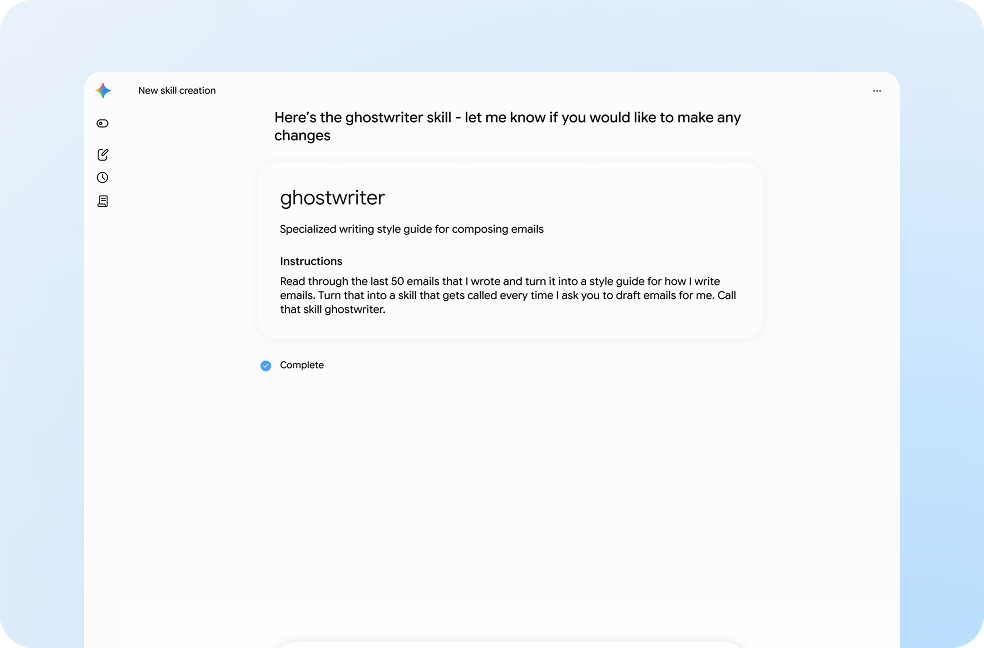
Another major idea behind Spark is teachable Skills.
Instead of rebuilding workflows repeatedly, Spark is designed to retain context and adapt over time.
Repeated instructions → Reusable workflows
Over time, systems can begin reflecting how users naturally operate:
- Preferred writing style and tone
- Reporting structures
- Research methods
- Team workflows
- Content frameworks
The goal is simple:
Teach once.
Reuse repeatedly.
As more behavior becomes reusable, the distance between intention and execution keeps shrinking.
3. Native connections instead of screen scraping
Many AI agents today still rely on browser automation and analyzing screen pixels.
They:
- Observe screens
- Click buttons
- Mimic user actions
Spark moves toward native integrations instead:
- Deep Workspace integration
- Gmail
- Docs
- Sheets
- Calendar
- Third-party integrations through MCP (Model Context Protocol)
This allows workflows to operate closer to the application layer itself.
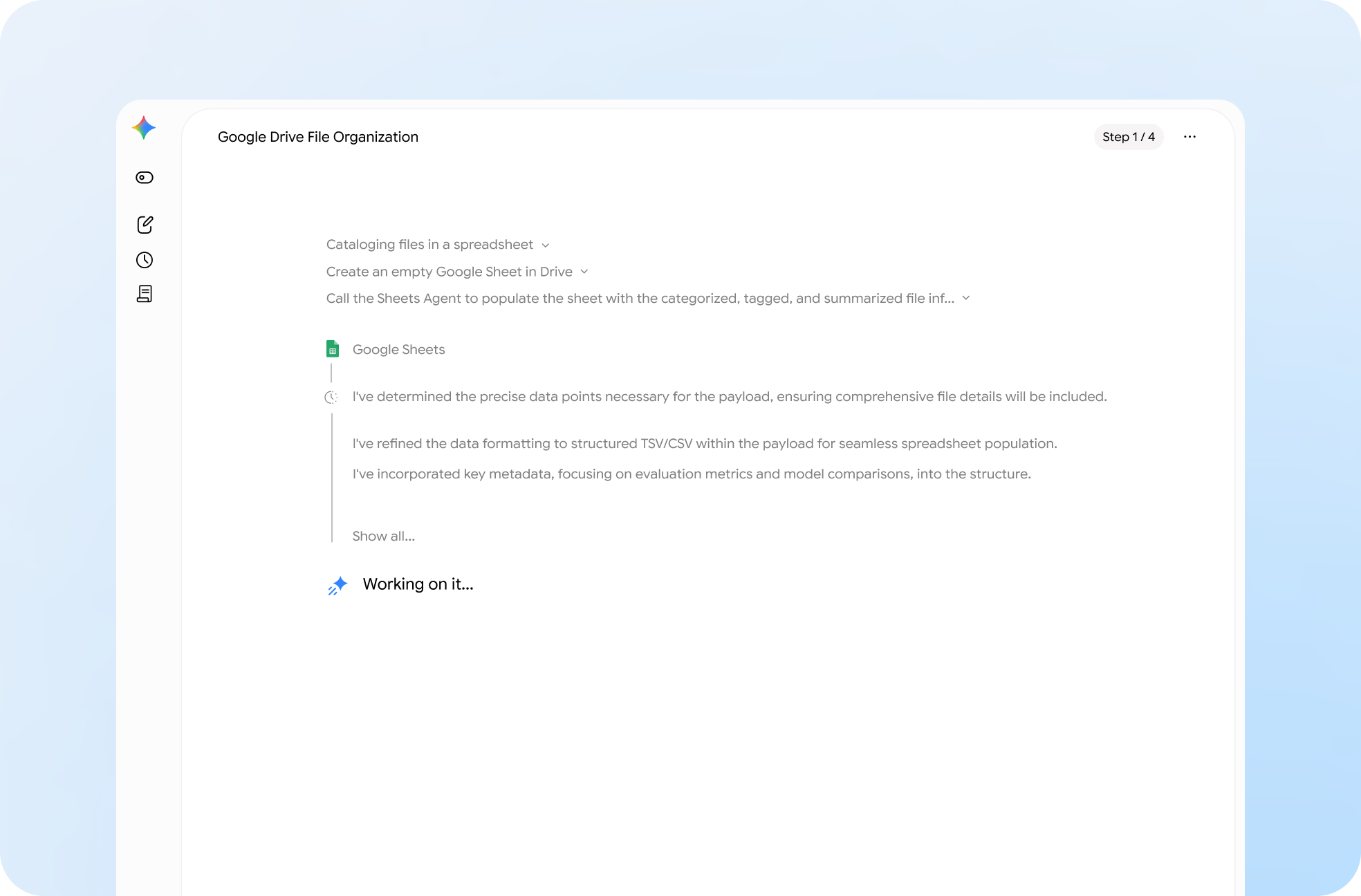
Instead of manually moving information between tools, Spark can coordinate across connected systems more directly.
The result:
Less tool switching. A more widely capable agent.
4. Control still sits with the user
Persistent AI naturally raises another question:
How much autonomy is too much?
Google is trying approach Spark with strong controls and approval layers.
The idea is not unrestricted automation.
It is controlled execution.
Spark can:
✅ Monitor
✅ Organize
✅ Draft
✅ Prepare workflows
While keeping human oversight where needed.
That balance matters because future agent systems will be judged not only by capability, but by trust.
5. Multi-agent coordination
Perhaps the most interesting part of Spark is its move toward multi-agent coordination.
Instead of one assistant handling everything, Spark points toward specialized systems working together.
Potential roles could include:
- Research agents
- Scheduling agents
- Communication agents
- Documentation agents
- Monitoring agents
Different responsibilities.
Shared objective.
The user gradually shifts from operator to coordinator.
And that changes the relationship between humans and AI entirely.
Gemini Spark represents a larger transition happening across AI:
- Sessions → Persistent workflows
- Prompts → Systems
- Single assistants → Agent coordination
- Manual execution → Continuous operation
Will be very interesting to see how all this evolves.