
The Claude memory import feature is going to make a world of difference for how we use and think about AI assistants moving forward.
Until now moving from one tool to another meant starting over — re-explaining your preferences, projects, tone, and workflow from scratch.
But now, the memory import feature removes so much of that friction by letting you bring over the context another AI has already built about you.
No more wasting time rewriting words and recreating context that already exists in another chatbot.
What it is
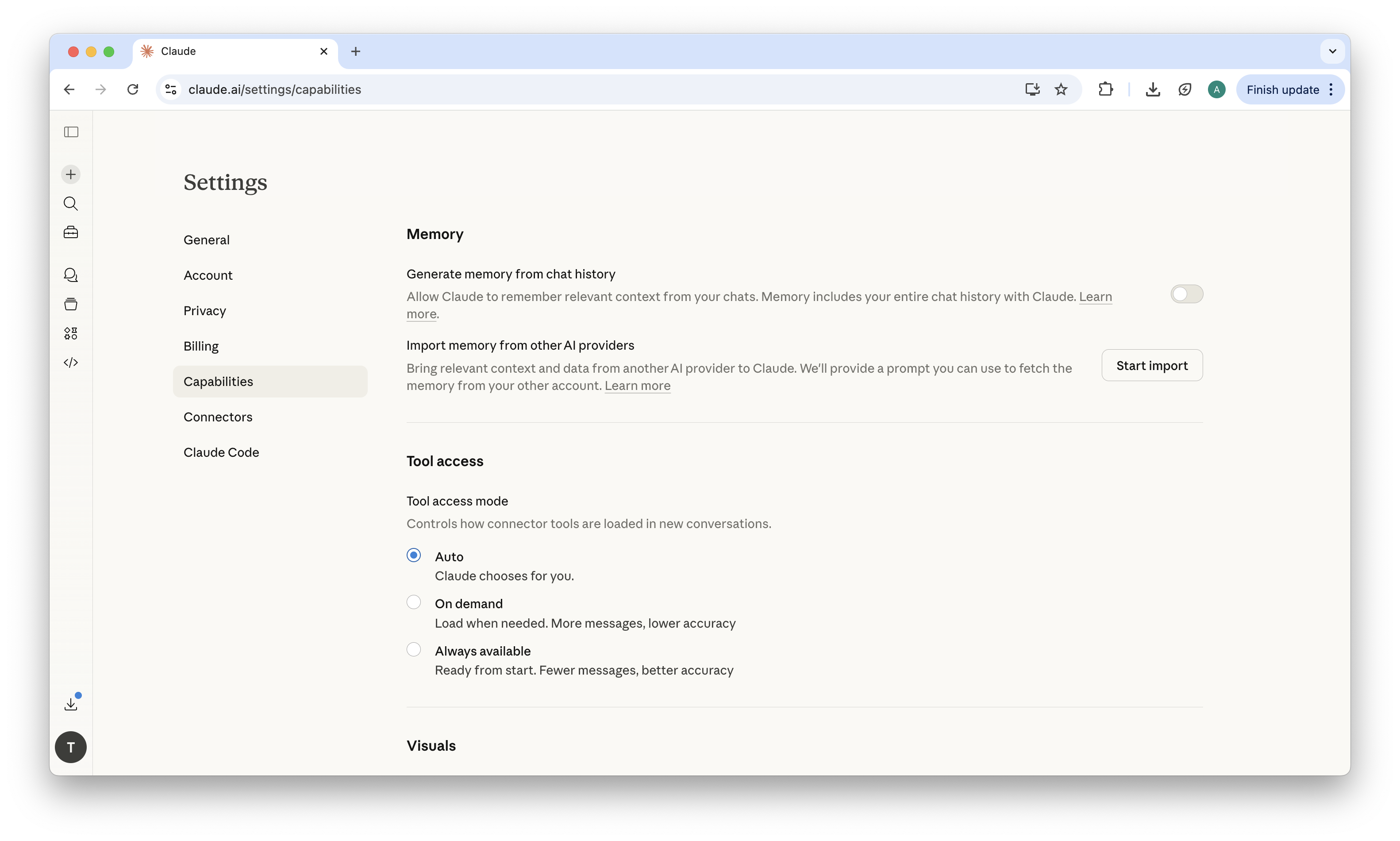
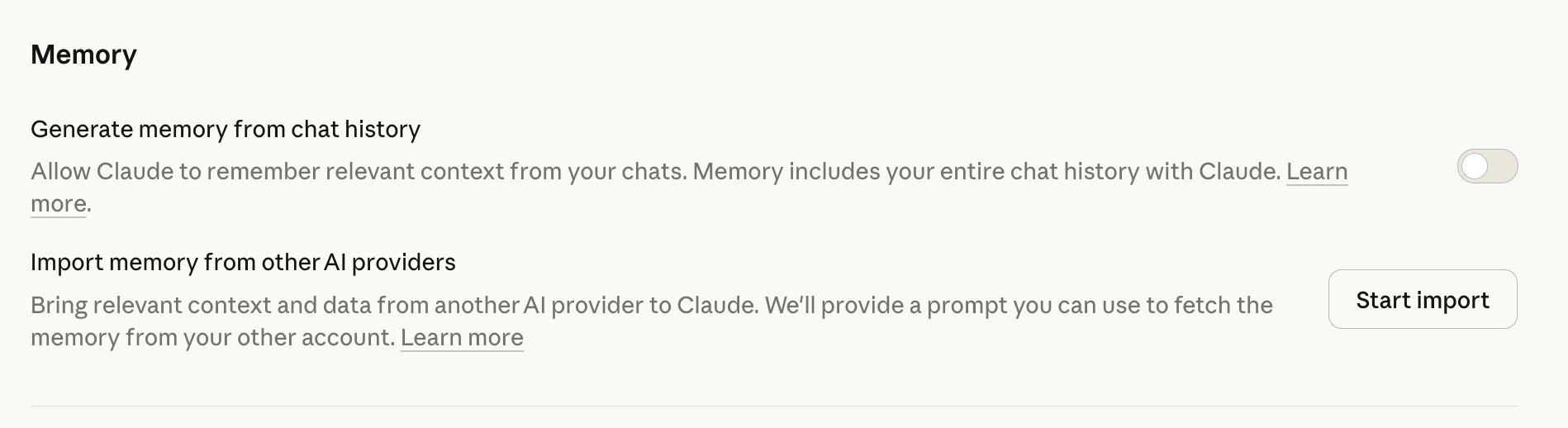
Claude’s memory import lets you transfer personalization data from another AI into Claude.
That can include:
- Writing preferences
- Tone and formatting style
- Recurring projects
- Professional goals
- Tools and workflows you use
- Corrections you’ve made to previous AI behavior
Instead of rebuilding this manually, you can import it and give Claude a strong starting point.
This is huge because modern AI value isn’t just about intelligence — it’s about accumulated context.
How to use it
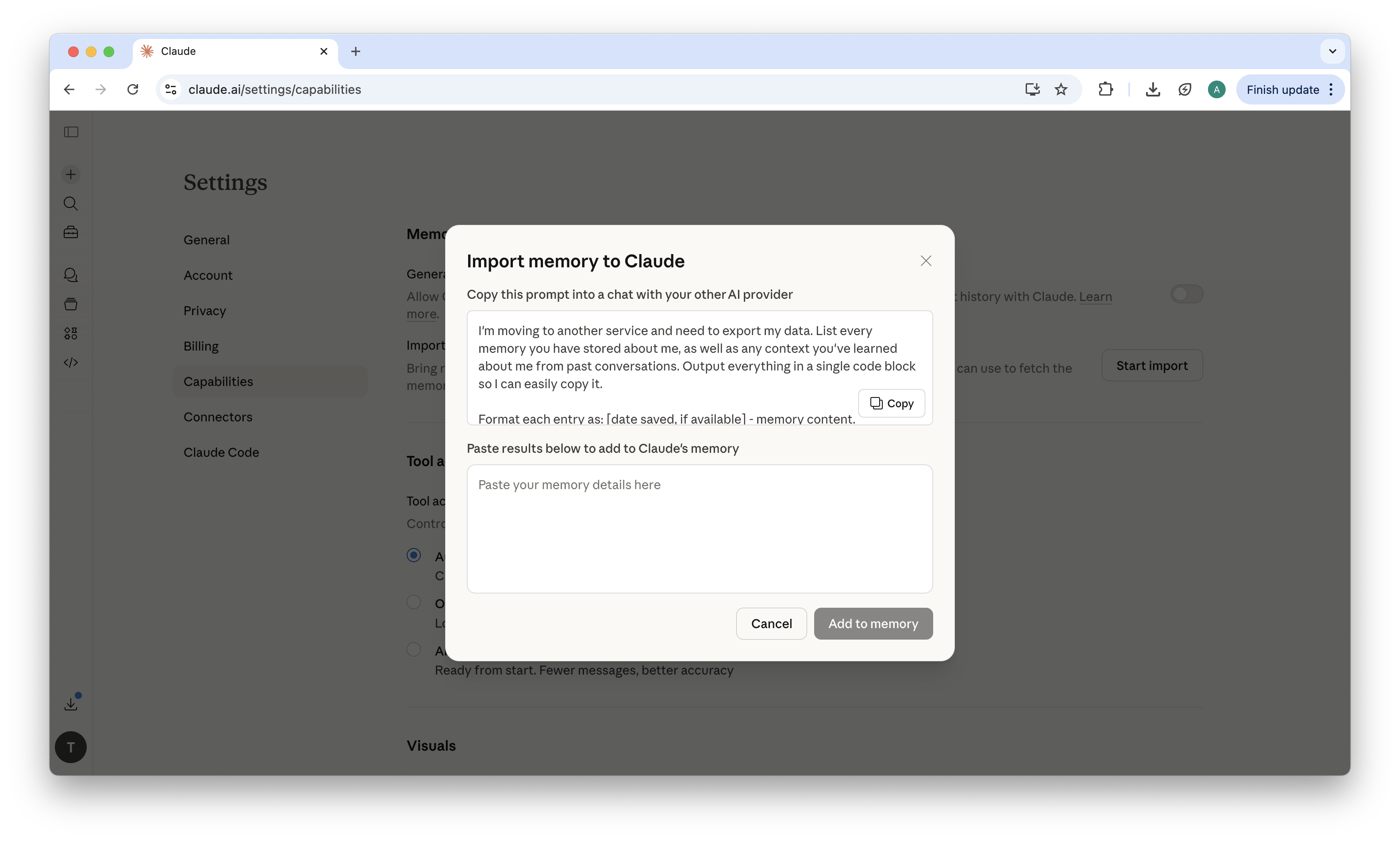
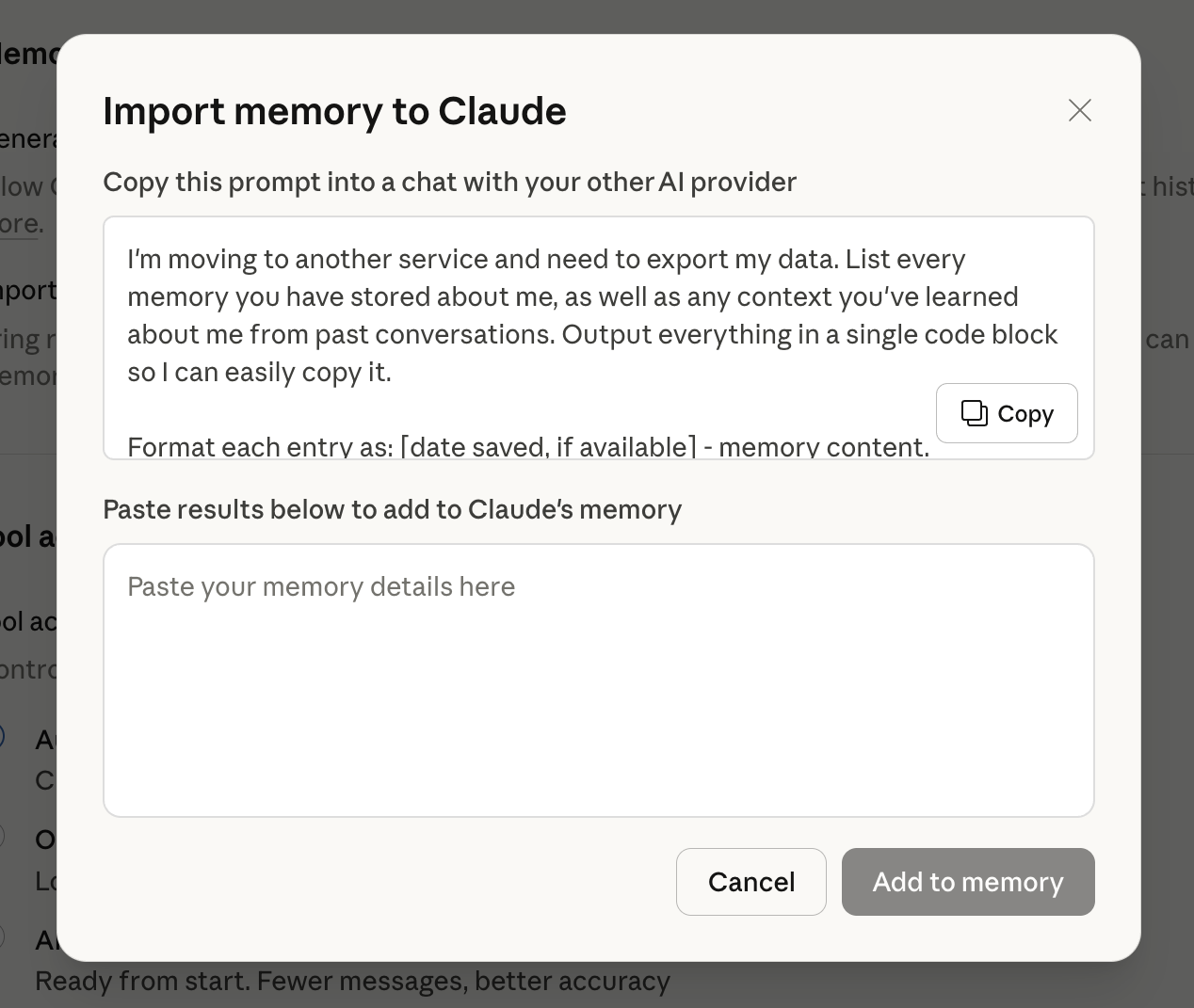
The process is simple:
- Ask your current AI assistant to export everything it remembers about you
- Copy the exported memory
- Paste it into Claude’s memory import flow
- Claude extracts and converts that information into structured memory entries
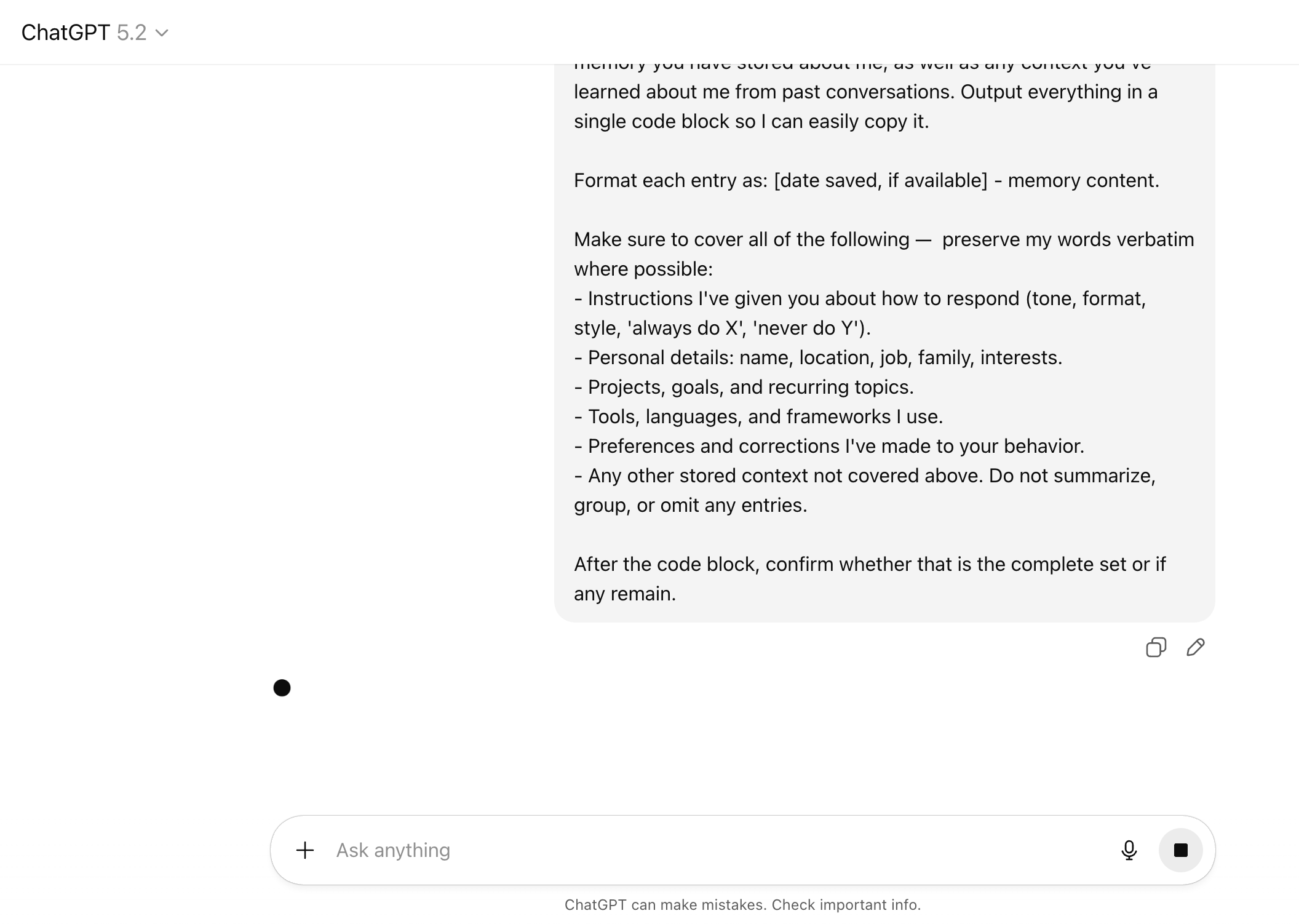
Important distinction:
- Claude does not import your full chat history
- It imports a synthesized personalization layer
- It converts that synthesis into editable memory items
This makes it about portability of context — not portability of conversations.
Why it matters
1. Zero-day personalization
Normally, switching AI tools means:
- Repeating your writing preferences
- Re-explaining your job or industry
- Re-teaching tone and formatting
- Re-stating tools and workflows
- Re-correcting predictable mistakes
That can take days or weeks.
Memory import changes that.
- Claude starts with a richer understanding on day one
- No need to manually recreate long preference lists
- Faster path to useful outputs
It compresses the personalization timeline.
2. No more context lock-in
AI lock-in today isn’t just about files. It’s about learned context.
Before now, the more an assistant knows about you, the harder it feels to leave.
Claude’s import feature weakens that dynamic:
- Makes personalization more portable
- Reduces switching costs
- Gives you more control over your AI context
The bigger idea:
- You should own the data AI has on you
- That includes the memory layer
- Personalization shouldn’t trap you on a platform
That’s a meaningful shift in power toward users.
3. Switch whenever
It lowers the barrier to walking away from ChatGPT.
Reasons someone might want to leave:
- Product direction
- Trust concerns
- Pricing
- Ecosystem preference
- Competitive experimentation
The hardest part of leaving isn’t model access — it’s losing personalization.
Claude reduces that cost.
That makes it easier to:
- Switch tools
- Diversify AI usage
- Or fully boycott ChatGPT if desired
Even if people don’t leave, the leverage dynamic changes.
How it differs from ChatGPT memory
Two key differences stand out.
Memory synthesis
Claude’s system is built around:
- Ingesting exported context
- Extracting key information
- Converting it into structured memory entries
That creates:
- Faster onboarding
- Migration-friendly personalization
- A deliberate “context transfer” workflow
ChatGPT memory, by contrast, primarily improves through ongoing usage and gradual accumulation.
Claude accelerates that process.
Work-centric prioritization
Claude appears to prioritize professional context.
Its memory focuses on:
- Work-related information
- Projects
- Tools
- Goals
- Collaboration preferences
It may not retain unrelated trivial personal details.
That suggests:
- Less life-log
- More professional collaborator
For developers, that focus makes the feature more valuable.
The bigger takeaway
This isn’t just a convenience feature.
It signals a shift toward:
- Portable AI memory
- User-controlled personalization
- Lower switching friction
- Reduced platform lock-in
The next phase of AI competition won’t just be about smarter models.
It will be about:
- Who personalizes fastest
- Who gives users control
- Who makes context movable
Claude’s memory import feature pushes in that direction.