
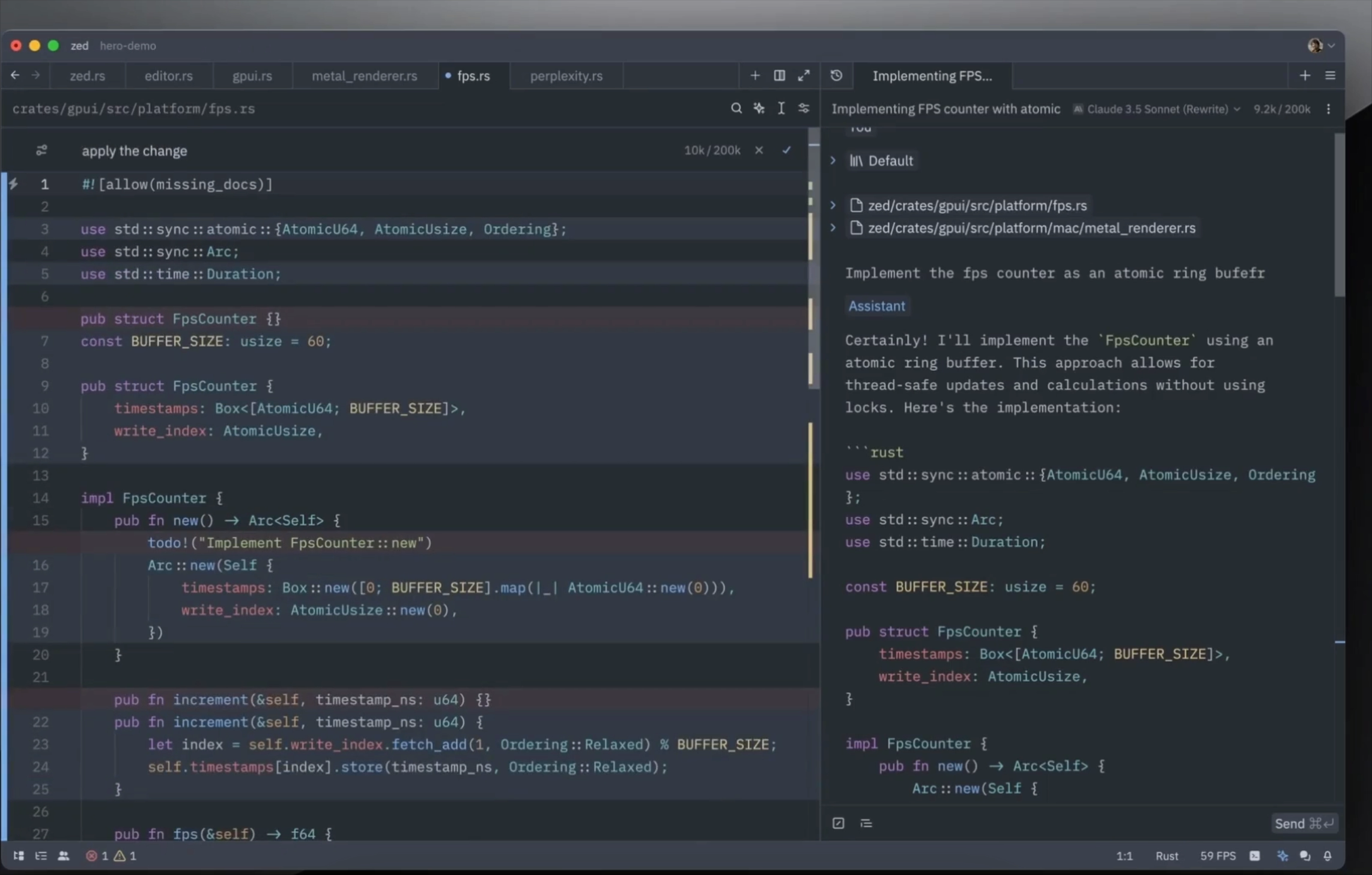
Woah this is huge.
This new Zed IDE is absolutely incredible — the speed and flexibility is crazy.
Built with RUST — do you have any idea what that means?!
This is not yet another painfully boring VS Code fork… this is serious business.
As far as performance goes there is no way in hell VS Code is going to have any chance against this.
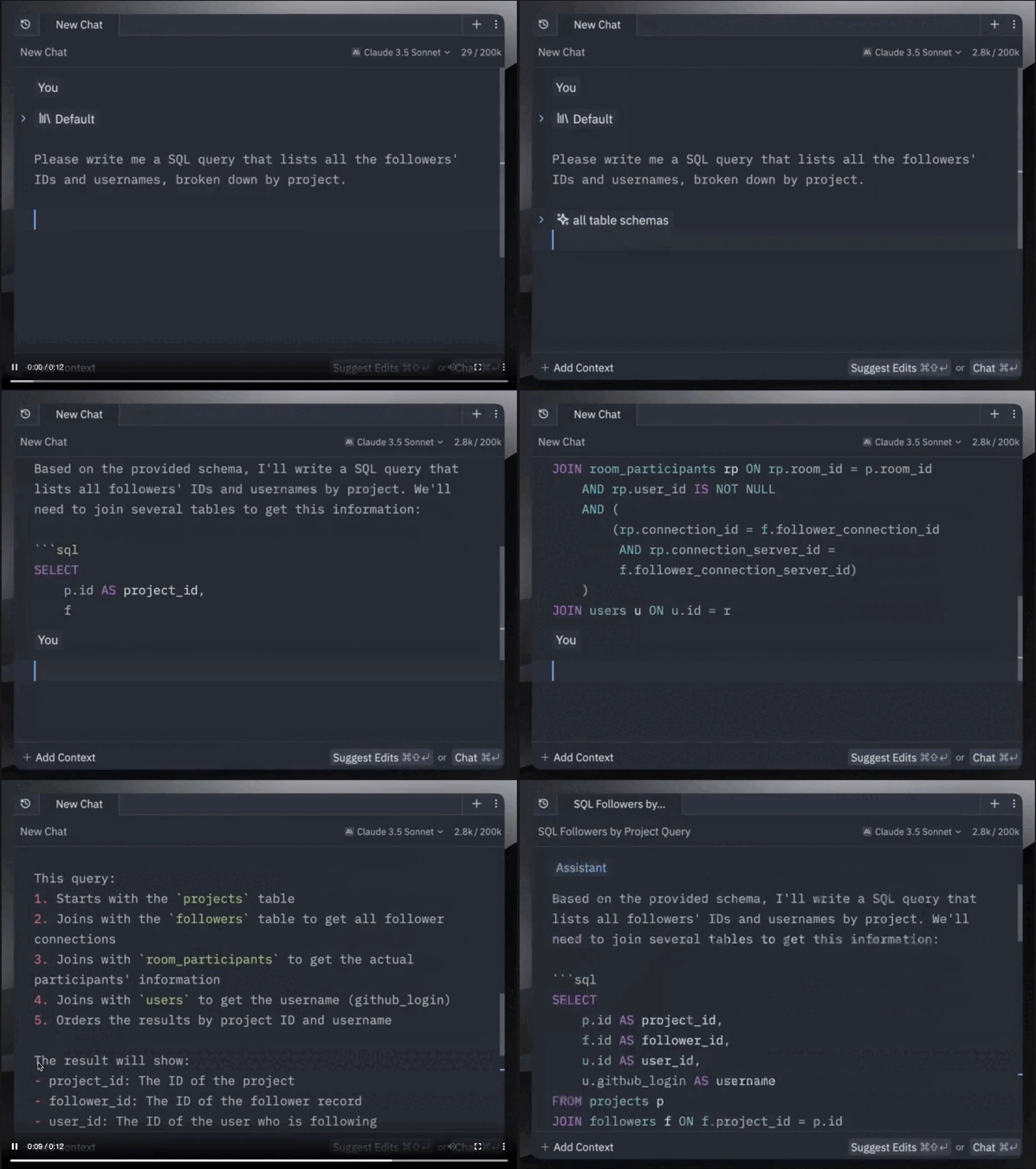
Even the way the AI works is quite different from what we’re used to:
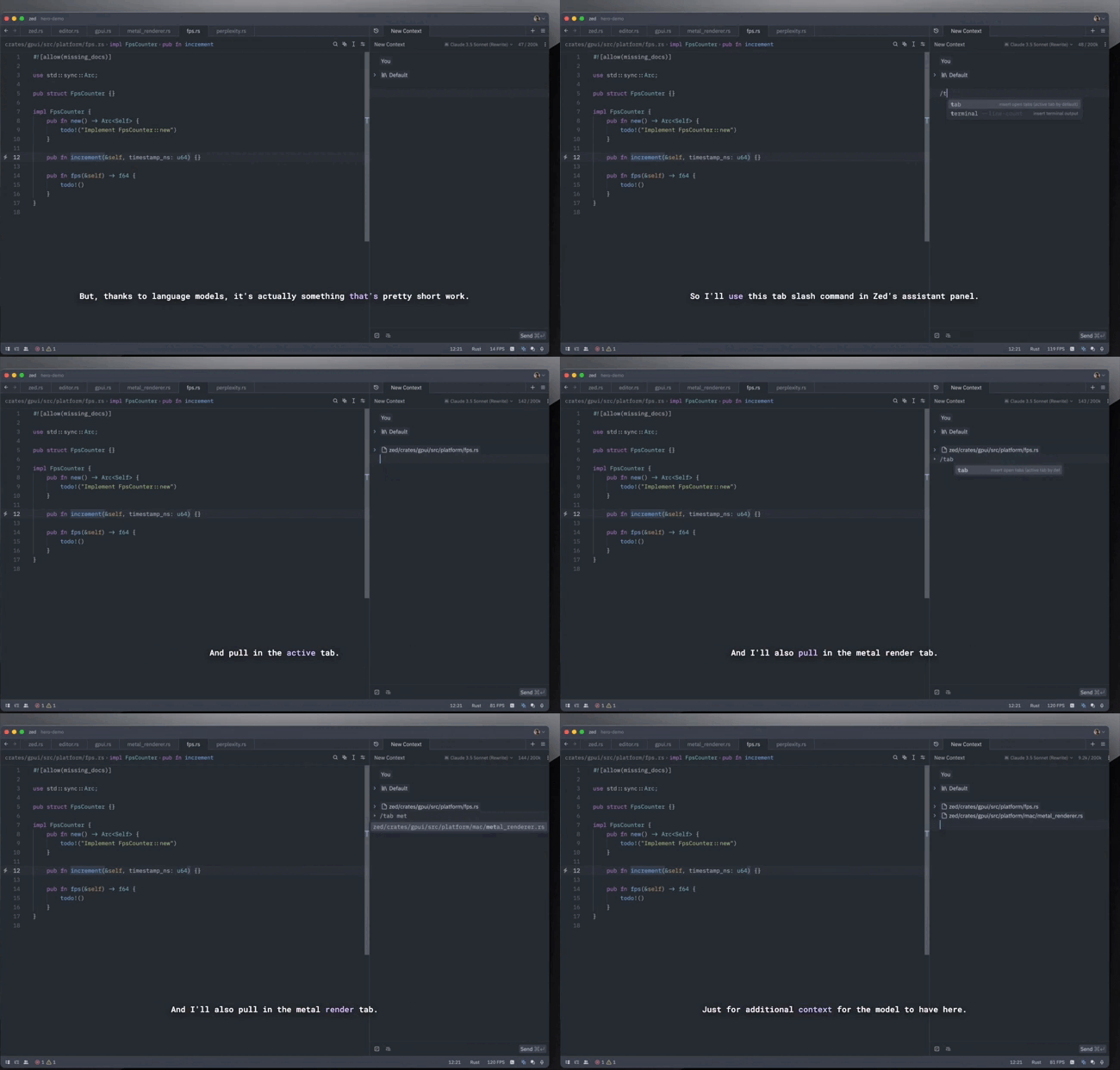
Look at how we easily added the precise context we needed — but just wait and see what we do next after this…
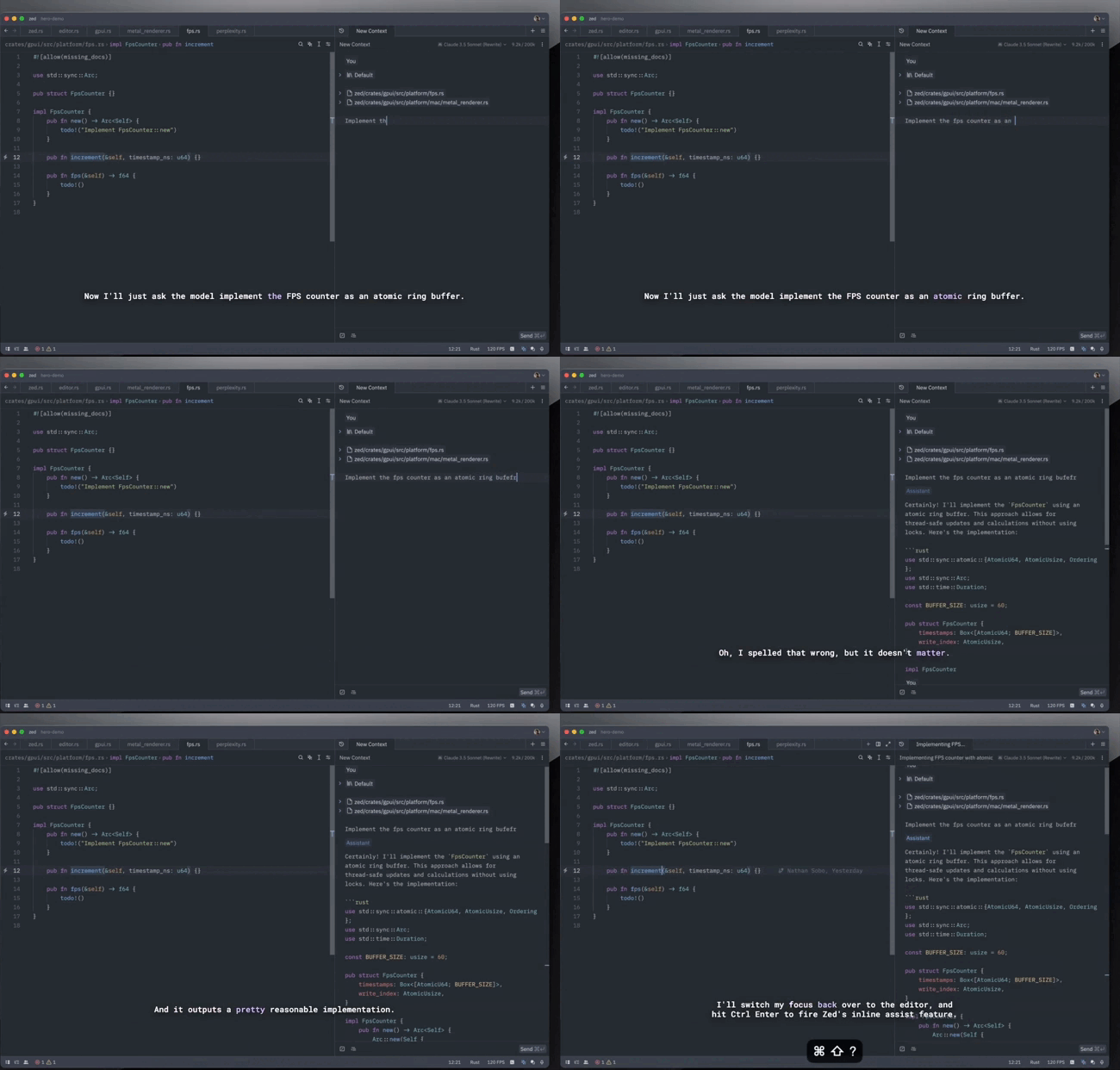
Now we send messages to the AI — but this is not like your regular Copilot or Cursor stuff…
We are not even making changes directly, we are creating context…
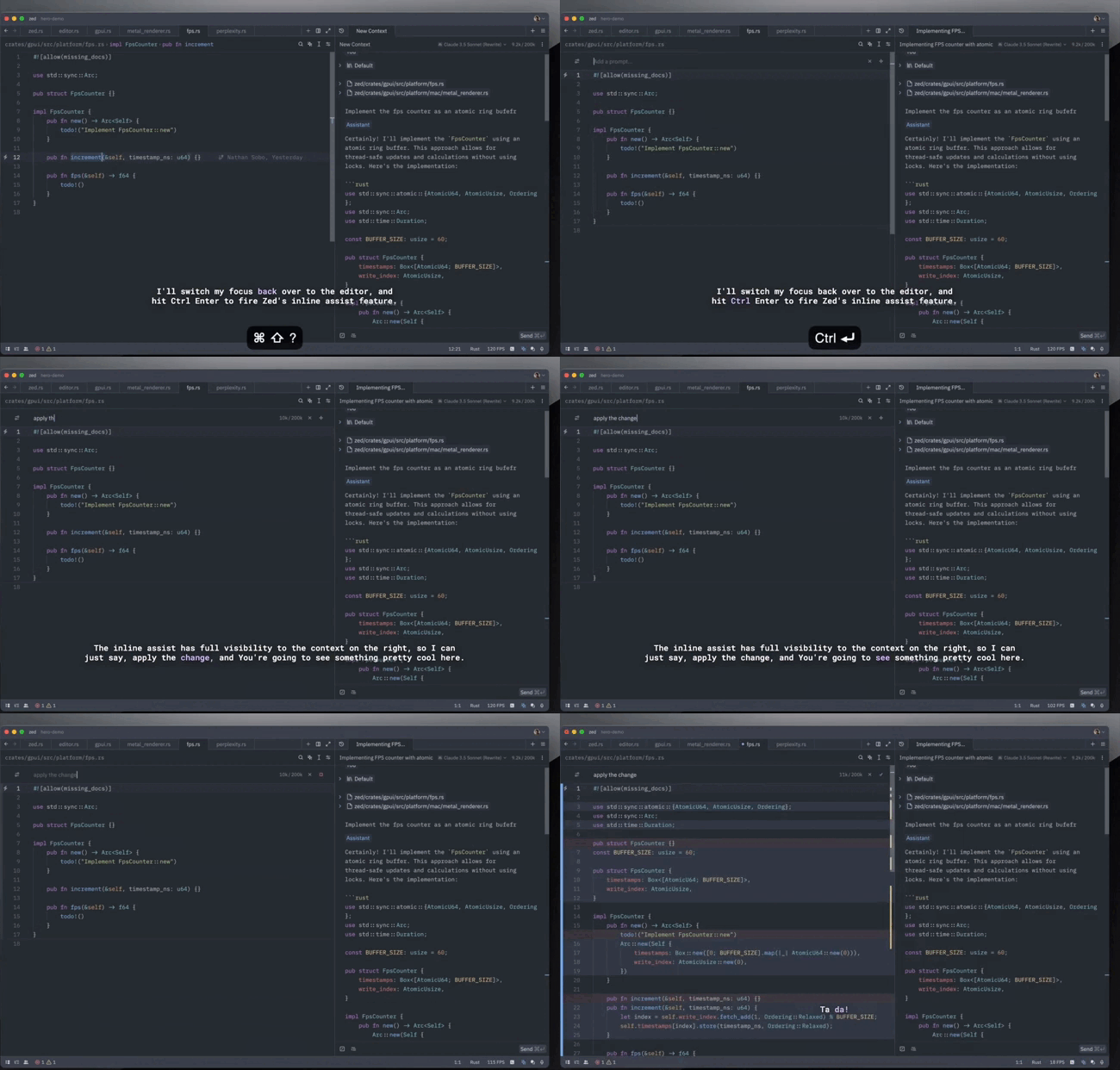
Context that we can then use with the inline AI — like telling to apply specific sections of what the AI said as changes:
Blazing fast:
This is an open-source IDE where performance, multiplayer, and agent workflows are first-class infrastructure.
Available everywhere you are.
Lightning-fast agentic support from the ground up
We’re already know about agentic coding — but what Zed gets right is where those agents live.
Instead of bouncing between your editor, a terminal, and three side tools, Zed gives you a native Agent Panel inside the editor. Agents can reason over your codebase, propose multi-file changes, and walk you through decisions in the same place you’re already editing.
Even better: Zed isn’t trying to lock you into one model or one workflow. It’s built to plug into the agent tools you already use. If you’re running terminal agents, Zed can talk to them directly. If you’re building toolchains around MCP servers, Zed already speaks that language. The editor becomes the hub where humans and agents actually collaborate instead of taking turns.
This is what makes it different. Not “AI in the editor,” but the editor designed around AI as a teammate.
Speed is the architecture, not the slogan
Zed was built in Rust with a hard focus on performance. It uses modern rendering and multi-core processing so the UI stays fluid even on big projects. No input lag. No “why did my editor freeze” moments. It feels lightweight in a way most editors stopped feeling years ago.
And when Zed came to Windows, they didn’t ship a half-baked port. They implemented a real rendering backend, deep WSL integration, and made Windows a first-class platform. That’s not checkbox compatibility—that’s engineering discipline.
If you care about flow state, this matters. The editor disappears. You move faster. You think more clearly. You ship more.
Serious business
Zed isn’t a weekend hacker tool. It’s backed by serious funding and built by people who’ve already shaped the modern editor ecosystem. That matters because it means long-term velocity: features land quickly, architectural bets actually get executed, and the product has a direction.
And that direction is clear: real-time collaboration between developers and agents inside the editor itself.
Not “connect to an AI.”
Not “paste code into a chat.”
But a shared workspace where humans and machines build together.
That’s the future Zed is aiming at—and it’s already usable today.
No-brainer pricing
Zed’s pricing is designed to get you in fast. The editor is free. The Pro plan is cheap, includes unlimited accepted AI edits, and gives you token credits for agent usage. There’s also a trial.
Translation: you don’t need a procurement meeting or a long debate. You can just install it and try your real workflow.
Which is exactly what they want you to do.
Definitely worth switching to
Zed is what happens when someone rebuilds the editor around modern realities instead of layering them on top of 2015-era assumptions.
You get:
- A UI that feels instant.
- Multiplayer and collaboration that are native.
- Agents that live inside your workflow instead of beside it.
- An architecture that respects performance and scale.
- An open ecosystem that doesn’t lock you into one model, one vendor, or one style of “AI coding.”
If you’re already doing serious agent-driven development, Zed doesn’t ask you to change how you think—it finally gives you an environment that matches how you already work.